Tenants complain | Apt. Damage | Mold

Tenants complain| Apt. Damage | Mold | Baton Rouge, LA | WAFB News

Posted: Oct 1, 2008 06:39 AM CST
By Keitha Nelson

BATON ROUGE, LA (WAFB) – Since Hurricane Gustav, several tenants at Myrtle Place Apartments off Sherwood Forest have found themselves living in homes where parts of the ceiling are caving in and mold lines the walls.

They now say enough is enough. Some are complaining about having headaches and feeling sick because of the mold in their apartments.

“Something needs to be done from the landlord. I’m tired. I’m tired of it. It’s ridiculous.” Candice Brown is not alone when it comes to her frustration over the situation. The complex took its toll from Gustav, evident by the tarps covering many of the roofs. Brown says the blue tarp over her roof was put up there by a neighbor, not her landlord.

Inside Brown’s apartment, there are signs that the damage was not confined to the outside. In what was her daughter’s room, the ceiling caved in and has left piles of insulation and ceiling tiles, along with dust and mold. “It’s upsetting because you work so hard for everything you have and then to come home and see everything your daughters have and you’ve worked for is completely destroyed, she says. “We now have rats and mice in there with us. We’re getting sick constantly from the mold and the smell and just everything from that room.”

Brown and her neighbors say the management is dragging its feet. They’re furious about having to live like this and hopeful things will soon change.

Owner Eddie Zayde says he plans to get everything fixed next week. Tenants say they’ll believe it when they see it.

Katy’s Comment
Sunday, October 05, 2008

I do not know enough about this complex or story to comment on the accuracy. However, there is a factually documented continuing public health issue at another apartment complex in Baton Rouge. A large national property management company can suppress this information along with the Louisiana Housing Finance Agency who purchased this complex to “provide safe affordable housing” even after knowing mold testing was conducted for the SALE that backed up not only what my report had but that mold is also in many more apartments!

This is not a little mold. It is in the HVAC systems and walls, it was eating the back of our refrigerator. It covered our air vents in 2 months. There is years worth of mold growth all over the complex yet they still deny it even with pictures and experts and actual testing. I can’t help but link this to when these buildings sat in the elements for a year or more just framed up but unfinished.

I have maintenance records showing years of repeated leaks and sloppy repair work. Management tells those who complain that this is dust and then they have the ducts cleaned. I have records showing an extreme amount of air duct and dryer vent cleaning. If the mold did not keep growing and sporulating fed by the moisture and water leaks they would have the cleanest vents ever.

I know that from my own experience that if certain people or companies or political figures are involved they will just continue to ignore it and so will the news. These documents have been published and almost every day I find more cover up, fraud, etc. I will post this and see if the NEWS can actually INVESTIGATE a PUBLIC HEALTH issue that is documented with REAL EVIDENCE that people are allowed to move in to highly toxic apartments and the state KNOWS along with many others but it is ignored because of those who are involved in it. We will see if the NEWS is above the INFLUENCE of these people and if no story appears even with public documents to back up my comment here, then we will know.

Story – http://www.wafb.com/global/story.asp?s=9103878

Posted in Environmental Health Threats, Louisiana Housing Finance Agency, Mold and Politics, Riverstone Residential, Toxic Mold | Tagged , , , , , , , , , | Comments Off on Tenants complain | Apt. Damage | Mold

Investment Houses Downsize to Shacks

Posted on – http://peureport.blogspot.com/2008/10/investment-houses-downsize-to-shacks.html

Five storied Wall Street investment houses are no more. Four managed their way into safer commercial bank waters, two with lifeguard Uncle Sam’s direct assistance. The fifth, Lehman Brothers went under. Its failure is odd given the firm’s employ of two Presidential relatives, cousin George Herbert Walker and brother Jeb Bush.

Three groups have the money to open boutique investment shacks in that empty New York real estate, private equity firms, sovereign wealth funds, and the posse of welfare mothers that took down Wall Street. I envision the following for each investment niche:

The PEU Investment Trust

Private equity underwriters (PEU) will open a branch office, now known as an outhouse. There they plan to buy banks loaded with crappy “mortgage related securities”, the government definition of which includes credit derivatives, car loans, credit card debt and student loans. They will temporarily store the fecal like investment products until the Treasury pulls up with a sewage truck to empty their investment septic tank of billions in bad paper. Competitors on Wall Street will can it the PEU Stink Tank.

The Three Sheiks (which sounds like Shack when pronounced by a Bostonian)

Sovereign Wealth Funds, overflowing from our gas money, will build a rotating skyscraper that looks like a clenched hand, only one finger will be raised. The middle one will protrude high into the New York skyline. The rotating finger will point to all of America at some time during its 24 hour rotation. The state of the art building will collect methane produced by workers. Rather than an opening bell, this firm will expel the gas loudly when it buys or sells a key U.S. asset. Once released in a giant farting sound, the methane will be flared to as not to contribute to global warming.

The Two Shaqs

The welfare mother who took down Wall Street, Shaquilla Brown and her posse of welfare queens will join with NBA star Shaquille O’Neil and open a branch. They will manage Robert Johnson’s billions. Mr. Johnson made big money from his BET sale and is the owner of two Charlotte, N.C. professional basketball teams. Another niche for the boutique investment firm will be investing money for overpaid New York Knick players recently acquired from the Charlotte Bobcats.

Look for big changes on Wall Street. They could be entertaining, but then again, not.

Posted in Politics | Tagged , , , , , , , , | Comments Off on Investment Houses Downsize to Shacks

Toxic Mold Litigation Riverstone Residential

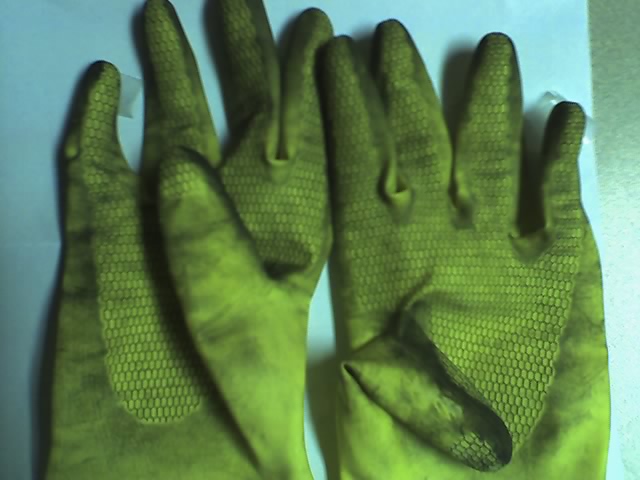
These are the gloves I used to pick up and pack things to move out of the toxic apartment at Jefferson Lakes. I was not picking up anything that would have a black residue and I was not trying to rub any off – in fact I did not even want to touch anything with the gloves ON. But since I was inhaling it in large quantities anyway it does not really matter.

gloves1

This is the mold that had covered everything we had in the apartment after just 4 months. This is not dust. This is on everything after wiping off any dust. It grows on metals and even gets in jewelry and it starts consuming items made of wood, paper etc. People too. This is the sticky mold that was on the coat hangers in the closets even though air vents are not in the closets. This is the black residue that would wash out of our hair in the shower (yes – you could see the black residue in the water).

This is the black mold the baby was breathing, touching, and eating and drinking since it was on his baby bottles and the toys he put in his mouth.

This is the mold that is still in us.

This is an extreme amount of mold and Riverstone Residential knew about this in 2005 and again in 2007 mold reports along with the Louisiana Housing Finance Agency.

They continue to lease these apartments.

Our litigation against them for poisoning us (how could they do that to a baby and still be allowed to poison more) is very obviously being manipulated by these unethical, greedy people and others – the Louisiana Housing Finance Agency which knows about the toxins in the apartments along with Riverstone Residential and the State of Louisiana and the judicial system there that allows and ignores this. They must either have some business and investments connecting them or they are just spineless, souless cowards and puppets. Probably business and investment partners.

What allowing this to continue says is that no matter how much evidence or harm – victims of these people (who think they are MORE important and who can pay for that importance) – have no rights. Allowing this to continue says that the money made leasing these toxic apartments is more important than we are and the others who lived there before, live there now, and will live there.

That is what this all comes down to if it continues to be ignored.

Understanding this has almost become more horrible, devastating, and stressful than being exposed to all the toxins we have in us.

Posted in Environmental Health Threats, Health - Medical - Science, Louisiana Housing Finance Agency, Mold and Politics, Mold Litigation, Riverstone Residential, Toxic Mold | Tagged , , , , , , , , , , , , , , , , , , | Leave a comment

How Litigation against Riverstone gets Dismissed – Court Transcript – 19th Judicial District Court – Judge Timothy E. Kelly – Baton Rouge, LA

I just read a transcript of what was said in court when a motion for summary judgement was granted to Riverstone Residential. I am so shocked right now that I will have to let this sink in and add it to all the other obvious proof that Riverstone is allowed to get away with documented criminal acts, lies, altered records, etc. The records subpoenaed for the plaintiffs were for the wrong years, look suspicious and an affidavit is to the wrong company. Also leaving out some records when subpoenaed is against the law.

As far as the judge and the transcript – I bet he would not want a judge deciding important issues about his own family the way he did for us. He either does not have any understanding of this issue and should have educated himself so he could make intelligent statements (because this transcript shows only stupidity) or could it be his decision is influenced by money and politics – his wife is the Commissioner of Administration and is on the Louisiana State Bond Commission that in 2007 – and even with a mold report done for the whole Jefferson Lakes Apartments Complex showing high levels of molds in the HVAC system, etc. – approved the purchase and so called “renovations” of this complex by the Louisiana Housing Finance Agency who now (along with Riverstone) continue leasing these known highly toxic apartments to unsuspecting victims. These criminals are above the law too.

According to this transcript – the very reason this “judge” granted the motion for summary judgement now becomes proof that Riverstone Residential has knowledge these apartments contain toxins and that by leasing these apartments to people they are exposing them to known toxins that can cause illness and death. They knew this in 2005 and the evidence (if complete, correct, and not altered) is overwhelming.

Let me mention we were never shown the apartment we moved into – we were shown another one with the same floor plan. Most have mold that they hide easily for a while until the mold growth is out of control and they have to vacume the “dust” out of the ducts.

I will post the complete transcript. Be very concerned about your rights or rather your lack of rights and who is making decisions concerning those rights.

Posted in Environmental Health Threats, Louisiana Housing Finance Agency, Mold and Politics, Mold Litigation, Riverstone Residential, Toxic Mold | Tagged , , , , , , , , , , , , , , , , , , , , , , | Leave a comment

Overwhelmed by Mold – Sinus & Tear-Duct Surgery

Sacramento Business Journal – September 26, 2008

Wendy Schroeder began working at the California State Board of Equalization headquarters on April 1, 1996 — April Fool’s Day. It was no laughing matter.

She’s been on disability leave since March. Now, recovering from sinus and tear-duct surgery, she says toxic mold and other hazardous substances in the building made her sick. Even working on files that have been stored in the building makes her break out in a rash.

Although state officials took steps last month to relocate dozens more workers to new offices, more than 2,300 people still work at BOE headquarters at 450 N St. in downtown Sacramento, despite overcrowded conditions and ongoing problems with water damage and mold. The problems raise questions about whether staying in the building over the long term is viable as costs climb.

“(That’s) my question daily,” said Bill Leonard, a Republican who served in the state Legislature for 24 years before he was first elected to the board in 2002. “If we weren’t in a budget crisis, I’d be looking for a legislative sponsor to buy us a new campus.”

Management has already closed three floors, six break/conference rooms and a security station in the lobby for cleanup. More than 50 square feet of “visible mold growth” was discovered on three walls of an elevator shaft last month, a consultant’s report shows.

Legal action has mushroomed, from a lawsuit filed in February on behalf of 23 workers to a total of 40 plaintiffs in three cases today. At least 57 new workers’ compensation claims have been filed, BOE said in August, though the dates weren’t specified.

The building, designed to hold no more than 2,200 people, is overcrowded even though 121 workers were moved out this year and 50 are slated to move to West Sacramento by the end of the month.

Faced with these issues, the board has approved a management request for $9.6 million in new funding in 2009-2010 and 2010-2011 for space needs and ongoing repairs. Board members also approved a stop-gap plan last month to move 520 employees to space outside the headquarters while a long-term plan is developed.

“The mental, physical and emotional health and safety of BOE employees is our primary concern,” states an internal executive memo issued last month. “BOE is diverting significant resources to protect our employees, which causes a large drain on BOE’s resources and productivity.”

BOE has spent about $3 million so far on consultants and expenses, agency spokeswoman Anita Gore said. The Department of General Services, which manages the state-owned building and is in charge of fixing it, has spent $16.3 million.

Some say it’s time the state cuts its losses.

Workers angry, scared

Three-quarters of the 164 employees who attended group meetings this year on mold and other problems at the headquarters cited health problems they felt were related to something in the building. Symptoms reported included headaches, itchy eyes, sinus and lung problems, skin lesions, difficulty concentrating and one case of cancer.

Symptoms seemed to increase with longer exposure. Files removed from exposed floors of the building and opened elsewhere prompted a return of physical problems.

“Overall, employees indicated a lack of confidence that the problem is being addressed adequately,” facilitator Karen Howell wrote in her final report. “In addition to physical ailments, employees overwhelmingly reported feeling angry, stressed, depressed and frightened.”

Schroeder, 45, used to work on the now-closed 24th floor. She sat on plastic because her chair was wet from leaks in the ceiling, she said this week. Co-workers dubbed a plastic chute installed to channel the water “Wendy’s waterfall.”

Off work on disability, she worries about her friends who remain on the job.

“Every time they go in the elevator, into the break room or the bathroom, they’re exposed,” she said. “Who knows what the long-term effects will be?”

Schroeder was a plaintiff in the lawsuit filed in February and also has filed a worker’s comp claim.

“This building is very unsafe … yet people continue to work there,” said Anthony Perez, a Sacramento attorney who filed the February lawsuit for 23 plaintiffs and another in July on behalf of eight more. “Remediation and analysis is going on with people in there. It needs to be evacuated.”

A third lawsuit was filed by a Los Angeles firm in June on behalf of nine other workers. “It’s sad that BOE has permitted employees to work in an environment with toxic mold and other problems,” said Anthony Patchett, one of the lawyers on that case.

Plaintiffs allege management fraudulently concealed the dangerous condition of the property for years. They demand medical expenses, compensatory damages for lost wages and other employment benefits, punitive damages, legal fees and court costs. The lawsuits name BOE and its executive director, the state and DGS as defendants.

The state negotiated out-of-court settlements with the architects and builder in 2000, according to court documents.

Gore said she can’t talk about pending litigation or workers’ comp claims. A Web site has been set up to provide updates about work on the building, notices of employee meetings and other information, she said.

Court documents filed on behalf of DGS allege that employees were informed about damage to the building and that the plaintiffs’ own actions contributed to any damages they might have suffered.

Spokesman Jeffrey Young declined comment on the lawsuit but said the condition of the building is a top priority at DGS. “This is a big deal for us.”

DGS spent $13 million on exterior windows this year and $3.3 million more on cleanup and repair on the three closed floors, break rooms and in the lobby, Young said. Most of that work is done or close to it, he said, though the discovery of mold in the elevator shafts means more work to come.

Numerous air quality tests conducted so far have shown no remarkable results, Young said.

“From our point of view, with remediation, the building is occupiable,” he added. “We’re doing everything we can to take care of any issues we discover — and we are working hard to discover them.”

Alternatives

The $9.6 million approved by BOE would be spent on six new positions to enable the agency to deal with overcrowding and health problems at the headquarters.

Some of the options under consideration are to:

• Remain in the current headquarters while DGS continues to investigate and make necessary repairs, but relocate staff in excess of 2,200 workers

• Permanently relocate all staff to a single-site headquarters other than 450 N St.

• Permanently relocate all staff to multiple decentralized locations, or

• Permanently relocate all staff to a complex of buildings that would comprise a new headquarters campus.

“My preference is to acknowledge that our building is actually several hundred people overcrowded today,” Leonard said. “Not quite as bad as state prisons, but we are overcrowded.”

“I’d just as soon get out of the building,” he added. “I don’t believe it’s a current health hazard — with the caveat that there’s always somebody who is allergic to something — but I want to do something right on the rehab, not have employees moving their desks around while we tear out ceilings and carpet.”

Bobbi Smith, a district council president for Service Employees International Union Local 1000, which represents some workers in the building, wants workers out now.

“It’s been a construction zone for a couple of years,” she said. “The feeling of most of the employees in the building is, ‘Get us out of here.’ ”

California State Board of Equalization, by the numbers

– 1993: Opening date for 24-story headquarters building at 450 N St., Sacramento
– 2,200 workers: Designed capacity of building; now has 2,300, and headquarters staff is projected to grow to 2,650 by 2011
– 1995: First written report of water damage from rain and wind, blamed on construction defects
– Late 1990s: Employees begin complaining about health problems
– 121: Employees moved this year from 450 N St. to offices at the Franchise Tax Board
– 50: Additional employees moving to warehouse space in West Sacramento this month
– 57: New workers’ comp claims filed by BOE employees
– 40: Plaintiffs in three pending lawsuits over building conditions
– $3.9 million: New funding approved for fiscal 2009-2010 to address space needs and problems with the building; the figure rises to $5.7 million for 2010-2011

bizjournals.com

Posted in Environmental Health Threats, Health - Medical - Science, Mold and Politics, Mold Litigation, Toxic Mold | Tagged , , , , , , , , , , , | Leave a comment