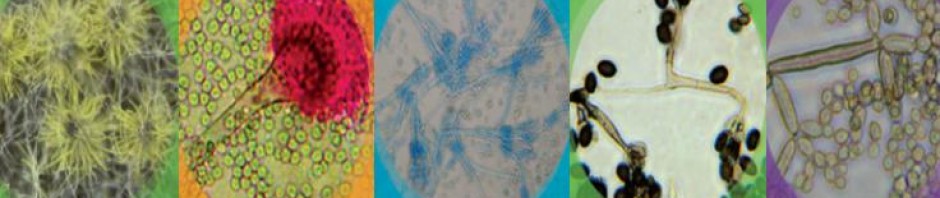
Jones v. Steve Jones Auto Group (Re: Exposure to mold in the workplace) – findings of fact that Plaintiff’s exposure to mold at his place of work caused his illness – disability approved by North Carolina Court of Appeals

Jones v. Steve Jones Auto Group
Court of Appeals of North Carolina
Filed November 3, 2009
Van Camp, Meacham & Newman, PLLC, by Thomas M. Van Camp, for Plaintiff.
Brooks, Stephens & Pope, P.A., by Matthew P. Blake and James A. Barnes IV, for Defendants.
STEPHENS, Judge

I. Procedural History

On 3 January 2005, Plaintiff Steve R. Jones completed an Industrial Commission Form 18 seeking benefits for disability allegedly due to mold exposure in his place of employment. On 9 September 2005, Defendant Steve Jones Auto Group and Defendant Universal Underwriters Group (collectively, “Defendants”) completed a Form 61 denying Plaintiff’s claim. On 22 May 2006, Plaintiff filed a Form 33 request for hearing. The claim was heard by Deputy Commissioner Wanda Blanche Taylor on 21 June 2007. Deputy Commissioner Taylor entered an Opinion and Award on 1 February 2008 awarding Plaintiff benefits. From this Opinion and Award, Defendants appealed to the Full Commission. The matter was heard by the Full Commission on 5 August 2008, and by Opinion and Award entered 12 September 2008, the Full Commission affirmed with modifications Deputy Commissioner Taylor’s Opinion and Award. Defendants appeal.

II. Factual Background

Plaintiff, 51 years old at the time the matter was heard by the Full Commission, is part-owner of Steve Jones Auto Group. In 1998, in his capacity as minority owner and employee, Plaintiff opened two new dealerships, Steve Jones Honda and Steve Jones Chevrolet. Plaintiff served as general manager of both dealerships. Plaintiff was responsible for making all management decisions, and oversaw sales, finance, and insurance. Plaintiff often worked 10-hour days and was described as very professional, sharp, and good with both customers and finances. At no time prior to mid-2000 did Plaintiff experience any medical ailments that prevented him from performing his duties and responsibilities on a full-time basis.

Between late 1999 and mid-2000, the building which housed Steve Jones Honda, and Plaintiff’s office, was remodeled. After the remodeling was completed, Plaintiff moved back into his office in the building. However, Myrick Construction’s failure to properly caulk and seal along the base of the exterior wall of Plaintiff’s office caused water intrusion into the wallboard, wall cavity, sheetrock, and carpeting of Plaintiff’s office.

In late 2000, Plaintiff began to experience medical problems, including excessive and uncontrolled coughing, wheezing, a burning sensation in his nose and mouth, headaches, dizziness, and a lack of energy. Plaintiff’s work performance began to deteriorate as Plaintiff lost his ability to calculate numbers in his head, and Plaintiff had severe memory problems. Plaintiff’s medical and performance issues continued to worsen until September 2003. Plaintiff continued to receive a wage of $10,000 per month during this time, even though he was not performing his duties as general manager.

In April 2003, Steve Jones Auto Group’s majority owner, Tom Davis, removed Plaintiff as general manager of the dealerships. Davis continued to pay Plaintiff his monthly salary until 28 December 2005. Plaintiff has not received a salary since that date.

In August 2003, Plaintiff’s wife was undergoing a medical procedure performed by Dr. Jonathan Hasson, a vascular surgeon. During the procedure, Plaintiff began to cough uncontrollably and had to leave the room. After the procedure, Dr. Hasson spoke with Plaintiff about his symptoms and work conditions. Dr. Hasson opined that Plaintiff’s symptoms may be the result of mold exposure. Following Plaintiff’s discussion with Dr. Hasson, Plaintiff contacted Myrick Construction and had a representative from Myrick cut several holes in the wall of his office. The holes revealed that the wall cavity was “heavily laden” with black mold, with mold growing inside the sheetrock, insulation, and electrical receptacles.

Plaintiff then contacted Mike Shrimanker of EEC, Inc., a certified industrial hygienist, registered professional engineer, certified safety professional, certified audio-metric technician, and certified Asbestos Hazard Emergency Response Act inspector. Mr. Shrimanker advised Plaintiff to leave the office and lock the door until Mr. Shrimanker arrived. When Mr. Shrimanker arrived, he observed black mold on the back of the sheetrock that had been cut out of the wall and on the backs of Plaintiff’s chairs. Mr. Shrimanker took air and tape samples from inside Plaintiff’s office to identify what kinds of mold were present. He also took air and tape samples from outside the building.

The mold testing established that there was no stachybotrys, commonly known as black mold, in the outdoor samples, but high levels of stachybotrys in the samples taken from inside Plaintiff’s office. Mr. Shrimanker testified that stachybotrys should not have been present inside or outside of Plaintiff’s office in any amount and that the average member of the general public is not exposed to stachybotrys on a regular basis. The testing further revealed that there was no aspergillus, another type of mold, in the outdoor samples, but elevated levels of aspergillus in the samples taken from inside Plaintiff’s office. In addition, the testing revealed small levels of penicillium, a type of mold, in the outdoor samples, and significantly higher levels of penicillium in the samples taken from inside Plaintiff’s office. Mr. Shrimanker testified that although aspergillus and penicillium are commonly found in the outside air, their levels should be greater outdoors than indoors. Testing of Plaintiff’s home revealed no elevated levels of mold.

Dr. Donald E. Schmechel, a clinical professor of medicine at Duke University and board certified in neurology and psychology, first saw Plaintiff on 13 October 2003. He performed a physical examination of Plaintiff and diagnosed him with “asthmatic reactive airway disease.” Dr. Schmechel also performed a neurological exam, which included cognitive screening, and diagnosed Plaintiff with “mild cognitive impairment[.]” According to Dr. Schmechel, there is no indication that Plaintiff suffered from any cognitive defects prior to his exposure to mold. It was Dr. Schmechel’s opinion that Plaintiff’s pulmonary airway disease is most likely the cause of his cognitive dysfunction.

Dr. Peter Kussin, an associate clinical professor of medicine at Duke University in the Division of Pulmonary, Allergy, and Critical Care Medicine, first saw Plaintiff on 23 October 2003. According to Dr. Kussin, before Plaintiff’s exposure to mold, Plaintiff’s childhood asthma had resolved and was asymptomatic. In October of 2003, however, Dr. Kussin reported that Plaintiff had evidence of both upper and lower airway problems, including hyperinflation of the lungs, inflammation and narrowing of his airways, and abnormalities of his upper airway and vocal chords. Dr. Kussin opined that Plaintiff’s persistent asthma and related symptoms were caused by his exposure to mold at work.

Plaintiff also saw Dr. David C. Thornton, a physician at the Pinehurst Medical Clinic and board certified in internal, pulmonary, critical care, and sleep medicine, in October 2003. At the time of Plaintiff’s first visit, he complained of a marked aggravation in his respiratory symptoms, including sudden onsets of shortness of breath and a terrible cough. Plaintiff also reported having problems with memory and dizziness, and an inability to focus. Dr. Thornton testified that stachybotrys is at the top of the list of dangerous molds because it is capable of provoking an immune response and because it produces toxins that can affect the human body and human function. Dr. Thornton opined that Plaintiff’s prolonged exposure to the combination of stachybotrys, aspergillus, and penicillium “perpetuated and established in [Plaintiff] an immunologic state that perpetuated a very serious illness.” In Dr. Thornton’s opinion, Plaintiff’s exposure to the high levels of mold at work was “the factor” in the onset of Plaintiff’s lung inflammation.

III. Discussion

Appellate review of an opinion and award of the Full Commission is generally limited to

(i) whether the Commission’s findings of fact are supported by competent evidence, and

(ii) whether the Commission’s conclusions of law are justified by the findings of fact. Clark v. Wal-Mart, 360 N.C. 41, 43, 619 S.E.2d 491, 492 (2005). The Full Commission’s conclusions of law are reviewed de novo. Bond v. Foster Masonry, Inc., 139 N.C. App. 123, 127, 532 S.E.2d 583, 585 (2000).

A. Occupational Disease

By Defendants’ first argument, Defendants contend that the Commission erred in concluding that Plaintiff contracted an occupational disease as defined by N.C. Gen. Stat. § 97-53(13). We disagree.

N.C. Gen. Stat. § 97-53, which lists various compensable occupational diseases, does not include pulmonary airway disease among these. However, a disease not specifically listed in the statute may nonetheless be compensable pursuant to N.C. Gen. Stat. § 97-53
(13), which defines an occupational disease as

[a]ny disease . . . which is proven to be due to causes and conditions which are characteristic of and peculiar to a particular trade, occupation or employment, but excluding all ordinary diseases of life to which the general public is equally exposed outside of the employment.

N.C. Gen. Stat. § 97-53(13) (2007). Our Supreme Court has interpreted this language as requiring three elements in order to prove that a disease is an occupational disease:

(1) the disease must be characteristic of and peculiar to the claimant’s particular trade, occupation, or employment; (2) the disease must not be an ordinary disease of life to which the public is equally exposed outside of the employment; and (3) there must be proof of a causal connection between the disease and the employment. Rutledge v. Tultex Corp./Kings Yarn, 308 N.C. 85, 93, 301 S.E.2d 359, 365 (1983); accord Hardin v. Motor Panels, Inc., 136 N.C. App. 351, 354, 524 S.E.2d 368, 371, disc. review denied, 351 N.C. 473, 543 S.E.2d 488 (2000). The first two elements of the Rutledge test are satisfied where the employee can show that “the employment exposed the worker to a greater risk of contracting the disease than the public generally.” Rutledge, 308 N.C. at 94, 301 S.E.2d at 365. The third element is satisfied if the employment “`significantly contributed to, or was a significant causal factor in, the disease’s development.'” Hardin, 136 N.C. App. at 354, 524 S.E.2d at 371 (citation omitted). Since Rutledge, this two-pronged requirement for proving an occupational disease, increased risk and causation, has been approved and applied repeatedly by this Court and the North Carolina Supreme Court. Hassell v. Onslow County Bd. of Educ., 362 N.C. 299, 306, 661 S.E.2d 709, 714 (2008).

1. Increased Risk

Defendants first challenge the sufficiency of the evidence to support the Commission’s determination that Plaintiff’s employment exposed him to an increased risk of contracting his illness as compared to the public generally. Specifically, Defendants argue that “[t]he Commission disregarded our Supreme Court precedent which requires a link between the nature of an employment and the alleged occupational disease.” We are unpersuaded by Defendants’ argument and conclude that, on the record before us, we are bound by the prior decision of this Court in Robbins v. Wake Cty. Bd. of Educ., 151 N.C. App. 518, 566 S.E.2d 139 (2002).

In Robbins, plaintiff filed a claim with the Commission seeking compensation for his wife’s contraction of and death from mesothelioma. Plaintiff’s wife (“Ms. Robbins”) had worked for defendant as a secretary and graphic artist from 1978 to 1981. During her employment, Ms. Robbins worked at defendant’s central administrative office building in a large room on the second floor that was divided by partitions. She also spent about two hours per day in the office’s print shop and made daily trips to the basement of the building to place materials in courier boxes, which were located next to the boiler room. In 1988, a survey performed on the building revealed that the building contained substantial amounts of asbestos in the ceiling plaster, wall plaster, floor tile, pipe insulation in the boiler room and print shop, vibration dampers of the heating system, and numerous other areas.

In late 1992, Ms. Robbins developed a persistent cough. In January of 1993, a chest x-ray revealed a suspicious shadow in her lung, and a CT scan confirmed the presence of an egg-sized tumor in her right lung. Ms. Robbins was diagnosed with mesothelioma, a cancer most often associated with asbestos exposure. She died of the disease in June 1995 at the age of 41.

The Full Commission found and concluded that Ms. Robbins had contracted a compensable occupational disease as a result of her employment with defendant. In so concluding,

[t]he Commission found as fact that [Ms. Robbins’] employment at defendant’s . . . facility exposed her to a greater risk of contracting mesothelioma than the public generally. The Commission found that while the nature of [Ms. Robbins’] employment as a secretary and graphic artist did not place her at risk for contracting the disease, the fact that her employment required her to work in a building with higher-than-normal levels of asbestos did place her at such a risk, and that the risk was higher than that to which the general public was exposed, as not all buildings contain significant amounts of friable asbestos.

Id. at 521, 566 S.E.2d at 142 (emphasis added). In upholding the opinion and award of the Full Commission, this Court concluded that the Commission’s findings were supported by the testimony of Dr. Victor Roggli, an expert in the pathology of asbestos-related diseases of the lung, including mesothelioma. Dr. Roggli testified that it was his opinion that Ms. Robbins’ exposure to asbestos at the building placed her at an increased risk for developing mesothelioma. He opined that mesothelioma is a disease which is characteristic of particular trades or occupations, such as Robbins’ employment, where the employee is exposed to asbestos.

Dr. Roggli also testified that mesothelioma is not an ordinary disease of life that is typically seen in the general population. Dr. Roggli stated that mesothelioma is very rare among the general population, and that it is estimated that there exist only one or two cases per million people per year where mesothelioma develops without asbestos exposure. Thus, this Court concluded that “the Commission’s findings with respect to the first two elements of the Rutledge test were sufficiently supported by competent evidence.” Id. at 522, 566 S.E.2d at 142-43. This Court further concluded that the Commission’s findings supported the Commission’s conclusion of law that, as a result of her employment with defendant, Ms. Robbins sustained a compensable occupational disease within the meaning of N.C. Gen. Stat. § 97-53(13).

In the present case, the Full Commission found as fact that “Plaintiff’s employment, and specifically, his exposure to mold for approximately three years, exposed [P]laintiff to a greater risk of developing his pulmonary airway disease than members of the general public not so employed.”

This finding is supported by competent evidence in the record. Mr. Shrimanker testified that under normal conditions, “[t]he general public doesn’t get exposed to stachybotrys” at any level. The results of the mold testing performed by Mr. Shrimanker on 27 August 2003 revealed a “large quantity” of stachybotrys in the tape and air samples taken from plaintiff’s office, with no stachybotrys outside. Additionally, the test results revealed no aspergillus in the outdoor sample, but elevated levels of aspergillus in the samples from Plaintiff’s office, and small levels of penicillium in the outdoor sample, with significantly higher levels of penicillium in samples taken from Plaintiff’s office.

Dr. Thornton testified that stachybotrys is “perhaps the most noxious [mold] and most likely to affect human health in an adverse way.” He further testified that Plaintiff’s exposure to stachybotrys, aspergillus, and other molds present in his office placed him at an increased risk, greater than that of members of the general public, of developing the inflammation in his lungs.

Dr. Kussin also testified that while there may be as many as five million adults in this country with asthma, no more than “[one] percent have asthma as a result of occupational exposures or environmental exposures that are not allergic . . . .” He further testified that “even a smaller subset of that [one] percent” sustain the type of problems that Plaintiff experienced.

We conclude that this testimony is competent to support the Commission’s finding that Plaintiff’s work placed him at an increased risk for contracting pulmonary airway disease.

Defendants argue that Plaintiff’s testimony that he had visited hundreds of automobile dealerships in his 20-year career but only two had contained mold, as well as Dr. Thornton’s testimony that he knows of no correlation between the auto dealership industry and mold-related disease, shows that there is no link between mold-related disease and auto dealerships. However, as in Robbins, although the nature of Plaintiff’s employment as an automobile dealership manager did not increase his risk for contracting pulmonary airway disease, the fact that his employment required him to work in a building contaminated with mold did place him at an increased risk. Competent evidence in the record supports the Commission’s determination that the risk to which Plaintiff was exposed was greater than the risk to which the general public is exposed as stachybotrys should not have been present in Plaintiff’s office in any amount. Because the Commission’s findings are supported by competent evidence, this Court is bound by them, even though the record also contains contrary evidence. Gilberto v. Wake Forest Univ., 152 N.C. App. 112, 118, 566 S.E.2d 788, 792 (2002).

2. Causation

Defendants next argue that the expert medical testimony relied upon by the Commission was not sufficient to prove a causal connection between Plaintiff’s illness and his employment. Specifically, Defendants argue that medical experts erroneously premised their opinions “on the temporal relationship between discovery of mold [in] [P]laintiff’s office and the onset of [P]laintiff’s symptoms.” Defendants’ argument is meritless. “[W]here the exact nature and probable genesis of a particular type of injury involves complicated medical questions far removed from the ordinary experience and knowledge of laymen, only an expert can give competent opinion evidence as to the cause of the injury.” Click v. Pilot Freight Carriers, Inc., 300 N.C. 164, 167, 265 S.E.2d 389, 391 (1980). However, “`expert opinion testimony [that] is based merely upon speculation and conjecture . . . is not sufficiently reliable to qualify as competent evidence on issues of medical causation.'” Cannon v. Goodyear Tire & Rubber Co., 171 N.C. App. 254, 262, 614 S.E.2d 440, 445 (quoting Young v. Hickory Bus. Furn., 353 N.C. 227, 230, 538 S.E.2d 912, 915 (2000)), disc. review denied, 360 N.C. 61, 621 S.E.2d 177 (2005); see also Dean v. Carolina Coach Co., 287 N.C. 515, 522, 215 S.E.2d 89, 94 (1975) (“[A]n expert is not competent to testify as to a causal relation which rests upon mere speculation or possibility.”).The Commission made the following findings of fact regarding causation:

25. Dr. Thornton was of the opinion that [P]laintiff’s exposure to mold in the [workplace] was the cause of the inflammation in his lungs.

29. In Dr. Thornton’s opinion, the debilitating symptoms that [P]laintiff exhibits, including problems with breathing, coughing, inflamed airways, and the acceleration or exacerbation of those symptoms, as well as his cognitive defects are all caused by long term exposure to stachybotrys and other molds and their toxins.

33. The basis for Dr. Thornton’s causation opinion is not just the temporal relationship, which he described a[s] “quite compelling,” but the level of mold on the occupational health testing, the types of mold present, the intensity of the exposure, the duration of the exposure, and the fact that anti-bodies were identified in [P]laintiff’s blood stream.

37. Dr. Kussin was of the opinion that [P]laintiff’s persistent asthma was causally related to his exposure to mold at the [workplace]. . . .

56. Plaintiff’s [workplace] exposure to mold caused [P]laintiff’s pulmonary condition and was a substantial contributing factor in the development of [P]laintiff’s pulmonary airway disease and resulting conditions.

(Emphasis added.)

Dr. Thornton opined that Plaintiff’s prolonged exposure to the combination of stachybotrys, aspergillus, and penicillium “perpetuated and established in [Plaintiff] an immunologic state that perpetuated a very serious illness” and that Plaintiff’s symptoms and problems “were significantly aggravated if not caused completely” by his exposure to mold in the workplace. Dr. Thornton explained that while “there is not a specific medical test that would clearly demonstrate definitively” that Plaintiff’s exposure to mold caused his illness, based on “the constellation of . . . [Plaintiff’s] symptoms, the time course of their onset, [and Plaintiff’s] response to therapy[,]” he felt strongly that Plaintiff’s illness was caused by his exposure to mold in his workplace. Thus, contrary to Defendants’ contention, Dr. Thornton’s opinion is not based solely “on the temporal relationship between discovery of mold [in] [P]laintiff’s office and the onset of [P]laintiff’s symptoms.”

Dr. Kussin testified that he did not know of another irritant or exposure, other than the mold, that would have been the primary cause of Plaintiff’s symptoms and opined that Plaintiff’s persistent asthma and related symptoms were caused by his exposure to mold at work.

Although Defendants argue that “[P]laintiff’s treating physicians assumed drastic mold exposure based on air sampling data that did not reflect the air [P]laintiff breathed daily,” Defendants cite no evidence from the record and make no argument in support of this assertion. Moreover, our review of the evidence reveals no support for this statement.

We conclude that the testimony of Dr. Thornton and Dr. Kussin is competent evidence to support the Commission’s findings of fact that Plaintiff’s exposure to mold at his place of work caused his illness. This Court is thus bound by these findings. Gilberto, 152 N.C. App. at 118, 566 S.E.2d at 792.

3. Personal Sensitivity

Defendants further argue that Plaintiff’s illness is not compensable as it is the result of a preexisting personal sensitivity. We disagree.

This Court has held that an individual’s personal sensitivity to chemicals does not result in an occupational disease compensable under our workers’ compensation scheme. See, e.g., Hayes v. Tractor Supply Co., 170 N.C. App. 405, 612 S.E.2d 399 (2005), disc. review denied, 359 N.C. 851, 619 S.E.2d 505 (2005); Nix v. Collins & Aikman, Co., 151 N.C. App. 438, 566 S.E.2d 176 (2002). In Hayes, plaintiff had an allergic reaction to the chemical naphthalene, which was stocked in plaintiff’s employer’s store. Plaintiff had a long history of allergies and reactions to substances, including a diagnosis of “chemical sensitivity,” prior to her exposure to naphthalene at work. Hayes, 170 N.C. App. at 406, 612 S.E.2d at 401. Because plaintiff had a “heightened peculiar susceptibility to chemicals . . . [which] predated the exposure to naphthalene[,]” id. at 409, 612 S.E.2d at 402, this Court affirmed the Commission’s conclusion that plaintiff had failed to prove “that her employment with defendant-employer placed her at an increased risk of contracting the present condition[.]” Id. at 408, 612 S.E.2d at 402 (quotation marks omitted).

Similarly, in Nix, plaintiff developed hyperactive airway disease. Although plaintiff contended that his condition was caused by his exposure to chemicals in the workplace, a testifying physician opined that “plaintiff was only at an increased risk due to his `idiopathic’ sensitivity to chemicals at the workplace[,]” Nix, 151 N.C. App. at 444, 566 S.E.2d at 179, and that “only plaintiff’s sensitivities to the chemicals made him more susceptible to the disease.” Id. at 444, 566 S.E.2d at 180. Thus, this Court affirmed the Commission’s conclusion that “[p]laintiff’s condition was caused by his personal, unusual sensitivity to small amounts of certain chemicals.” Id. at 441, 566 S.E.2d at 178 (quotation marks omitted).

In this case, the Commission made the following findings of fact relevant to whether Plaintiff’s illness was a result of a preexisting personal sensitivity:

30. Dr. Thornton was of the opinion that [P]laintiff’s exposure to mold was occupational in nature and not a personal sensitivity that produces “a noxious reaction.” . . .

63. Plaintiff’s disability was not caused by a “personal sensitivity” to mold.

Dr. Thornton testified that “[i]n situations of allergic mediated asthma, or occupational asthma mediated by a toxin, we often see a worsening of asthma due to the inflammatory response from an intense exposure.” Dr. Thornton explained that the reaction can last for weeks, months, or longer, and symptoms can linger for years after the exposure to the toxin has terminated. He further explained that “[t]his is a common scenario in a number of different asthmatic exposures in the workplace, and could certainly be seen with any intense exposure to a mold. . . . And so, this is different than a sensitivity, for example, to something that produces a noxious reaction.” Dr. Thornton further testified that “after an intense exposure, an allergic response is established. After the establishment of the allergic response, then that allergic response can continue and be perpetuated for years.” Dr. Thornton stated that he had no way to know if Plaintiff was sensitive to the molds that were present in his office before he was exposed to them there. When asked if the exposure that Plaintiff experienced at his place of employment could have created an allergic response to the molds, Dr. Thornton replied, “Yes.”

Dr. Kussin testified that Plaintiff’s reaction to the mold was “not an allergy in the way you’re allergic to dust or cats or . . . ragweed. The changes that occur in the type of asthma that [Plaintiff] has can only be described generically as inflammatory, and the word `allergic’ doesn’t necessarily need to be invoked.”

Thus, unlike in Hayes and Nix, and contrary to Defendants’ contention, there is no evidence in this case that Plaintiff had a heightened peculiar susceptibility to mold which predated his exposure to the mold at his workplace. To the contrary, the evidence establishes that Plaintiff’s sensitivity to mold was caused by his exposure to mold in the workplace. Accordingly, there is competent evidence to support the Commission’s findings of fact on this issue. Defendants’ argument is overruled.

We reiterate that, although the record contains evidence which would support contrary findings, the Commission’s findings regarding the genesis and nature of Plaintiff’s occupational disease are sufficiently supported by competent evidence in the record and are thus conclusive on appeal. Robbins, 151 N.C. App. at 523, 566 S.E.2d at 143. We hold that these findings support the Commission’s conclusion of law that, as a result of Plaintiff’s employment with Defendant Steve Jones Auto Group, Plaintiff developed a compensable occupational disease withing the meaning of N.C. Gen. Stat. § 97-53(13).

B. Occupational Mold Exposure

Defendants next assert that “[t]here is no competent evidence that distinguishes Plaintiff’s occupational mold exposure from mold that is ubiquitous in the environment.” Specifically, Defendants argue that the Commission’s findings of fact 10 through 17 are not supported by competent evidence.

The challenged findings of fact are as follows:

10. Mr. Shrimanker observed black mold in [P]laintiff’s office prior to the tests. This mold was located on the inside of the sheetrock, insulation, and electrical receptacles as well as in the carpet in [P]laintiff’s office. According to Shrimanker, the sheetrock behind the wall had also been “covered with mold” due to defects in construction, and the saturation had been going for a “long time.”

11. Mr. Shrimanker was of the opinion that under normal conditions to which the general public is exposed, stachybotrys should not be present at any level. Although penicillium and aspergillus are commonly found in the outside air, the levels of aspergillus and penicillium should be greater outdoors than indoors. The mold testing performed on August 27, 2003 found no stachybotrys in the outdoor sample and high levels of stachybotrys in the tape and air samples in [P]laintiff’s office. According to Mr. Shrimanker, both the air and bulk samples “indicated that stachybotrys spores were pres e n t in high concentrations.” . . . There were small levels of penicillium in the outdoor sample, but the levels of penicillium in the air and tape samples in [Plaintiff’s] office were significantly greater than the outdoor sample.[ 1 ]

12. Exposure to stachybotrys, which contains mycotoxins, can cause different symptoms in different individuals. Common symptoms include coughing, headache, dizziness, malaise, burning in the nose and mouth, and cold and flu-like symptoms. Plaintiff was experiencing most, if not all, of these symptoms between late 2000 and August 27, 2003 when the samples were originally tested.

13. Stachybotrys is known as “black mold,” and, according to Mr. Shrimanker, is the most dangerous of the molds because of its ability to produce mycotoxins. Stachybotrys may produce a trichothecene mycotoxin-sutratoxin H — “which is poisonous by inhalation.” Penicillium can cause extrinsic asthma and some species can also produce mycotoxins. Aspergillus can also produce mycotoxins.

14. As the mold dries out, it can be released by pressure, or walking on the carpet and by air movement through the use of air conditioning or heating unit. Defendants’ expert, Dr. Dalton, agreed with this assessment. According to Mr. Shrimanker, mold can also travel from wall cavities into air through openings in the wall, including electrical receptacles.

15. The stachybotrys, penicillium, and aspergillus species found in [P]laintiff’s office in the late 2000 through August 27, 2003 were released into the air in the office.

16. Between late 2000 and August 2003, as a result of [P]laintiff’s presence in his office, he was exposed to and inhaled mold spores, including stachybotrys, penicillium and aspergillus.

17. Plaintiff’s home was tested for mold and no unusual or elevated levels of mold were found.

Mr. Shrimanker testified that upon entering Plaintiff’s office, he observed black mold on the inside of the sheetrock and on the back sides of Plaintiff’s chairs. Mr. Shrimanker also took photographs which showed mold on the sheetrock, insulation, and electrical receptacles in Plaintiff’s office. Mr. Shrimanker’s report states that “no sealer or wall barrier(s) were installed at ground level near the wall(s) adjacent to the downspout” and, thus, “[i]t would be reasonable to assume that water enters the building and has kept the carpet and the interior space between the walls wet during heavy rain episodes.” Mr. Shrimanker testified that “when rain stops and over a period of time the carpet dries out, and people walk and so forth, it will kick the spores into the air.”

Mr. Shrimanker took tape samples of the mold from the back of the sheetrock, the back of the wallpaper, and the exterior sheetrock wall. Air samples were also taken from inside Plaintiff’s office and outside the building. The analysis of the samples indicates that stachybotrys spores “were present in high concentrations” inside Plaintiff’s office. Penicillium and aspergillus were present inside as well. A report from testing done on Plaintiff’s home revealed the presence of some mold spores, but not at unusual or elevated levels.[ 2 ]

Defendants contend that there is no competent evidence that the mold escaped the wall cavity or that Plaintiff breathed the mold. However, Mr. Shrimanker testified that mold spores are blown through the air conditioning and heating vents and escape through the space surrounding electrical outlets, network cables, and drop ceilings. Photographs show mold on the electrical receptacles in Plaintiff’s office. Furthermore Mr. Shrimanker testified that the carpet was contributing to the mold found in Plaintiff’s office and recommended that the carpet be replaced during remediation. Although Mr. Shrimanker did not test the carpet to determine if mold was present under the carpet, he testified that, based on his observations and experience, there should have been. Mr. Shrimanker also testified that the day the carpet was pulled up to be replaced, he observed that the carpet was “`full of mold.'” After the carpet had been removed, tape samples showed stachybotrys still on the floor. Furthermore, Mr. Shrimanker testified that when dry, moldy carpet is walked on or disturbed in some other manner, the mold spores can get released into the air.

Defendants argue that Mr. Shrimanker’s testimony was “[in]competent evidence of an occupational exposure to mold” as he did not test the carpet to determine if it contained mold or what kinds of mold were present. However, Mr. Shrimanker testified that he observed mold on the carpet and acknowledged that identifying mold is “what [he] do[es] for a living[.]” Furthermore, the tape and air samples taken from Plaintiff’s office identified that stachybotrys, penicillium, and aspergillus were present in Plaintiff’s office.

Mr. Shrimanker testified that the general public is not exposed to stachybotrys under normal circumstances. He explained that stachybotrys is not found outdoors and is only found indoors when there has been water intrusion and there is an organic material such as paper or cellulose present upon which the mold can thrive. Mr. Shrimanker further testified that stachybotrys, or black mold, is the most dangerous kind of mold and that the presence of aspergillus and penicillium in addition to stachybotrys is like adding “insult to an injury” in that aspergillus and penicillium make the illness from stachybotrys exposure worse. Mr. Shrimanker’s report indicates that stachybotrys may produce mycotoxins such as sutratoxin “which is poisonous by inhalation.” Penicillium can cause extrinsic asthma and some species can produce mycotoxins. Aspergillus can also produce mycotoxins.

Based on his experience, it was Mr. Shrimanker’s opinion that Plaintiff’s symptoms, including the reaction in his lungs, cough, fever, and burning eyes, were consistent with long-term exposure to stachybotrys, aspergillus, and penicillium.

Notwithstanding this testimony, Defendants further argue that the air samples taken on 27 August 2003 did not reflect the air quality Plaintiff breathed. While Mr. Shrimanker testified that on any given day, depending on the conditions, an air sample can reveal differing levels of mold in the same room, he further explained that any level of stachybotrys, whether it be on a tape sample or in the air, in an indoor facility is cause for concern as an individual should not be exposed to stachybotrys to any degree. Furthermore, “[o]ur Supreme Court rejected the requirement that an employee quantify the degree of exposure to the harmful agent during his employment.” Matthews v. City of Raleigh, 160 N.C. App. 597, 606, 586 S.E.2d 829, 837 (2003) (quotation marks and citations omitted).

We conclude that the foregoing testimony is competent to support the challenged findings of fact regarding Plaintiff’s occupational mold exposure. Thus, the assignments of error upon which Defendants’ argument is based are overruled.

C. Lien on Third-Party Settlement Proceeds

Defendants finally argue that, pursuant to N.C. Gen. Stat. § 97-10.2, they are entitled to a lien against third-party settlement proceeds received by Plaintiff. Plaintiff responds that Defendants failed to offer evidence at the hearing on the issue of a lien, and, thus, have waived any right to pursue a lien. However, the parties stipulated to the following:

Defendants’ issues to be addressed by the Commission are:

e. If [P]laintiff’s claim is compensable, have third-party settlement proceeds been distributed, to whom were they distributed, and, pursuant to N.C. Gen. Stat. § 97-10.2(h), may any resulting lien be enforced against persons receiving such funds[.]

Furthermore, the record contains a “Settlement Agreement and Release of Claims” wherein

Steve Jones Auto Group, Inc. d/b/a Steve Jones Honda, Steven R. Jones, and Sherrie L. Jones (collectively referred to as “Plaintiffs”), Myrick Construction, Inc. (“Myrick”), Commercial Acoustical and Drywall, Inc. (“CAD”), and Rockingham Paint and Glass Center, Inc. (“RPGC”)

entered into a settlement agreement for claims arising out of “defects in the construction and renovation of the Steve Jones Honda dealership” providing for the payment of $1,000,000 to Plaintiffs. Pursuant to that agreement,

Steven R. Jones agrees that any government or private liens, claims or demands for workers’ compensation liens and/or medical expenses and services, and/or any unpaid bills owed for medical related services rendered to him prior to the date of this Agreement, will be paid from the sum he is to receive pursuant to this settlement agreement prior to distribution to him.

We conclude that Defendants have not waived their right to pursue a lien against such third-party settlement proceeds.

An injured employee has the exclusive right to enforce the liability of a third party within the first twelve months following an injury. N.C. Gen. Stat. § 97-10.2(b) (2007). Pursuant to subsection (h) of section 97-10.2, “[i]n any proceeding against or settlement with the third party, every party to the claim for compensation shall have a lien to the extent of his interest . . . upon any payment made by the third party by reason of such injury or death.” N.C. Gen. Stat. § 97-10.2(h) (2007). This lien “may be enforced against any person receiving such funds[,]” id., is a lien against “all amounts paid or to be paid” to the employee, Hieb v. Lowery, 344 N.C. 403, 408, 474 S.E.2d 323, 326 (1996) (emphasis removed), and is mandatory in nature. Radzisz v. Harley Davidson of Metrolina, Inc., 346 N.C. 84, 90, 484 S.E.2d 566, 569 (1997).

Here, the Commission failed to determine whether third-party settlement proceeds had been distributed; if so, to whom they were distributed; and whether Defendants were entitled to a lien on those funds under N.C. Gen. Stat. § 97-10.2. Accordingly, we remand this case to the Commission to address and resolve the lien issue raised by Defendants.

AFFIRMED in part and REMANDED in part with instructions.

Chief Judge MARTIN and Judge HUNTER, JR. concur.

leagle.com

Updated with more information – Political Action Committee – NAA – files Amicus Brief in mold case (two infant deaths in mold filled apt – Wasatch Prop Mgmt) citing US Chamber/ACOEM ‘litigation defense report’ to disclaim health effects of indoor mold & limit financial risk for industry

“Changes in construction methods have caused US buildings to become perfect petri dishes for mold and bacteria to flourish when water is added. Instead of warning the public and teaching physicians that the buildings were causing illness; in 2003 the US Chamber of Commerce Institute for Legal Reform, a think-tank, and a workers comp physician trade organization mass marketed an unscientific nonsequitor to the courts to disclaim the adverse health effects to stave off liability for financial stakeholders of moldy buildings. Although publicly exposed many times over the years, the deceit lingers in US courts to this very day.” Sharon Noonan Kramer

Note – Information on Riverstone Residential knowingly exposing tenants to extreme amounts of mold toxins at Toxic Mold Infested Jefferson Lakes Apartments in Baton Rouge, Louisiana

Toxic Mold Infested Jefferson Lakes Apartments managed by Riverstone Residential

Riverstone Residential Litigation

Mold Inspection Reports

Photos of Mold in Apartment

Attorney Malpractice

Posted in Civil Justice, Environmental Health Threats, Health - Medical - Science, Mold Litigation, Toxic Mold | Tagged , , , , , , , , , , | 1 Comment

Veterans-For-Change News – VA Expands Agent Orange Illness List – DD 214’s are now available online

veterans for change

Monday, November 2, 2009

IT'S OFFICIAL

DD 214’s are now available online.  Just click onto link below to get  started.

http://www.archives.gov/veterans/evetrecs/index.html

Thanks to fellow Veteran’s advocate Terry Richards for the information!  Many veterans are tired of waiting and waiting for St. Louis to respond to requests!

Veterans who served in  Korea / DMZ your help is needed!

The research questionnaire response so far has been good, but we still need more veterans who served in Korea to participate.

Veterans-For-Change is distributing a questionnaire to veterans pertaining to service in Korea to help us gather statistical information in our ongoing efforts to correct the wrongs and to assist in declassifying many missions in Korea so that veterans such as you will be able to gain the benefits and services needed from the VA System.

This questionnaire is anonymous, you do not need to provide personal contact information if you’re not comfortable with this.

However, if you do provide personal contact information it will be kept 100% confidential, will not be given to any member of Congress, the VA or the DoD, nor will it be sold to any company for any reason what-so-ever.

Statistical information will be used to compile a report to submit to various members of Congress in our efforts to declassify all missions 25 or more years ago so that all veterans can apply for and gain the much needed benefits and medical care/services needed and long over due.

If you’re interested in participating, please send an E-Mail to:   Jim.davis@veterans-for-change.com

We’ll respond with a short two page questionnaire you can return via US Mail or E-Mail.

VA Expands Agent Orange Illness List

Week of October 19, 2009

The Department of Veterans Affairs established a service-connection for Vietnam veterans suffering from Parkinson’s disease, ischemic heart disease (IHD) and B-cell leukemias such as hairy-cell leukemia. These illnesses are now considered “presumed” illnesses. This “presumption” simplifies and speeds up the application process for VA benefits. It is important to note that this new policy will not go into effect until sometime in 2010. At which point affected veterans will be urged to submit new disability claims. Additional information about Agent Orange and VA’s services and programs for veterans exposed to the chemical are available at VA’s Agent Orange webpage, or call the toll-free helpline at 800-749-8387.
TCE/PCE   C h e m i c a l   E x p o s u r e

We’ve seen this in the news on CNN who hosted a special approximately one month ago about the male breast cancer cluster at Camp LeJeune, North Carolina.

Many of the current and former military bases used these chemicals, they were disposed of into the group which in turn contaminated the water supply.  Over 130 bases are on the EPA Superfund List.

To help spread the word, bring to light all the illnesses and deaths which have been caused by these chemicals and hopefully put us one step closer to getting the bill signed and passed.

What we (VFC) needs is for all veterans, spouses, widows, family, friends of veterans to please request a copy of the petition, sign it, get 14 more signatures and send copies off to all on your private E-Mailing lists and request they too help.

For a copy of the bill and the petition, E-Mail:   Jim.Davis@Veterans-For-Change.com

Were you stationed at MCAS El Toro, were you a student at the base school?  Have you or someone you know been sick, ill, or has passed away from cancer or some other illness?

Please write to me ASAP:   Jim.Davis@veterans-for-change.com

Support All Veterans Bills & Request your members of Congress to Co-Sponsor, or Sponsor Companion Bills!

The USDR CapWiz system provides you an easy to use tool, pre-written E-Mails, and will even send you reminders of new bills added.

Bookmark: http://capwiz.com/usdr/home/

Once you’ve visited the site it will remember you so you won’t have to complete your personal information every visit.

Be sure to send all the E-Mails out, you might need to edit one or two at most, and you can even add a comment as well.

And it’s a good idea to re-visit the site about every two weeks and even if you’ve already sent the E-Mail, send them again, pass along the information to your friends and relatives and ask them to do the same.

Veterans-for-Change is Growing and Needs your help!

But we still need your help!  We need members who can volunteer 30-60 minutes per month to help determine hot issues that need to be addressed by the members of Congress to provide better benefits, facilities, care and treatment to all veterans and to help get our monthly letters out to all these members.

If interested please check out the group at:

http://groups.yahoo.com/group/VETERANS-FOR-CHANGE/ 

Veterans-For-Change is also in the process of becoming a full 501(c)(3) non-profit organization.  We’ll continue with out current mission, and will be expanding to add more and more programs over the coming months.

A special award recognition program for veterans, spouses and their children, a small college scholarship program for children of veterans, a small emergency relief fund for veterans in need, and more.

If you’re able to make a small donation to help in the cause and fight please go to:

https://www.paypal.com/cgi-bin/webscr?cmd=_s-xclick&hosted_button_id=7849171

Free Caregiving for Veterans

Homewatch CareGivers, the largest international franchise provider of home care, is offering up to 20 hours of free in-home care to disabled or injured U.S. military veterans of any conflict — from World War II and Korea to the wars in Afghanistan and Iraq — through its”We Care for Veterans” program. Servicemembers or a family member can sign up for the “We Care for Veterans” program on the Homewatch CareGivers website or by calling toll free 1-800-777-9770. The program is available to one veteran per location and is issued on a first come, first serve basis. Applicants must sign up for the program by Nov. 30, 2009. For more information, visit the Homewatch CareGivers website at www.homewatchcaregivers.com.

Watch for Veterans-For-Change new website coming soon:

www.veterans-for-change.com


Do you have a story to tell of wrongful death or malpractice?

Please contact Jim Davis at Jim.Davis@veterans-for-change.com about your story, it may be posted on several veterans news sites and websites.

Annual Check Up Reminder

If you haven’t already done so, be sure to get your annual physical, and be sure to ask for a full body cat scan as well!

It’s important to stay up on your health and be alerted to anything that’s new or changed since your last physical!

VETERANS-FOR-CHANGE MISSION STATEMENT

A Veterans Advocacy and Assistance Organization

The purpose of Veterans-For-Change is to make major changes in the treatment and rights for all veterans. In benefits claims, appeals, medical care and treatment, VA Facilities, PTSD, Agent Orange, POW & MIA recoveries, diabetes, TBI and dioxins.

Members combine their talents, information, ideas and suggestion and contribute to a monthly letter that’s sent to all 535 members of Congress expressing the concerns over various issues and offers possible solutions.

This is in an effort to make change within the VA system, to streamline, expedite and insure claims are honored to the best possible rating, to insure all medical facilities are using the best equipment in the most modernized facilities with a properly trained and fully licensed and compassionate medical staff.

Additionally we circulate petitions for various pieces of legislation to promote their being presented on the floor and voted on.

We conduct research, develop ideas, solutions, and programs and do our best to make sure they’re put into action.

We also provide guidance and assistance to veterans, spouses, their children and widows with their claims and appeals and the support of all veterans who seek assistance.

We must guarantee the rights of every single veteran and gain the rights and benefits promised!

Google News Alert for: “Veterans-For-Change”

El Toro Marines, Cancer, and Irvine’s ‘Great Pork’ Project

Jim Davis, a veteran’s advocate with Veterans for Change, told me last week, that perhaps 10% of the Marines who served at the El Toro Marine Corps Air

http://www.salem-news.com/articles/november022009/el_toro_tk.php

Other News Sources:

Veterans Today: http://veteranstoday.com/

NEWSVINE: http://jdavis92840.newsvine.com/

Jim Davis
Garden Grove, CA 92840
jdavis92840@sbcglobal.net

Don’t be afraid, just be yourself!
“Be who you are and say what you feel .. Because those that matter .. don’t mind ..
And those that mind … don’t matter.”

MEMORIAL PAGE & BLOG:
http://veterans-for-change.tripod.com/index.html

Are you or a fellow Vet diagnosed with ALS (Lou Gehrig’s Disease)?

We’d like to help you, and your family cope with, understand, and be able to find the assistance you need.

Group Name: Vets_ALS
Group Home Page: http://groups.yahoo.com/group/Vets_ALS

For more Veterans Information: http://veteransinfo.org

VETERANS-FOR CHANGE

VETERANS WILLING TO GET INVOLVED IN THE FIGHT AGAINST THE VA

ALL Veterans complain about one thing or another when it comes to the VA, benefits, etc. and for the most part they’re right, however, NOT many will stand up to the VA nor our goverment.

DO YOU HAVE THE GUTS TO STEP FORWARD AND SAY YOU WON’T TAKE IT ANY MORE AND HELP IN THE FIGHT?

Then join us today because tomorrow NEVER comes!

Group Name: Veterans-For-Change
Group Home Page: http://groups.yahoo.com/group/VETERANS-FOR-CHANGE

NEWS SOURCES:

Newsvine: http://jdavis92840.newsvine.com/

Be sure to comment and vote so Veterans news gets pushed to front page!

Veterans Today: http://veteranstoday.com/

Salem News: http://www.salem-news.com/

Veterans United For Truth: http://www.vuft.org/

Send The Troops a Message of Support
http://web.archive.org/web/20070616081905/www.americasupportsyou.mil/americasupportsyou/Message.aspx?SectionID=5

MAKE A DONATION TO VETERANS-FOR-CHANGE
https://www.paypal.com/cgi-bin/webscr?cmd=_s-xclick&hosted_button_id=7849171

Posted in Environmental Health Threats, Politics, Veterans | Tagged , , , , , | Leave a comment

ToxLaw.com – NIEHS – Applying Research to Public Health Questions: Timing and the Environmentally Relevant Dose

Posted on Toxlaw.com by Sharon Kramer
11/01/09

“So much for the concept that Bruce Kelman and Bryan Hardin could borrow someone else’s data from a high dose rodent study of mold and “scientifically” conclude all claims of illness from mold toxins are just a result of trial lawyers, media and Junk Science – as they wrote for judges with payment for the statement coming from a think-tank, and mass promoted to the courts by the US Chamber of Commerce and pacs like the National Apartment Association.

Below is a video of Bruce Kelman, under oath, discussing the scientific foundation, payment and false authorship for the Chamber’s “scientific view” that the NAA has submitted in the Arizona mold litigation case involving the two new born infant deaths.”  Sharon Kramer

VIDEO – US CHAMBER – SCIENTIFIC VIEW OF THE HEALTH EFFECTS OF…GOLD

VeriTox 3 min video illustrating perjury & attempted coercion into silence by Bruce Kelman

“NIEHS researchers are turning their attention to the “environmentally relevant dose,” which is the dose in the range of typical human exposure as measured in tissue, blood, and urine of study subjects. Simply put, the environmentally relevant dose is based on the internal concentration of the toxicant rather than the administered dose.”

Applying Research to Public Health Questions: Timing and the Environmentally Relevant Dose

The mission of National Institute of Environmental Health Sciences (NIEHS) is to improve the health of the American people by understanding the role of environmental exposures in disease and dysfunction. We accomplish this mission by conducting and funding research—including in vitro, animal, and human studies—on the health effects of environmental agents. Our goal is to prevent disease by identifying and reducing exposures to environmental agents that compromise health. It is clear that every complex disease has both an environmental and a genetic component. Thus, NIEHS-sponsored research must play an important role in understanding disease etiology. In the last few years there have been workshops (Melnick et al. 2002; vom Saal et al. 2007), manuscripts (Myers et al. 2009a, 2009b), and even society-position papers (The Endocrine Society 2009) indicating that increased use of environmental health science data by policy makers should lead to reductions in the human burden of disease.

There are several recent examples of how research supported by the NIEHS is leading to paradigm shifts in understanding how environmental toxicants—even at very low-level exposures—can have significant consequences, including dysfunction and disease. These paradigm shifts are being informed by new approaches for dose measurement. NIEHS researchers are turning their attention to the “environmentally relevant dose,” which is the dose in the range of typical human exposure as measured in tissue, blood, and urine of study subjects. Simply put, the environmentally relevant dose is based on the internal concentration of the toxicant rather than the administered dose.

In 2007, the NIEHS invited a panel of experts to Chapel Hill, North Carolina, for a scientific review of all literature published on bisphenol A (BPA). The expert panel then issued a consensus statement (vom Saal et al. 2007), which concluded that low environmentally relevant doses of BPA could cause numerous diseases in animal models, and that there was evidence for both low-dose effects and for nonmonotonic dose–response relationships. Overall, similar conclusions were reached by the National Toxicology Program’s Center for the Evaluation of Risks to Human Reproduction (NTP 2008), which focused on the developmental and reproductive effects of BPA.

An article in this issue of Environmental Health Perspectives (Myers et al. 2009b) highlights this discussion of low-dose effects and notes that nonmonotonic, or biphasic, dose–response curves are commonly observed in endocrinology. This suggests that high doses may not be appropriate to predict the safety of low doses when hormonally active or modulating compounds are studied. Their conclusions are supported by the position statement published by the Endocrine Society (2009). This debate—whether chemicals with endocrine-disrupting activity can cause toxicity at environmentally relevant doses—has been under way for more than a decade (Melnick et al. 2002). There are now low-dose data not only on BPA but also on phthalates, polychlorinated biphenyls (PCBs), dioxins, heavy metals such as lead and mercury, perchlorate, and some diverse pesticides such as hexachlorobenzene and atrazine. Indeed, the doses used in many animal toxicology studies result in internal concentrations that are in the range of human exposures.

Many of these low-dose studies demonstrate that the timing of exposure is critical to the outcome and that exposures during early life stages (fetal, infant, and pubertal) are particularly important. This recognition of critical windows of vulnerability not only demonstrates the developmental basis of disease but also that the timing, as well as the dose, makes the poison.

Understanding the connection between our health and our environment, with its mixture of chemicals, diet, and lifestyle stressors, is no less complex than understanding the intricacies of the human genome; just as we have moved beyond “one gene, one disease,” we must move beyond “one chemical, one dose (range), one health outcome.” Reliability and validity are established in science by replication of findings in multiple independent studies. A weight-of- evidence approach is essential in understanding the public health impacts of environmental exposures.

Linda S. Birnbaum
Director, NIEHS and NTP
National Institutes of Health
Department of Health and Human Services
Research Triangle Park, North Carolina
E-mail: birnbaumls@niehs.nih.gov

Linda S. Birnbaum is director of the NIEHS and the NTP. She oversees a budget that funds multidisciplinary biomedical research programs, and prevention and intervention efforts that encompass training, education, technology transfer, and community outreach. Birnbaum has received numerous awards, including the Women in Toxicology Elsevier Mentoring Award, the Society of Toxicology Public Communications Award, the U.S. Environmental Protection Agency’s (EPA) Health Science Achievement Award and Diversity Leadership Award, and 12 Science and Technology Achievement Awards. She is the author of more than 700 peer-reviewed publications, book chapters, abstracts, and reports. Birnbaum received her M.S. and Ph.D. in microbiology from the University of Illinois, Urbana. A board certified toxicologist, she has served as a federal scientist for nearly 29 years: 19 years with the U.S. EPA Office of Research and Development, preceded by 10 years at the NIEHS as a senior staff fellow, a principal investigator, a research microbiologist, and finally as a group leader for the institute’s Chemical Disposition Group.

References

Melnick R, Lucier G, Wolfe M, Hall R, Stancel G, Prins G, et al. 2002. Summary of the National Toxicology Program’s report on the endocrine disruptors low-dose per review. Environ Health Perspect 110:427–431.

Myers JP, vom Saal FS, Akingbemi BT, Arizono K, Belcher S, Colborn T, et al. 2009a. Why public health agencies cannot depend on good laboratory practices as a criterion for selecting data: the case for bisphenol A. Environ Health Perspect 117:309–315.

Myers JP, Zoeller RT, Vom Saal F. 2009b. A clash of old and new concepts in toxicity, with important implications for public health. Environ Health Perspect 117:1652–1655.

NTP. 2008. NTP-CERHR Monograph on the Potential Human Reproductive and Developmental Effects of Bisphenol A. NIH Publication No. 08-5994. Research Triangle Park, NC:National Toxicology Program. Available: http://cerhr.niehs.nih.gov/chemicals/bisphenol/bisphenol.pdf [accessed 9 February 2009].

The Endocrine Society. 2009. Position Statement: Endocrine-Disrupting Chemicals. Available: http://www.endo-society.org/advocacy/policy/upload/Endocrine-disrupting-chemicals-position-statement.pdf [accessed 7 October 2009].

vom Saal FS, Akingbemi BT, Belcher SM, Birnbaum LS, Crain DA, Eriksen M, et al. 2007. Chapel Hill bisphenol A expert panel consensus statement: integration of mechanism, effects in animals and potential to impact human health at current levels of exposure. Reprod Toxicol 24(2):131–138.

toxlaw.com

ehponline.org

Updated with more information – Political Action Committee – NAA – files Amicus Brief in mold case (two infant deaths in mold filled apt – Wasatch Prop Mgmt) citing US Chamber/ACOEM ‘litigation defense report’ to disclaim health effects of indoor mold & limit financial risk for industry

“Changes in construction methods have caused US buildings to become perfect petri dishes for mold and bacteria to flourish when water is added. Instead of warning the public and teaching physicians that the buildings were causing illness; in 2003 the US Chamber of Commerce Institute for Legal Reform, a think-tank, and a workers comp physician trade organization mass marketed an unscientific nonsequitor to the courts to disclaim the adverse health effects to stave off liability for financial stakeholders of moldy buildings. Although publicly exposed many times over the years, the deceit lingers in US courts to this very day.” Sharon Noonan Kramer

Note – Information on Riverstone Residential knowingly exposing tenants to extreme amounts of mold toxins at Toxic Mold Infested Jefferson Lakes Apartments in Baton Rouge, Louisiana

Toxic Mold Infested Jefferson Lakes Apartments managed by Riverstone Residential

Riverstone Residential Litigation

Mold Inspection Reports

Photos of Mold in Apartment

Attorney Malpractice

Posted in Environmental Health Threats, Health - Medical - Science, Mold and Politics, Toxic Mold, US Chamber of Commerce | Tagged , , , , , , , , , , , | Leave a comment

Council rejects permit request – a decrepit, run-down apartment complex, vacant for 2 years with blue tarps covering leaky roofs will not be redeveloped for affordable housing

Note – This is good news – one less unhealthy affordable housing complex.

Unanimous vote ‘effectively a condemnation’ of decrepit Summerhill apartment complex

by Daniel DeBolt
Mountain View Voice Staff
10/28-09

In another chapter of the ongoing drama over 291 Evandale Ave., the City Council on Tuesday rejected the owner’s attempt to re-roof the run-down apartment complex there, which has stood vacant with blue tarps covering leaky roofs ever since a redevelopment plan failed almost two years ago.

Paul Hogan, attorney for Summerhill Apartments owner Sal Teresi, argued that the city’s ordinances allow a re-roofing permit for the building because it is not receiving major changes to the exterior, and because the site is not undergoing a change in land use.

But due to a long list of code violations, safety issues and neighborhood concerns about the complex, city staffers say, Teresi needs to go through an unusual discretionary requirement — a several-week-long “design review process” — before any permits are issued.

The council voted unanimously against Teresi’s appeal for the re-roofing permit, including member John Inks, a self-described “property rights purist,” who said the council’s action could be seen as “effectively a condemnation” of the building.

“Not allowing us to make repairs is not helpful to anyone,” Hogan said at the meeting. The city’s ordinances do not apply, he said, because “This is not a new building, this is not a change in land use and this is not a change to the exterior. Your ordinance doesn’t say you have to go through design review if the neighborhood has concerns.”

City attorney Michael Martello disagreed.

“Under their theory they could rebuild the entire complex” without any oversight, Martello said. Before the city preemptively shut the complex’s water off and stopped work orders, city staff observed workers at the complex last year doing unapproved work on the buildings so people could move back in, with workers camping out at the complex in the process, said zoning administrator Peter Gilli in a staff report.

“Staff was concerned people would start occupying an uninhabitable building,” Gilli wrote.

Gilli reports that there are “life safety issues” there, such as illegal exterior water heater sheds mounted in spaces formerly used as exits and walkways.

The property has been up for sale since last year, and several buyers reportedly have expressed interest — only to pull out after seeing how much work the complex needs.

Last year the city reported that “numerous structures have rodent infestation, insect hives along with dry rot and signs of termite destruction. … Numerous units lack working bathroom fixtures, kitchen appliances, lighting fixtures and heating devices.” Other problems reported by city staff include the “presence of rank odor,” likely from a broken sewer line, broken concrete stairs and metal guardrails, missing smoke detectors, mold, unvented water heaters and numerous electrical violations.

“The majority of the neighborhood does not support rehabilitation of this property,” said Lisa Matichak, president of the Wagon Wheel Neighborhood Association. “There are pages and pages of code violations.” Residents in the neighborhood also claim that crime has gone down since the complex went vacant.

In 2006 the City Council approved a plan for 144 condos to replace the 64 apartments at the site, but that plan failed when the owner apparently could not get the loans required. Because the apartments were filled with some of the poorest families in the city, the city ended up spending $127,000 of its own funds to relocate 33 of the households.

Meanwhile, the city says Teresi still owes $87,950 in unpaid planning fees for the previous condo development plan, which spurred the council later that evening to change how city planning fees are collected.

Several other plans and permits would be required to make the building inhabitable, including a landscaping plan to address the complex’s dead landscaping. Martello said it was best for the city to make sure all of that work would be done before money is spent on a new roof.

“To put a roof on with all the illegal changes made is just unacceptable,” said council member Ronit Bryant.

In June the City Council rejected a plan from KDF Communities to renovate the apartment complex for affordable housing, saying they did not have enough information about what KDF would do to the buildings before the developer applied for $12 million in state bonds for the project.

mv-voice.com

Updated with more information – Political Action Committee – NAA – files Amicus Brief in mold case (two infant deaths in mold filled apt – Wasatch Prop Mgmt) citing US Chamber/ACOEM ‘litigation defense report’ to disclaim health effects of indoor mold & limit financial risk for industry

“Changes in construction methods have caused US buildings to become perfect petri dishes for mold and bacteria to flourish when water is added. Instead of warning the public and teaching physicians that the buildings were causing illness; in 2003 the US Chamber of Commerce Institute for Legal Reform, a think-tank, and a workers comp physician trade organization mass marketed an unscientific nonsequitor to the courts to disclaim the adverse health effects to stave off liability for financial stakeholders of moldy buildings. Although publicly exposed many times over the years, the deceit lingers in US courts to this very day.” Sharon Noonan Kramer

Note – Information on Riverstone Residential knowingly exposing tenants to extreme amounts of mold toxins at Toxic Mold Infested Jefferson Lakes Apartments in Baton Rouge, Louisiana

Toxic Mold Infested Jefferson Lakes Apartments managed by Riverstone Residential

Riverstone Residential Litigation

Mold Inspection Reports

Photos of Mold in Apartment

Attorney Malpractice

Posted in Environmental Health Threats, Politics | Tagged , , , , , , , , , , , | Leave a comment

Updated with more information – Political Action Committee – NAA – files Amicus Brief in mold case (two infant deaths in mold filled apt – Wasatch Prop Mgmt) citing US Chamber/ACOEM ‘litigation defense report’ to disclaim health effects of indoor mold & limit financial risk for industry

“Changes in construction methods have caused US buildings to become perfect petri dishes for mold and bacteria to flourish when water is added. Instead of warning the public and teaching physicians that the buildings were causing illness; in 2003 the US Chamber of Commerce Institute for Legal Reform, a think-tank, and a workers comp physician trade organization mass marketed an unscientific nonsequitor to the courts to disclaim the adverse health effects to stave off liability for financial stakeholders of moldy buildings. Although publicly exposed many times over the years, the deceit lingers in US courts to this very day.” Sharon Noonan Kramer

“Government agencies refer the sick to two medical associations who [sic, purportedly] have physicians knowledgeable about mold induced illnesses, the ACOEM and the Association of Occupational and Environmental Clinics. But the clinics are run by physicians who also members of ACOEM and adhere mostly to the teachings of ACOEM. So, the sick are being referred by our government to those who deny mold causes serious illnesses. These are the same clinics that employers or insurers often times send patients to for independent medical exams that are then used against the sick as a weapon to deny liability for causing their illness because they know the doctors don’t acknowledge mold causes serious illness. The sick are victimized all over again.” Mary Mulvey Jacobson (Testimony before the Massachusetts Legislature’s Joint Committee on Public Health – H2181 – An Act Relative to Air Quality in Schools and Other Public Buildings)

“In the late 70’s, buildings in the US began to be constructed more airtight to promote energy efficiency. Manmade materials such as particle board and dry wall began to be used. These materials easily wick when water is added from floods and leaks in the buildings.

In essence, we transformed our buildings into gigantic petri dishes and provided a food source for molds and bacteria to flourish when water is added. Air conditioners also became the mainstay of construction causing the molds and bacterias to recircluate in the air and spread throughout the buildings.

Over the next twenty years as many buildings experienced water damage, people began to become ill from the mold and bacteria in damp buildings at a rate never before seen in the history of man. Instead of doing the right thing to warn the public and teach the physicians that the buildings were the cause of the increased illnesses, commerce took an orchestrated deceptive measure to stave off the financial liability from the situation.

They systematically marketed false science to the courts that it had been scientifically proven the damp, moldy buildings were no health threat. They brought into the mold issue a toxicologist who had a long term relationship with Big Tobacco, Bruce Kelman PhD; and his business partner, Bryan Hardin PhD. Hardin had just retired from the National Institute of Occupational and Environmental Health (NIOSH). He was beginning a lucrative second career as an expert defense witness in toxic torts bringing his government credentials with him to add credibility. The two men authored two US health policy papers on mold illnesses in 2002 and 2003.

One of the scientifically fraudulent policy papers is presented to the courts as being the scientific opinion of thousands of knowledgeable physicians, the American College of Occupational and Environmental Medicine (ACOEM) Adverse Human Health Effects of Molds In the Indoor Environment – an evidence based position statement.

The other policy paper authored by Kelman and Hardin was specifically written and paid for by the Manhattan Institute think-tank to be shared with judges by the US Chamber of Commerce Institute for Legal Reform (ILR). Judges are “educated” by the ILR that it had been scientifically proven claims of illness from the toxins of mold are only being made because of “trial lawyers”, ”media” and “Junk Science”.

The Chamber paper that was SPECIFICALLY written for judges – “A Scientific View of the Health Effects of Mold”

Kelman and Hardin had no research backgrounds in mold, yet they professed to prove what no one else has proven before them or since – that it is scientifically determined the poisons of mold do not poison when people are exposed in damp buildings. They accomplished their novel scientific feat simply by applying mathematical extrapolations to data they borrowed from someone else’s high dose, single mold exposure rodent study. Adding unscientific hypotheticals that fly in the face of the basic tenets of toxicology, their mass marketed nonsequitor of science has saved many a building stakeholder hundreds of thousands of dollars in mold litigation.

Their nonsense was legitimized as “evidence based” science by ACOEM in 2002. ACOEM is not a college. It is a trade association made up largely of company doctors who oversee workers compensation claims. The organization is discussed four times in Dr. David Michaels’ book ‘Doubt Is Their Product, How Industry’s Assault On Science Threatens Your Health’ for their various antics over the years for adding undue legitimacy to the ability to legally deny causation of environmental illnesses that are costly for commerce and industry.

I find it disgusting that the National Apartment Association PAC would submit an amicus curie brief, August 31, 2009, in a litigation involving two new born infant deaths and a moldy apartment complex while, stating, “In a report entitled, ‘A Scientific View of the Health Effects of Mold’, a panel of scientists, including toxicologists and industrial hygienists stated that years of intense study have failed to produce any causal connection between exposure to indoor mold and adverse health effects. U.S. Chamber of Commerce, A Scientific View of the Health Effects of Mold (2003) at p. 64 and p. 65″.

This is because I know and possess incontrovertible evidence that the US Chamber of Commerce Institute for Legal Reform (ILR) “Scientific View of the Health Effects of Mold” is the marketing of a scientific fraud along with her the sister paper, ACOEM’s position statement on mold.

The US Chamber ILR “Scientific View” cites false authorship of having a physician co-author as one of the “panel of scientists”. In reality no physician had anything to do with the ILR’s deceptive marketing piece specifically written for judges. The authors, Kelman and Hardin, do not acknowledge they are the authors of the “scientific view” on their curriculum vitaes as the scientific fraud insidiously makes its way into litigations where they are generating income from expert witnessing for the defense. Such is the case in Arizona involving the two infant deaths and a $25 million dollar insurance policy issued by Travelers Insurance.

What is even more disturbing is that our elected officials in Washington DC on both sides of the isle are well aware of the deceit of the US Chamber ILR and company over the mold issue; yet they remain mum and take no action even when directly requested to do so by thousands.

In the words of Eliot Spitzer in Slate Magazine, October 15, 2009, and regarding lack of accountability for the deceptive practices of the US Chamber of Commerce, “The passivity of the publicly elected officials who have the capacity to raise these issues has been a bit surprising.”

The reality is, state and federal elected officials in the United States of America know it is the kiss of death to their political careers to directly challenge the US Chamber of Commerce. The Chamber has a notorious reputation of instigating smear campaigns and filing lawsuits to vex, harass and silence detractors. As a result of the lack of action by elected officials, US citizens bare the burden and experience the devastating effects from the “Scientific View of the Health Effects of…….Gold.”

Disclosure: In March of 2005, I was the first to publicly write of the unholy union of ACOEM, the Manhattan Institute, the US Chamber of Commerce, Congressman Gary Miller, Bruce Kelman and VeriTox, Inc (formerly known as GlobalTox) over the marketing of a scientific fraud on the courts with regard to the mold issue. Kelman and Veritox sued me claiming the phrase “altered his under oath statements” was a false accusation of perjury made with malice. Since September of 2005, I have been informing the San Diego courts with uncontroverted evidence that Kelman committed perjury as to why I would have malice – in a litigation where his sole claim is that I falsely accused him of being one who would commit perjury. Kelman v. Kramer Case No. D054496 Fourth District Division One Court of Appeal, San Diego.

Since September of 2005, seven San Diego judges and justices have been provided with the uncontroverted evidence of Kelman’s perjury on the issue of malice, including Presiding Justice Judith McConnell who Chairs the California Judicial Review Committee. Amazingly the uncontroverted evidence of Kelman’s perjury is repeatedly ignored by the San Diego judges and justices in a litigation containing information that is detrimental to the interests of the US Chamber of Commerce should their scientific fraud on the courts come to greater public light.”

As taken from page 9 of the August 31, 2009, NAA amicus curie brief submitted in the case of Tricia Mason, et al., Kaitlyn Morris, et al., April Abad et. al., Alicia Stewart, et al. v. Wasatch Prop. Mgmt., Inc., et al. Consolidated:

“In a report entitled, A Scientific View of the Health Effects of Mold, a panel of scientists, including toxicologists and industrial hygienists stated that years of intense study have failed to produce any causal connection between exposure to indoor mold and adverse health effects. U.S. Chamber of Commerce, A Scientific View of the Health Effects of Mold (2003) at p. 64 and p. 65″.

There was no “panel of scientists” that authored the Chamber ILR’s scientific view. Only a long time tobacco scientist, Bruce Kelman, and his business partner, Bryan Hardin. These two have been publicly exposed for their involvement of marketing garbage science to the courts over the mold issue before. In January of 2007, the Wall Street Journal ran a front page expose titled “Amid Suits Over Mold Experts Wear Two Hats, Authors of Science Paper Often Cited By Defense Also Help In Litigation.” Kelman and Hardin were the “authors of science papers” noted in the title.

In a day when no one questions the US Chamber of Commerce’s deceptive science over global warming and their influence over legislators in Washington DC, I question why this deceit before the courts is permitted to continue over the mold issue? I feel completely confident in stating that I have personally witnessed a scientific view of the health effects of GOLD.

Below is a video of Bruce Kelman, under oath, discussing the scientific foundation, payment and false authorship for the Chamber’s “scientific view” that the NAA has submitted in the Arizona mold litigation case involving the two new born infant deaths.” Sharon Noonan Kramer

VIDEO – US CHAMBER – SCIENTIFIC VIEW OF THE HEALTH EFFECTS OF…GOLD

WSJ – Court of Opinion – Authors of Science Paper Often Cited by Defense Also Help in Litigation – Corruption & Deceit in Mold Litigation – ACOEM / US Chamber

Chamber Paper Cites False Authorship

Testimony, Bruce J. Kelman June 22, 2004

US. Chamber of Commerce Mold Statement (aka Manhattan Institute Version) July 2003

Testimony, Andrew Saxon, November 28, 2006

 Testimony, Bruce J. Kelman, February 18, 2005

Billing records to the Manhattan Institute – Bruce Kelman (GlobalTox) serving as an expert for Phillip Morris in the Big Tobacco RICO

Bruce Kelman (GlobalTox) serving as expert witness for Phillip Morris in the Big Tobacco RICO of United States of America v. Phillip Morris et al when the ACOEM & the Chamber used him to author the litigation “defense paper”

VeriTox 3 min video illustrating perjury & attempted coercion into silence by Bruce Kelman

Opinion written by Justice McConnell refusing to acknowledge evidence of Kelman’s perjury on the issue of malice when denying Anti-SLAPP motion“Kramer asked us to take judicial notice of additional documents, including the complaint and an excerpt from Kelman’s deposition in her lawsuit against her insurance company. We decline to do so as it does not appear these items were presented to the trial court.”

Attempted Coercion into Silence – required to retract info to Senate HELP Committee to stop strategic litigation

WATCHDOG ON SCIENCE – Corrupt Doctors: The UNTOLD Mold Story – Sharon Kramer speaks on the conflict of interest between trade group ACOEM and the need to defend people who are sickened by mold. She reports on her efforts to get a Congressional Investigation on this conflict of interest and the role of Senator Edward Kennedy on deleting this aspect in the GAO Audit.

Dr. James Craner’s IJOEH Commentary of ACOEM’s Deceit On Mold – a litigation “defense report”

Sharon Kramer’s Public Comment to Senate HELP Committee – Need For Clear Definition Of The Term “Evidence Based” In The American Health Choice Act – ACOEM – Conflict & Deceit – Toxic Mold

Mary Mulvey Jacobson – Testimony before the Massachusetts Legislature’s Joint Committee on Public Health – H2181 – An Act Relative to Air Quality in Schools and Other Public Buildings

Support Letters for Hearing on Mold Illnesses and Industry Influence to Henry Waxman, Chairman, Committee on Oversight and Government Reform – documented conflicts of interest, undue industry influence and the misinformation that has been systematically promoted to medical communities because it is costly to insurers and other stakeholder industries should causation of these illnesses be better understood

Congressman Henry Waxman Ignoring The Pleas Of Thousands To Investigate

Alberto Gonzales & Dept of Justice using US Chamber ILR Authors Against Children Made Ill In Military Housing

Kelman and Robbins (Veritox co-owner) testifying for the DOJ

TOXLAW.com – FOX – Mold Sick Military Family – Will DOJ use ACOEM again?

ToxLaw.com – Another Sick Teacher Speaks Out Against ACOEM Mold Statement – State Board of Health – Olympia, Washington

ConflictedScienceMold

Chamber of Horrors – The U.S. Chamber of Commerce must be stopped. Here’s how to do it – Eliot Spitzer

Chamber Sues the Yes Men – Mother Jones


NAA Files Amicus Brief in Mold Case

Brief of Amicus Curiae National Apartment Association

Motion for leave to file Brief Of Amicus Curiae national Apartment Association

A letter to the NAA regarding an email they deleted without reading – please retract your amicus in the Abad case in Arizona – it is fraud by a political action committee, the National Apartment Association, that is furthering another fraud by another political action committee, the US Chamber of Commerce

National Apartment Assn Contributors – OpenSecrets

National Apartment Assn Contributions to Federal Candidates – OpenSecrets

National Apartment Assn – OpenSecretsPAC Recipients

National Apartment Assn – OpenSecretsFundraising/Spending by Cycle

George W. Bush, NAA’s key note speaker for upcoming “educational” meeting


A FEW LINKS TO THE TRUE HEALTH EFFECTS OF INDOOR MOLD TOXINS – MOLD LITIGATION & THE POLITICS OF MOLD

Video – The TRUTH about current scientific understanding of mold induced illnesses – ConflictedScienceMold

Truth About Mold

WHO Submission of Additional Publications Regarding Molds & Mycotoxins – Cheryl Wisecup’s response to request by the EPA

 WHO Guidelines for Indoor Air Quality – Dampness and Mold – PDF

WHO – Right to Healthy Indoor Air

Logjam at CDC – School Mold Help.org request for CDC to update mold info to correspond with that produced by the World Health Organization – July 2009 & the results of communication with Dr. Paul L. Garbe – Chief of Air Pollution & Respiratory Branch

On behalf of millions of Americans harmed by exposure to toxic mold the following message has been sent to President Obama, all U.S. Senators, members of the U.S. House, the Governors of all 50 states, state legislators, state health departments, etc

Home Inspections – Mold Reporting vs Protecting Big Business Interests over Human Life – Recommendations Proposed by Teresa McCormick – Microbiologist

Jones v. Steve Jones Auto Group (Re: Exposure to mold in the workplace) – findings of fact that Plaintiff’s exposure to mold at his place of work caused his illness – disability approved by North Carolina Court of Appeals

Judge grants SSI Disability for mold-related injuries, accepting medical testimony linking physical and cognitive impairments to mold exposure

More mold complaints against apartment complex – Follow up to – Jacksonville mom says apartment mold, asbestos caused son’s asthma death – Village of Baymeadows Apartments

Arizona Jury Awards Tenant $3.3 Million for Cognitive & Physical Injuries from Mold

2007 – Plaintiff – 1.6 Million – Court Finds Causal Link – Toxic Mold

ToxLaw.com – VA Supreme Court has refused Drees Co.’s petition for appeal – Meng 1.4 million judgement – construction defects led to debilitating mold-related injuries

Video – Tenant Sickened By Mold Awarded $1 Million – Landlords Ignored Complaints & Continued Leasing

Housing Authority Tenant Awarded $303,834 Verdict For Mold Apartment Claims

Affordable Housing Institute – The Challenge of Mold – The Sickness & The Litigation

The American Dream Home – Promise, Defects, Mold, Policy, Litigation, Medicine & Insurance

CA Appellate Decision – Mold Env. Hazard (unpublished) – Filed 2/4/09 Johnson v. Clarendon National Ins. CA4/3

Eastern District of New York Recognizes “Medical Monitoring” in a Toxic Mold Exposure as a Cause of Action


Information on Riverstone Residential knowingly exposing tenants to extreme amounts of mold toxins at Toxic Mold Infested Jefferson Lakes Apartments in Baton Rouge, Louisiana

Toxic Mold Infested Jefferson Lakes Apartments managed by Riverstone Residential

Riverstone Residential Litigation

Mold Inspection Reports

Photos of Mold in Apartment

Attorney Malpractice

Posted in Environmental Health Threats, Health - Medical - Science, Louisiana Housing Finance Agency, Mold and Politics, Mold Litigation, Politics, Toxic Mold, US Chamber of Commerce | Tagged , , , , , , , , , , , , , , , , , , , , , , , , , , , , | 1 Comment