


 Apartment Mold News
- Mice, mold, snakes: NAACP considers legal action over 'shocking' apartment conditions: 'Horrible stories' - WTVR.com
- Yakima resident claims her apartment has had mold for several months - Nonstop Local News
- Condemned apartment due to mold has caused chronic health issues for tenant - LEX18
- 'I can't take this anymore.' Newark tenants say rats and mold make apartments unlivable - News12 | New Jersey
- Mount Pleasant apartment complex loses appeal of $1 million damages verdict for black mold - Post and Courier
- Port Wentworth family claims mold forced them from apartment, faces $20,000 in damages - WTOC
- Denver mom says mold problems at apartment complex have made her sick; city confirms multiple complaints - CBS News
- Spring Hill apartment tenant says mold affects her and son's health - Akron Beacon Journal
- A hotter, wetter South is becoming a breeding ground for mold - North Carolina Health News
- Owasso family struggles to get mold situation fixed by apartment complex - KTUL
- Louisiana Attorney Disciplinary Board
- An error has occurred; the feed is probably down. Try again later.
- Pro Publica Blog
- Trump Has Detained the Parents of More Than 11,000 U.S. Citizen Kids
- Nominee for Ambassador to Hungary Co-Owns a Nursing Home That’s Suing the Trump Administration Over Medicare Payments
- ProPublica Adds Ownership Search to Nursing Home Inspect Database
- The Number of Families Being Held at Dilley Detention Center Has Plummeted
- DOGE Goes Nuclear: How Trump Invited Silicon Valley Into America’s Nuclear Power Regulator
- As Trump Demands Voter Data, This Fiercely Independent Red State Says No
- She Was in Labor at a Florida Hospital. Then She Was in Zoom Court for Refusing a C-Section.
- How Robert F. Kennedy Jr.’s Vaccine Agenda Risks a Resurgence of Deadly Childhood Plagues
- Transportation Lobbyists Have Donated Thousands to Sean Duffy’s Son-in-Law as He Runs for Congress
- Federal Cyber Experts Thought Microsoft’s Cloud Was “a Pile of Shit.” They Approved It Anyway.
- The Truth about MCS
- EUROPAEM EMF Guideline 2015 for the prevention, diagnosis and treatment of EMF-related health problems and illnesses.
- Reliable disease biomarkers characterizing and identifying electrohypersensitivity and multiple chemical sensitivity as two etiopathogenic aspects of a unique pathological disorder
- Fibromyalgia Linked to Deficiencies in RBC Magnesium, IGF-1
- The Health Care Industry Finally Recognizes Fibromyalgia
- 9th Graders Give Girl Born With Rare Condition Her Homecoming Dream
- Michigan Declares May 2015 Toxic Injury & Chemical Awareness Month
- Michigan Declares May 12th 2015 Fibromyalgia Awareness Day!
- Ohio Declares May as MCS Awareness Month
- Sumter County Proclaims May 2015 Fibromyalgia, Chronic Fatigue Syndrome, & MCS Awareness Month
- Multiple Chemical Sensitivity Recognized Across America | Chemical Sensitivity
- Corrupt US Courts & Government
- Bill Windsor HAS FILED LEGAL ACTIONS AGAINST OAK RIDGE MOBILE HOME PARK
- Windsor v. Christine Scholtus, et al
- Stacey Pynn Complaint Against Matthew Pynn
- Bill Windsor files Motion Against Judge Thomas W Thrash
- Bill Windsor Charged with Crimes by Sage Dental
- Bill Windsor seeks Injunction Amendment
- Windsor Petition for Rehearing En Banc
- Complaint for VIOLATION OF CIVIL RIGHTS
- Bill Windsor reportedly slandered by Marcie Schreck and Letty Lanzaro
- Crazy Judge Dan L. Schaap – Hunter Tyler Schreck Legal Update – 11-29-2021
- Evict This! Tenants Rights Blog
- Disenfranchised Citizen
- Slabbed
- An error has occurred; the feed is probably down. Try again later.
- Gulf Oil Spill Attorney Stuart H. Smith
- An error has occurred; the feed is probably down. Try again later.
San Diego Superior Court Judge Lisa Schall Offers to Answer Your Questions
Judge Lisa Schall (Re-Elect 2014)
What’s the difference between a Governor Brown appointed San Diego Judge and a Koch brother? UPDATED
Answer: NOTHING if it means violating voters rights while back-door politicking for special interest groups.
Written by Sharon Kramer
It has become common knowledge in the United States that big business and special interests have gained a tremendous amount of undue influence over legislators, public policies, courts, and citizens’ abilities to vote for candidates of their choice in public elections. Center for Media and Democracy/PRWatch has been tracking these rights violations and the Koch Brothers’ backing of it, for years.
In an ideal Democracy there would be conscientious judges from both the left and the right who would work to curtail special interests’ influence for the greater public good. In February 2014, any hope of that belief was shattered in San Diego, California, by multiple acts of a Democrat judge lobbying hard to fix a judicial election for her Republican jurist peer.
Judge Paula Rosenstein is a Democrat. She was appointed as a San Diego County judge by Governor Jerry Brown in late 2012. An openly gay jurist, she has an over twenty year history of reportedly championing civil and legal rights; particularly those of the lesbian, gay, bisexual and transgender communities. (LGBT).
Apparently Judge Rosenstein does not believe that the voters — who have helped her to advance the legal rights of herself and of the LGBT communities – deserve to have their rights protected to be able to vote for a candidate of their choosing. Like the Koch Brothers using questionable tactics to limit the public’s voting rights, Judge Rosenstein has been actively lobbying for San Diego voters to have no choice but to re-elect incumbent Judge Lisa Schall to judicial seat 20, on June 3, 2014.
Judge Lisa Schall is currently a judge in the San Diego County Superior family courts. She has been a judge in San Diego County since she was first appointed by Republican Governor Deukmejian in 1985. Schall has no less than two public admonishments issued from the California Commission on Judicial Performance; but no real repercussion for the ethics violations. Numerous complaints to the Commission against Schall by families have gone unpunished.
Among the many accusations for which Schall has never been punished, in 1986 the Los Angeles Times ran an article bringing one to public light, “Judge’s Credibility Lacking“. Prior to her divorce, Judge Schall’s name was Lisa Guy-Schall. The LA Times article was about a complaint to the Commission for Schall’s questionable election campaigning for the Governor who appointed her, Deukmejian. According to the article, Schall claimed she did not know she had violated judicial ethics. But also according to the article, “It’s hard to imagine a judge being quite so naive. We suspect–and hope–that were this a case in Municipal Court, Judge Guy-Schall would find witness Guy-Schall lacking credibility.”
Along with several of her endorsers for re-election, Schall is currently a named co-defendant in a federal lawsuit brought by the non-profit organization, California Coalition of Families and Children. The suit is for alleged racketeering with county court ancillary agencies, court experts, and county officials, to profitably drag divorces out for years at the expense of the families – and then abusing judicial power to retaliate when the families balk at being conclusively fleeced.
According to the documentary, Divorce Corp. Inc., this is a pervasive problem in family courts throughout the United States. Consistent with the unethical trend, Schall is reported by numerous San Diego parents to have destroyed their lives by the unethical and collusive misconduct. She has a dubious web presence that few judicial officers ever achieve.
Angie’s Media asks the question “Why is San Diego Judge Lisa Schall still on the bench?” Additional questions now needing to be asked are “How is San Diego Judge Lisa Schall still on the bench? Why would civil rights champion Judge Rosenstein — who should be appreciative to voters and families for helping to advance her legal rights and the rights of the LGBT community — work to assure that voters’ and families’ have no means to vote Schall out of office, were they so inclined? Has Judge Rosenstein put her rights and those of her newest special interest group — The Sitting Judges Club — above the rights of the people she was appointed to serve by Governor Brown just fifteen shorts months ago? It would strongly appear so.
On February 28, 2014, San Diego Free Press published an article by Doug Porter titled, “Thou Shalt Not Challenge a Sitting Judge.” The gist of the article is of Judge Rosenstein lobbying the support bases of the challenger for Judge Schall’s seat 20, Carla Keehn, to not endorse Keehn. Keehn is a law professor, Princeton graduate, and U.S. Assistant Attorney for the Federal Ninth District Court, Southern California. She is certainly someone who the voters should have the right and opportunity to choose to elect as a county judge, as opposed to only being able to re-elect sitting Judge Schall.
If Keehn were to drop from her run for public office by the intimidation tactics of Judge Rosenstein and her jurists peers; this would leave Schall unopposed with the voters and families having no choice but to vote for the only name on the ballot for seat 20 — Judge Lisa Schall. If many of Keehn’s supporters continue to be intimidated by Judge Rosenstein’s actions from endorsing and funding Keehn’s campaign — voters and families will have no way of knowing of Keehn’s exemplary qualifications or of Schall’s dubious track record.
Ironically, like Rosenstein and unlike Schall, Keehn is a Democrat and a lawyer member of the LGBT community – whose rights of choice, Rosenstein use to champion before becoming part of her new peer group, The Sitting Judges Club.
Judge Rosenstein took an oath of office when she became a judge in 2012 which requires ethical conduct. Intimidation tactics and lobbying for the purpose of tampering with an election to stop voter choice violates the Canons of Judicial Ethics that she took the oath to uphold. She has to know that judges are not permitted to abuse their judicial positions to intimidate and lobby against a candidate for judicial office to the benefit of a fellow sitting judge. And if she does not know then any of her fellow members of The Sitting Judges Club should be able to tell her that ignorance of the law is no excuse. This includes incumbent Schall, who once again, cannot be this naive to the acts of unethical campaigning, now in support of her own re-election.
According to the February 28th San Diego Free Press article “Thou Shalt Not Challenge a Sitting Judge”,
“San Diego Superior Court Judge Lisa Schall (the incumbent) appeared to be have matters well in hand for 2014. Her campaign for re-election this year has been endorsed by District Attorney Bonnie Dumanis, City Attorney Jan Goldsmith, the Alliance of California Judges and all 127 sitting judges in the San Diego Superior Court….Keehn sought the endorsement of the County Democratic Central Committee. The Committee endorsed two incumbent judges (Michael Popkins and Cynthia Bashant), but when it came time to vote on Carla Keehn, it was suddenly ‘too political’ and the consensus was the committee should ‘refrain from being involved in the judiciary.’ Judge Paula Rosenstein was at the meeting and spoke about the party staying out of it….San Diego Dems for Equality were also going to vote on endorsing Keehn. But Judge Rosenstein reportedly spoke to Doug Case, club president.…[The San Diego Dems for Equality meeting is reportedly upcoming] The ‘off the record’ warnings have been even worse. Threats have ranged from being told running against an incumbent judge was ‘suicide’ to promises that ‘life in this county would be miserable’ for Keehn and her family unless she dropped out.”
________________________________________________________________________
Updated at 3:30 PM on March 3, 2014
There was some confusion as to who actually spoke to whom regarding Keehn seeking endorsement from the San Diego Democrats for Equality, and Judge Rosenstein using her judicial position to try to head-off the endorsement. The organization’s president, Mr. Case was kind enough to post the following on the San Diego Free Press comment section for the article, “Thou Shalt Not Challenge a Sitting Judge”. Below is Mr. Case’s comment.
Regardless of the miscommunications, all agree that San Diego Dems for Equality will vote on Ms. Keehn’s and other candidate endorsements in April. Thank you, Mr. Case, for clearing this up.
________________________________________________________________________
The Free Press article also provides direct quotes from an email by Attorney Richard L. Duquette. He is a member of the County Democrat Central Committee. Mr. Duquette apparently also recognizes the alarming similarities of The Sitting Judges Club and the Koch Brothers when trying to control voters’ rights. According to the article, Mr. Duquette emailed the following to the Committee:
“The failure to endorse Ms. Keehn, merely because she is a challenger, does not show patience or prudence. Rather, it reveals weakness. Surely, the Committee is well aware that Ms. Keehn’s candidacy would be severely hamstrung if it lacked her own Party’s endorsement, especially after the Committee has forsaken its judicial independence by endorsing the sitting judges. Need I point out that the Republicans are promoting their own candidates, many of whom are groomed by large corporations, or large law firms that service them?…In this coming election, an immediate opportunity is available and Ms. Keehn has a legal right to run. There is no justifiable reason to withhold endorsement of a viable Democratic candidate. This is particularly true when the sitting Judge has suffered an arrest, criminal conviction, judicial reprimands, and numerous appellate reversals. We, as a unified group, are duty-bound to investigate not only these issues, but also any financial investments that may create an appearance of impropriety…The fact that a sitting judge has not yet been removed should not provide relief from continuous scrutiny, nor should our Committee shrink from backing the campaign of one of its own. We should also investigate Democratic Judges up for re-election in order to determine if they are truly Democrats, in order to uphold the integrity of a Democratic endorsement”.
On February 21, 2014, the San Diego Union Tribune Watchdog first broke the story of Judge Rosenstein’s tampering with the election to undermine Keehn’s campaign on behalf of sitting Judge Schall. The UT published an article titled, “Judge candidate feels gaveled down”.
The gist of the article is of how Rosenstein and another openly gay San Diego Superior Court judge, Judge David Rubin, coerced and intimidated Tom Homann LGBT Law Association (THLA) to withdrawal their endorsement of Keehn in early February. The threat was that The Sitting Judges Club would ostracize and retaliate against THLA members if one of THLA’s directors, Keehn, ran against sitting Judge Schall. See the direct evidence of how THLA sneakily responded to Rosenstein’s and Rubin’s coercion by misstatement of Keehn’s prior multi-seat THLA endorsement that they had given her in October of 2013, coupled with an after-the-fact policy change in February 2014 here.
Hand picked by California Chief Justice Tani Cantil-Sakauye, who is a Republican, Judge Rubin is a member of the California Judicial Council. This is the state’s judicial branch policy-writing body. Because of inept stewardship of the courts complete with documented fraud, waste, and abuse; California Assembly member Reginald Jones-Sawyer, who chairs the Assembly Budget Subcommittee on Public Safety, recently recommended to the California Joint Legislative Audit Committee that a forensic audit of Judicial Council and the Administrative Officers of the Courts be conducted by the State Auditor, Elaine Howle, on behalf of the citizens of California.
The driving force behind this audit of the judicial branch’s leadership is the Alliance of California Judges. In addition to “all 127 San Diego Superior Court judges“, Judge Schall claims to have the endorsement of each and every purported five hundred jurists members of the Alliance from throughout the state in her bid for re-election to seat 20. To date, the Alliance has neither confirmed nor denied their members’ endorsement of Schall; or offered any acknowledgement of their entanglement with the Schall, Rosenstein, Rubin campaign tactics having the capability to jepordize the forensic audit from coming to fruition.
It should also be noted that San Diego District Attorney Bonnie Dumanis is also a THLA member who is endorsing Schall. See Union Tribune February 26, 2014 “Conflict seen in judges’ race“. THLA is endorsing and fund raising for Dumanis’ bid for re-election as San Diego County District Attorney. This begs the question: Why is it that DA Dumanis always seems to be dancing a little too close the flame these days when the subject of campaign violations comes up in San Diego County?
Surely Judicial Council member Judge Rubin, who is also a member of THLA, recognized the discrepancies in the after-the-fact THLA policy change as being inconsistent with the reason given for THLA to withdrawal their endorsement of Keehn — while claiming she needed a new endorsement specifically for seat 20. They refused to give the new endorsement on February 6, 2014 after being threatened by Judges Rosenstein and Rubin of retaliation from The Sitting Judges Club if they did. Again, see direct evidence here.
According to the February 21, 2014 UT article “Judge candidate feels gaveled down”
“A candidate challenging a longtime Superior Court judge in the June primary election says she is being pressured to drop out by a legal organization she belongs to [THLA] and by some judges [Rosenstein and Rubin]. The candidate, federal prosecutor Carla Keehn, said she won’t drop her bid to replace San Diego Superior Court Judge Lisa Schall. “It’s my constitutional right to do so,” she said. “I’m a qualified candidate. And I think I would make a good judge.” The Feb. 10 email obtained by U-T Watchdog reveals in frank terms the potential repercussions of challenging a judge…..Fox [THLA’s President] wrote [to Keehn] that two Superior Court judges, David Rubin and Paula Rosenstein, had ‘expressed a concern coming from their colleagues on the Superior Court regarding your running against a sitting judge’….’I was not in any way advocating on behalf of my colleagues,’ Rubin said. Rubin is the former president of the California Judges Association and said he is supporting Schall in the race….Fox went on to write how Keehn’s candidacy puts the group in a potentially awkward situation. ‘Openly challenging a sitting judge can be seen by some as undermining the support and relationship we have worked so hard to build,’ he wrote to Keehn.”
The purpose of the Fox email to Keehn, read here, was to pressure Keehn to resign from the Board of Directors of THLA if she planned to continue to run against Rosenstein’s and Rubin’s candidate of choice, incumbent Judge Schall, their fellow member of The Sitting Judges Club.
Why should this matter to every voter of the United States?
It is no secret that many civil and legal rights have been weakened for America’s middle class in the past fifteen years by the ever-increasing influences of special interests in politics and policy. That judges, who portray themselves as champions of the law and Constitutional rights would act no better than big industry to curtail voters’ right of choice on behalf of the judges’ personal special interest group — The Sitting Judges Club — is indicative of a two class system of which courts of law have become intricately involved to the personal benefit of elected and appointed government officials — sitting judges. Two classes:
The Koch Brothers & Special Interest Politicos vs. The Rights of the People
The citizens of San Diego County and all the United States have the right to vote for jurists without elections being fixed to give them no choice but to vote for members of The Sitting Judges Club. Jurists conclusively abusing their judicial powers to intimidate parties and organizations in a campaign for public office is unethical and illegal election tampering.
Perhaps Judge Rosenstein was not well enough vetted when Governor Jerry Brown appointed her to the judicial bench just fifteen short months ago. Perhaps Judge Rubin does not have enough knowledge to write ethical and effective policy for the entire judicial branch or the ability to recognize he aided to coerce a non-profit legal advocacy group, THLA, into misstating fact while violating the civil rights of one of their members, Keehn. Perhaps Judge Schall cannot successfully feign being naive to campaign ethics violations in 2014 as she was able to do in 1986.
And perhaps it is time that Judge Rosenstein, Judge Rubin, and Judge Schall all be made by the Commission on Judicial Performance to stop their unethical campaigning; and to mitigate the damage to Keehn, her intimidated supporters, and the voters of San Diego County, by being made to step off of their benches and out of the race for San Diego County Superior Court seat 20. The people of San Diego deserve to have their voting rights protected from unethical conduct within the San Diego Chapter of The Sitting Judges Club.
New Yorker ~ Annals of Science ~ A Valuable Reputation.
This is yet another true tale of intimidation and character assassination when one exposes frauds in science and policy adverse to the interest of Big Business. These types of true stories appear to becoming more collusively prevelent — not less.
Annals of Science A Valuable Reputation After Tyrone Hayes said that a chemical was harmful, its maker pursued him. by Rachel Aviv
“Hayes has devoted the past fifteen years to studying atrazine, a widely used herbicide made by Syngenta. The company’s notes reveal that it struggled to make sense of him, and plotted ways to discredit him.” “The E.P.A. complied with the Data Quality Act and revised its Environmental Risk Assessment, making it clear that hormone disruption wouldn’t be a legitimate reason for restricting use of the chemical until “appropriate testing protocols have been established.” Steeger told Hayes that he was troubled by the circularity of the center’s critique.” In 2001, seven years after joining the biology faculty of the University of California, Berkeley, Tyrone Hayes stopped talking about his research with people he didn’t trust. He instructed the students in his lab, where he was raising three thousand frogs, to hang up the phone if they heard a click, a signal that a third party might be on the line. Other scientists seemed to remember events differently, he noticed, so he started carrying an audio recorder to meetings. “The secret to a happy, successful life of paranoia,” he liked to say, “is to keep careful track of your persecutors.”
Three years earlier, Syngenta, one of the largest agribusinesses in the world, had asked Hayes to conduct experiments on the herbicide atrazine, which is applied to more than half the corn in the United States. Hayes was thirty-one, and he had already published twenty papers on the endocrinology of amphibians. David Wake, a professor in Hayes’s department, said that Hayes “may have had the greatest potential of anyone in the field.” But, when Hayes discovered that atrazine might impede the sexual development of frogs, his dealings with Syngenta became strained, and, in November, 2000, he ended his relationship with the company.
Hayes continued studying atrazine on his own, and soon he became convinced that Syngenta representatives were following him to conferences around the world. He worried that the company was orchestrating a campaign to destroy his reputation. He complained that whenever he gave public talks there was a stranger in the back of the room, taking notes. On a trip to Washington, D.C., in 2003, he stayed at a different hotel each night. He was still in touch with a few Syngenta scientists and, after noticing that they knew many details about his work and his schedule, he suspected that they were reading his e-mails. To confuse them, he asked a student to write misleading e-mails from his office computer while he was travelling. He sent backup copies of his data and notes to his parents in sealed boxes. In an e-mail to one Syngenta scientist, he wrote that he had “risked my reputation, my name . . . some say even my life, for what I thought (and now know) is right.” A few scientists had previously done experiments that anticipated Hayes’s work, but no one had observed such extreme effects. In another e-mail to Syngenta, he acknowledged that it might appear that he was suffering from a “Napoleon complex” or “delusions of grandeur.”
For years, despite his achievements, Hayes had felt like an interloper. In academic settings, it seemed to him that his colleagues were operating according to a frivolous code of manners: they spoke so formally, fashioning themselves as detached authorities, and rarely admitted what they didn’t know….
Liu and several other former students said that they had remained skeptical of Hayes’s accusations until last summer, when an article appeared in Environmental Health News (in partnership with 100Reporters)* that drew on Syngenta’s internal records. Hundreds of Syngenta’s memos, notes, and e-mails have been unsealed following the settlement, in 2012, of two class-action suits brought by twenty-three Midwestern cities and towns that accused Syngenta of “concealing atrazine’s true dangerous nature” and contaminating their drinking water. Stephen Tillery, the lawyer who argued the cases, said, “Tyrone’s work gave us the scientific basis for the lawsuit.”
Hayes has devoted the past fifteen years to studying atrazine, and during that time scientists around the world have expanded on his findings, suggesting that the herbicide is associated with birth defects in humans as well as in animals. The company documents show that, while Hayes was studying atrazine, Syngenta was studying him, as he had long suspected. Syngenta’s public-relations team had drafted a list of four goals. The first was “discredit Hayes.” In a spiral-bound notebook, Syngenta’s communications manager, Sherry Ford, who referred to Hayes by his initials, wrote that the company could “prevent citing of TH data by revealing him as noncredible.” He was a frequent topic of conversation at company meetings. Syngenta looked for ways to “exploit Hayes’ faults/problems.” “If TH involved in scandal, enviros will drop him,” Ford wrote. She observed that Hayes “grew up in world (S.C.) that wouldn’t accept him,” “needs adulation,” “doesn’t sleep,” was “scarred for life.” She wrote, “What’s motivating Hayes?—basic question.”
Syngenta, which is based in Basel, sells more than fourteen billion dollars’ worth of seeds and pesticides a year and funds research at some four hundred academic institutions around the world…
David Michaels, the Assistant Secretary of Labor for Occupational Safety and Health, wrote, in his book “Doubt Is Their Product” (2008), that corporations have developed sophisticated strategies for “manufacturing and magnifying uncertainty.” In the eighties and nineties, the tobacco industry fended off regulations by drawing attention to questions about the science of secondhand smoke. Many companies have adopted this tactic. “Industry has learned that debating the science is much easier and more effective than debating the policy,” Michaels wrote. “In field after field, year after year, conclusions that might support regulation are always disputed. Animal data are deemed not relevant, human data not representative, and exposure data not reliable.”…
Read More: Annals of Science A Valuable Reputation
Posted in Civil Justice, Environmental Health Threats
Tagged Astrazine, hormone disrupters, Syngenta, Tyrone Hayes
Leave a comment
San Diego Union Tribune~Conflict seen in race for judge’s post~by Sharon Kramer
San Diego Union Tribune Conflict seen in race for judge’s post February 26, 2014, by Sharon Kramer
“Regarding the Feb. 24 Union Tribune Watchdog article by Greg Moran, ’Judge candidate feels heat to quit,’ the gist is that a local legal advocacy group was pressured by local judges to drop its endorsement — which it did, of one of its members, Carla Keehn, for Superior Court judge. It was implied that Ms. Keehn should drop from the race [or get off their board of directors]. This would leave sitting judge, Lisa Schall, unopposed.
Not in the article, DA Bonnie Dumanis is also a group member. It raised funds for her re-election. According to Schall’s website, Dumanis endorses Schall’s re-election, as does San Diego City Attorney Jan Goldsmith and ‘all 127 judges of the San Diego Superior Court.’
 Would Dumanis prosecute her fundraisers and judges for election tampering on behalf of a judge she endorses? Citizens have a right to vote without elections being fixed.”
Read more at our sister blog, “Just Answer the Damn Question!”
San Diego LGBT Judges Attempt to Fix a Judicial Election Against an LGBT Candidate
San Diego County’s June 3, 2014 Judicial Election has opened with drama ordinarily seen only at state levels. Judicial elections typically occur quietly in the June primaries, well-ahead of the noise that grows before the November general ballot.
Normally a perfunctory rubber stamp for a sitting appointee or a weak challenge by a write-in candidate, the judicial election rarely gathers the attention of the general population.
All that changed in San Diego, California on Friday February 21, 2014, when the Union Tribune broke the story of why this June’s judicial election is shaping up to be a genuine race to the bench, “Judge candidate feels gaveled down.”
With all the trappings of Old Chicago style back door politicking and judges intimidating a candidate and her endorsers; their shady purpose is to aid a long-time county judge — with more ethics admonishments racked up than your typical fifty judges combined, Lisa Schall, — to run unopposed for re-election by a strong contender from the federal courts, Carla Keehn.
According to the article,
“Nicholas Fox, President of THLA [Tom Homann Law Association/local LGBT bar], wrote to Keehn [Board Member of THLA] on Feburay 10 expressing what he called ‘concerns’ he was receiving from Judges Rubin [California Judicial Council Member] and Rosenstein [appointed by Brown in 2012] as well as ‘their colleagues at the Superior Court’ about Keehn’s candidacy [for San Diego County Superior Court seat 20].”
The incumbent judge, Lisa Schall, is the same judge who falsified the judgment in the fall of 2008, in Kelman & GlobalTox v. Kramer; thereby aiding the US Department of Justice toxic tort expert defense witnesses, Veritox (formerly known as GlobalTox), to continue to fleece the United States public with scientific fraud in mold litigations. All California judges and justices involved in the debacle since, have covered-up that the Schall’s judgment was fraudulent and void; as they continued to use it to try to harass Kramer (me) into silence of their roles in aiding the fraud to continue — without their courts having subject matter jurisdiction.
My February 24, 2014 letter to THLA, urging them not to suscumb to intimidation tactics and to reinstate their endorsement of Schall’s viable challenger, Federal Prosecutor Carla Keehn. Please see attached to my letter to THLA, the 2008 declaration of former THLA board member and Juror #5 in Kelman & GlobalTox v. Kramer, Shelby Stuntz, Esq. Submitted to Schall in 2008 and regarding the false hearsay emails not discussed in trial, but read aloud in the jurors’ chambers causing the verdict for Kelman. Schall refused to even hear oral argument for a new trial.
My February 21, 2014 letter to the five hundred California jurists members of the Alliance of California Judges urging that they rescind their endorsement claimed by Schall to have been bestowed upon her.
![Incumbent Judge Lisa Schall [U-T file] — Charlie Neuman](http://search.aol.com/aol/imageDetails?s_it=imageDetails&q=judge+lisa+schall&img=http%3A%2F%2Fmedia.utsandiego.com%2Fimg%2Fphotos%2F2014%2F02%2F21%2Fschall_by_beuman_t540.JPG%3Ffcdc9254ac583bc086128bb79016bfc7c35538df&v_t=keyword_rollover&host=http%3A%2F%2Fwww.utsandiego.com%2Fnews%2F2014%2FFeb%2F21%2Fjudge-candidate-feels-gaveled-out%2F&width=181&height=118&thumbUrl=http%3A%2F%2Ft1.gstatic.com%2Fimages%3Fq%3Dtbn%3AANd9GcSvbf9E4M8YKlMzsq3t0dJah5eVjwE1lUrNl9WX3P-rOtGisVQL-3IF_PUH%3Amedia.utsandiego.com%2Fimg%2Fphotos%2F2014%2F02%2F21%2Fschall_by_beuman_t540.JPG%253Ffcdc9254ac583bc086128bb79016bfc7c35538df&b=image%3Fq%3Dj%3DimageResultsBack%26v_t%3Dkeyword_rollover%26oreq%3D9bf575f592e64a74ba778e22cecae263&imgHeight=354&imgWidth=540&imgTitle=Incumbent+Judge+Lisa+Schall+%5BU-T+file%5D+%E2%80%94+Charlie+Neuman&imgSize=22865&hostName=www.utsandiego.com "Incumbent Judge Lisa Schall [U-T file] — Charlie Neuman")
Judge Lisa C. Schall
Judge David S. Rubin
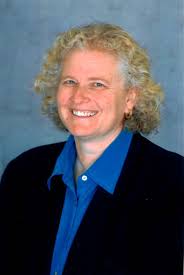
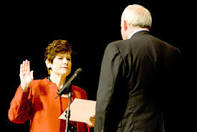
Judge Paula S. Rosenstein

Read More at Weightier Matter Carpe-Dicta, “San Diego Judicial Election 2014 Opens With Controversy as Sitting Judges Descend on Talented Challenger’s Campaign Support Base”
 Katy's Exposure
“Judge Rosenstein is a past president of San Diego Democrats for Equality (then the San Diego Democratic Club). (As a judge, however, she is not permitted to maintain an affiliation with a partisan organization.) I have not personally discussed this matter with her although she has communicated with at least one other Board member.
We are a grassroots organization. Unlike many other political groups, our membership, not the Board, makes endorsement decisions. I suspect that advocates of both sides of this matter will make their voices heard at our April meeting. As a democratic organization, that’s as it should be.
Doug Case, President
San Diego Democrats for Equality”