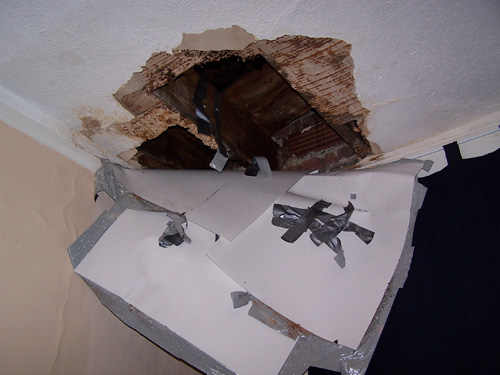
Mold forces apartment tenants to vacate homes – owner John Bosley was ordered hire a professional industrial hygienist to inspect the units for mold

National Apartment Association Tells Its Members MOLD CAUSES DEATH; Tells Courts It Doesn’t With The Help of US Chamber and UCLA

Thank You National Apartment Association. I will do my best to get this very important information out ASAP to numerous owners, investors, huge property management companies (e.g., Riverstone Residential), attorneys, and judges, AND, of course, to the MANY people who are currently living in MOLD-INFESTED APARTMENT COMPLEXES right now! katy

The Town of Mountain Village is concerned about the health of these residents living in a mold infested apartment complex.

In Baton Rouge, LA things are very different regarding toxic mold infested Jefferson lakes Apartments. Documented mold inspection reports in 2007 were apparently not considered very important by the sellers, purchasers, Riverstone Residential, the Louisiana Housing Finance Agency, and the State of Louisiana when all were involved in a transaction concerning this complex.

The owners, Riverstone Residential, the LHFA, and The State of LA all know of this severe mold infestation (our report in 2005, the report for the sale in 2007, visual mold growth, (not to mention the odors) and many other complaints, yet people are still allowed to move into these highly toxic apartments and it seems they have no plans to change that. Links below. katy 

May 30, 2010

Tenants in Mountain Village’s Telluride Apartment complex are being ordered to vacate their homes within the next four weeks because of mold.

Twenty four units have dangerous spore counts and six remaining units will stay occupied through the summer, and then vacated in the fall.

“Mold is everywhere,” said Mountain Village Building Official Chad Root. “No one should be in this sort of situation.”

In March, Telluride Apartments owner John Bosley was ordered by the Town of Mountain Village to pull a building permit and hire a professional industrial hygienist to inspect the units for mold and make a recommendation.

That hygienist is Plateau Engineering’s Chris Lakin. According to Lakin’s report, 24 apartment units should be vacated immediately with the other six units inhabitable, but only until the fall, due to excessive mold. Based on the information within the commissioned report,

Bosley informed the town last week that he intends to vacate the entire apartment complex within two-to-four weeks due to his concerns regarding tenants’ health and safety.

The Mountain Village Building Department has issued several Notice and Orders within the past two years for substandard conditions at Telluride Apartments. These conditions have deemed the apartment complex a dangerous building per the Uniform Code for the Abatement of Dangerous Buildings.

The last Notice and Order was given in March 2010, and outlined several code violations including the requirement to hire a licensed Colorado industrial hygienist to confirm that occupied units in Telluride Apartments prove to be safe. As previously stated, the hygienist’s findings showed mold levels high enough to affect one’s health.

The future of the complex is still in question.

“I will probably end up condemning it because it’s not habitable,” Root said. “In order to crack the problem right now, it would either have to be demolished or completely renovated.”

Editor’s note: Watch next week’s Daily Planet for an in-depth look at this issue.

telluridenews.com

Information about Riverstone Residential, the Louisiana Housing Finance Agency, and the owners of Jefferson Lakes Apartments in Baton Rouge, Louisiana allowing tenants to be exposed to extreme amounts of toxins from molds by intentionally concealing evidence

Irrefutable evidence indicates that Riverstone Residential, Guarantee Service Team of Professionals, & plaintiffs’ attorney, J Arthur Smith III, must have agreed to exclude evidence that would have shown the owners of Jefferson Lakes Apartments & Riverstone Residential had knowledge of the severe MOLD INFESTATION at the complex before we moved in

Riverstone Residential Litigation

Mold Inspection Reports

Photos of Mold in Apartment

Attorney Malpractice

TRUTH OUT Sharon Kramer Letter To Andrew Saxon MOLD ISSUE

Action Group Asks U of CA To Take Name Off US Chamber Medico-Legal Publication

Regents of the University of California acknowledge imprimatur on 2003 US Chamber of Commerce medico-legal publication

New Action Committee – ACHEMMIC- Urges Transparency in EPA Policy Over Mold & Microbial Contaminants

Truth About Mold – the most up to date, accurate, and reliable information on Toxic Mold

FEMA Using US Chamber Fraud in Katrina Trailer Litigation; EPA, GAO & Both Isle$ of Congre$$ Turn Blind Eye$

Sociological Issues Relating to Mold: The Mold Wars

Certain Corporate and Government Interests Have Spent Huge Sums of Money and Resources DENYING THE TRUTH about the HEALTH EFFECTS of TOXIC MOLD

Political Action Committee – National Apartment Association (NAA) files Amicus Brief in mold case (two infant deaths in mold filled apt – Wasatch Prop Mgmt) citing US Chamber/ACOEM ‘litigation defense report’ to disclaim health effects of indoor mold & limit financial risk for industry

“Changes in construction methods have caused US buildings to become perfect petri dishes for mold and bacteria to flourish when water is added. Instead of warning the public and teaching physicians that the buildings were causing illness; in 2003 the US Chamber of Commerce Institute for Legal Reform, a think-tank, and a workers comp physician trade organization mass marketed an unscientific nonsequitor to the courts to disclaim the adverse health effects to stave off liability for financial stakeholders of moldy buildings. Although publicly exposed many times over the years, the deceit lingers in US courts to this very day.” Sharon Noonan Kramer

Posted in Environmental Health Threats, Health - Medical - Science, J Arthur Smith III, Louisiana Housing Finance Agency, Mold and Politics, Mold Litigation, Riverstone Residential, Tenants Rights, Toxic Mold | Tagged , , , , , , , , , , , , , , , , , | Leave a comment

Environmental Lawyers.com – My daughter was exposed to toxic black mold in her college dorm room. Shes been feeling sick for weeks now. What can I do?

National Apartment Association Tells Its Members MOLD CAUSES DEATH; Tells Courts It Doesn’t With The Help of US Chamber and UCLA

Thank You National Apartment Association. I will do my best to get this very important information out ASAP to numerous owners, investors, huge property management companies (e.g., Riverstone Residential), attorneys, and judges, AND, of course, to the MANY people who are currently living in MOLD-INFESTED APARTMENT COMPLEXES right now! katy

My daughter began feeling a bit nauseated and dizzy about 10 days after returning to her California dorm room following the long summer break. When cleaning the other day, she moved the provided bed away from the wall and discovered a large patch of toxic black mold. Can she sue the university for her health problems and its failure to find that health hazard before allowing her to return to that room?

Your daughter will need to speak to a personal injury attorney who has specialized in pursuing toxic black mold cases. The university will probably have to answer for the mold your daughter found since they should have discovered it while preparing the rooms for the return of all the students.

Give your daughter advice about selecting the best attorney she can in her area. You might want to fly out and help her make that choice. This type of claim can involve some painstaking research into whether or not the school is handling its maintenance chores properly and whether or not there were any floods in the building over the summer.

If your daughter hasn’t already moved out of that dorm, be sure to ask her attorney to speak with the university on her behalf so she can readily obtain a healthy university (or off-campus) room or apartment. Her lawyer should also know where to send her for the best treatment of her toxic black mold-related illness.

environmentallawyers.com

TRUTH OUT Sharon Kramer Letter To Andrew Saxon MOLD ISSUE

Action Group Asks U of CA To Take Name Off US Chamber Medico-Legal Publication

Regents of the University of California acknowledge imprimatur on 2003 US Chamber of Commerce medico-legal publication

New Action Committee – ACHEMMIC- Urges Transparency in EPA Policy Over Mold & Microbial Contaminants

Truth About Mold – the most up to date, accurate, and reliable information on Toxic Mold

FEMA Using US Chamber Fraud in Katrina Trailer Litigation; EPA, GAO & Both Isle$ of Congre$$ Turn Blind Eye$

Sociological Issues Relating to Mold: The Mold Wars

Certain Corporate and Government Interests Have Spent Huge Sums of Money and Resources DENYING THE TRUTH about the HEALTH EFFECTS of TOXIC MOLD

Political Action Committee – National Apartment Association (NAA) files Amicus Brief in mold case (two infant deaths in mold filled apt – Wasatch Prop Mgmt) citing US Chamber/ACOEM ‘litigation defense report’ to disclaim health effects of indoor mold & limit financial risk for industry

“Changes in construction methods have caused US buildings to become perfect petri dishes for mold and bacteria to flourish when water is added. Instead of warning the public and teaching physicians that the buildings were causing illness; in 2003 the US Chamber of Commerce Institute for Legal Reform, a think-tank, and a workers comp physician trade organization mass marketed an unscientific nonsequitor to the courts to disclaim the adverse health effects to stave off liability for financial stakeholders of moldy buildings. Although publicly exposed many times over the years, the deceit lingers in US courts to this very day.” Sharon Noonan Kramer

Information on Riverstone Residential, the Louisiana Housing Finance Agency, and the owners of Toxic Mold Infested Jefferson Lakes Apartments in Baton Rouge, Louisiana continuing to allow tenants to be exposed to extreme amounts of mold toxins

Irrefutable evidence indicates that Riverstone Residential, Guarantee Service Team of Professionals, & plaintiffs’ attorney, J Arthur Smith III, must have agreed to exclude evidence that would have shown the owners of Jefferson Lakes Apartments & Riverstone Residential had knowledge of the severe MOLD INFESTATION at the complex before we moved in

Toxic Mold Infested Jefferson Lakes Apartments managed by Riverstone Residential

Riverstone Residential Litigation

Mold Inspection Reports

Photos of Mold in Apartment

Attorney Malpractice
Posted in Environmental Health Threats, Health - Medical - Science, Mold Litigation, Tenants Rights, Toxic Mold | Tagged , , , , , , , , , , , | Leave a comment

Henry McMaster: Slumlord Millionaire? McMaster’s Management of Rental Properties Questioned

BY COREY HUTCHINS

UPDATE: Judge Strikes Down McMaster’s Rental Property Appeal

After eight years of a quirky Republican governor who has been criticized for being irresponsible in both his private behavior and his management of state government, Henry McMaster says he is running to restore responsibility to the Palmetto State’s governor’s office.

But while many things are known about McMaster — he’s held some kind of office in the Republican galaxy here for decades — not much has been explored when it comes to his management of the dozen rental properties he’s been handling with his wife for several years in the leafy college neighborhood surrounding the University of South Carolina.

The current state attorney general and former chairman of the South Carolina Republican Party, McMaster will face off in the GOP primary elections June 8. He battles Lt. Gov. Andre Bauer, Lexington state Rep. Nikki Haley and Upstate Congressman Gresham Barrett for the party’s nomination. In most early polling, McMaster enjoyed a consistent frontrunner position in the race to replace term-limited Republican Gov. Mark Sanford. More recent polls show him trailing Haley.

For about 10 years, the McMasters have been snapping up low-rent, near-campus college housing in the University Hill neighborhood and renting out rooms to hordes of howling, booze-soaked, bong-ripping college kids. In that time, their management style has rubbed up against neighbors, tenants and city officials and has led to some pretty serious friction in the ‘hood. The city has issued numerous citations against properties owned by the McMasters, at least one of which is still working its way through the litigation process.

They have also had to pay several thousand dollars in tax penalties for late payment of property taxes over the years. Between 1997 and 2002, they paid about $16,000 in penalties.

Right now, they are “current on all their taxes and have been for years,” according to McMaster’s gubernatorial campaign spokesman Rob Godfrey. The Richland County assessor’s office backs up Godfrey’s statement.

All in all, the McMasters own 12 houses in Richland County, according to the county treasurer’s office. Henry McMaster’s wife Peggy owns most of the properties but Henry has acted as the de facto property manager, bill collector, maintenance man and all around Mr. Fix-it, even throughout his bid for the governorship, according to several current tenants.

Six of the houses are on Greene Street between USC and Five Points. They also own two houses on Senate Street; one on Marion Street; a historic residence on Gibbes Court across from Capstone Hall; a large brick house at the corner of Henderson and Blossom streets; and a house on Gregg Street. All of them are rental properties, except their family’s main residence, a stately mansion on Senate Street.

Most of the buildings they own are divided into several units, but because the McMasters often ignore the city’s occupancy laws, it is unclear how many tenants they currently have.
Rolling up in a blue, late-model Suburban or black sedan and asking renters to take liquor bottles out of window frames, dropping by to spruce up the landscaping or playing mediator between renters and his wife, Henry McMaster’s presence has been legendary among college-aged University Hill neighborhood residents for years.

For one of them, a 23-year-old recent USC sociology graduate named Anton Briton, who lives in the Charles Edward building on Gibbes Court, seeing a man running for governor working around his apartment with a tie on and sleeves rolled up has been pretty entertaining.

“He comes by most of the time,” Briton says one evening in May while on his porch overlooking Barnwell Street. “Does some manual stuff on the house or whatever.”

Briton’s relationship with his landlord is all good, he says. There have been some things that needed fixing that took a long time to take care of, but other than that he’s enjoyed a solid living situation. He’s certainly heard other tenants in the building complain, though.

“It’s hard to think about [McMaster] taking the governorship and leading people and then not being able to take care of his tenants,” Briton says. “We’ll see how that works.”

Briton might be in the minority when it comes to tenants of the McMasters who view their landlords in such positive light. Free Times spoke with nearly two dozen current and former tenants for this story. Many of them didn’t want their names to appear in print out of fear of retribution. In addition to being their landlord, McMaster is the state’s top cop, after all.

“He’s just too scary,” one tenant said.

Slumlord Millionaire?

The word “slumlord” gets thrown around an awful lot when you talk to college kids who rent cheap apartments in neighborhoods where broken bottles, crushed beer cans and plastic cups litter the sidewalks throughout the semester. It only takes a few years of cycling through such an undisciplined roster of hard-partying young tenants before the properties start sporting the all-too-familiar signs of the undergrad Animal House: lumpy floors, broken windows, sagging ceilings and the permeating smell of stale keg beer and lingering marijuana smoke.

If only those walls could talk.

McMaster’s gubernatorial spokesman sums it up pretty well in defending his boss from the charges of his tenants.

“When you’re renting to college students, it always seems to be the landlord’s fault,” he says.

True enough.

Regardless, fairly or unfairly, several current and former tenants say they consider McMaster a slumlord. And the complaints go beyond standard gripes about waiting too long to have an AC unit or refrigerator fixed.

In discussing their living situations, tenants complain of bad plumbing; broken windows; awkward confrontations with Henry; windows painted shut; bats, insects; mice; no central heating; non-working appliances; poor insulation; potentially dangerous gas leaks; rude text messages from Peggy; unjustified rent hikes; water pouring from light fixtures; being forced out of apartments; holes in ceilings, doors and floors; mistreatment of employees; discrimination; severe water damage; mold; breach of contract and the withholding of security deposits.

Even when trying to defend them on a personality basis, one tenant who Free Times recently spoke with in the living room of a McMaster-owned property couldn’t resist taking a jab at how they run their ship.

“They’re horrible landlords, but nice people,” she said.

City officials have been careful about how they address the relationship between the McMasters and the city. 

On one balmy spring morning in late May, a three-person city code-enforcement team was checking up on one McMaster-owned Greene Street apartment building because a tenant had complained of the living conditions there. No violations were issued. Apparently, the McMasters had been tipped off the day before and sent someone to come in and fix the place up. They nailed a board across the bottom of a door and painted it, among other things, said a tenant.

According to Marc Mylott, the city’s director of zoning and planning, that particular house is in Henry’s name, not his wife’s. Mylott says it is standard procedure to alert a property owner or manager whenever the city plans to inspect the interior of one of their houses if a tenant complains.

A sophomore USC student named Emrys McMahon is one of eight students living in that house. He and his roommates say the McMasters promised them a washer and dryer and to re-do the floors before they moved in. The work was never done, McMahon says. During the coldest part of January, the unit’s central heating broke down and the tenants were given two space heaters, one of which didn’t turn on. McMahon slept at his girlfriend’s house. He sums up his feelings about the man who owns the house he rents bluntly.

“He’s a slumlord,” McMahon says. “He has a bunch of sh#!ty places that he doesn’t care about. He’s a slumlord.”

In a way though, McMahon and his roommates also feel a little bad for Henry. Three of them were there with Henry and his wife when it was time to take care of the lease. It was truly an awkward situation, they say.

“Peggy just, like, bosses Henry around,” McMahon says. “She’s just like a b#!ch to him all the time. She just yells at him.”

McMahon says that dynamic between Henry and his wife is “the scariest part,” more so even than what he sees as broken promises over upgrades and repairs.

Gesturing with his foot at a rotting, crumbling baseboard in his apartment, McMahon says he doesn’t have any political axe to grind against Henry. He’s merely disappointed in the way a man he knows is running for governor has treated him and his roommates as tenants.

To the McMasters, “we’re just college kids,” McMahon says. His roommates all look up from their video games and nod in agreement. They’re all moving out next month.
 
How Can He Fix the Budget 
If He Can’t Fix My Heat?

It’s a common theme Free Times heard among tenants: If McMaster treats the state the way he treats his properties and tenants, he would, in college-kid Greek speak, “f#!k it up.”

In conversations with current and past tenants who rented from the McMasters, the most widely observed complaint has been a general lack of attention to the properties or to the tenants. Almost every tenant Free Times spoke with complained of a major problem when it came to trying to get their landlords to fix something.

Many tenants also felt the McMasters treated their longtime maintenance man, known to tenants as Jay, or Mr. Jay, badly. Several current and former tenants believe Jay works long hours for no pay, only food and housing.

McMaster spokesman Godfrey didn’t respond to questions about Jay’s employment and Jay ignored an attempt by Free Times to speak with him.

He can often be seen humping it up and down the steep hills of Barnwell or Henderson streets, heading from one property to another. He used to walk the McMasters’ famed bulldog dog in the mornings when it was still alive.

“We got the idea that Jay was completely mistreated,” says a former tenant who lived in a McMaster-owned property on Greene Street in 2006.

In 2004, Peggy told a tenant that Jay had fallen from a ladder and hurt his leg. “He’s no use to me now,” the tenant recalls her saying.

Maybe the McMasters are just overworked. Henry, who keeps a full-time job as the state attorney general, could often be seen in the middle of the day in a shirt and tie hammering away at pieces of wood or hauling paints cans around the open garage they use as a hub for their properties at the corner of Greene and Henderson streets.

It’s a small operation — Peggy, Henry, their son Henry Jr. who recently graduated from USC, Mr. Jay and a handful of landscaping contractors — not a big management company.

“I think they just bit off more than they could chew,” one current tenant says.

The Constitutional Landlord

The problems between the McMasters and their tenants aren’t the only troubles they’ve had in the neighborhood. As landlords, they’ve found themselves in disputes with the city over a number of violations that range from over-occupancy to citations for tenants not bringing in roll carts on time. While many of those confrontations have quietly swirled in the bureaucratic backwaters of City Hall, a current zoning violation has remained in limbo in front of a circuit court judge since 2007 that paints a telling, detailed portrait of the McMaster-as-landlord narrative.

As it turns out, when the attorney general of South Carolina isn’t challenging the constitutionality of national health care reform on the TV talk shows, he’s down at the local zoning board defending his wife’s rental properties on the same grounds.

Acting as his wife’s agent and counsel when she caught a citation in a house they own, McMaster testified in front of the board on her behalf on Sept. 25, 2007.

Free Times first reported on the case on May 5 in the story, “McMaster Blasts Local Zoning Ordinance as Unconstitutional.”

At issue is whether the McMasters are illegally housing too many occupants in a four-bedroom home adjacent to campus.

In his testimony in front of the city zoning board, McMaster evoked the U.S. constitution at least 15 times in response to the city’s complaint. The board upheld the zoning administrator’s decision.

The McMasters are appealing the case. A separate attorney is now handling it.
Inside the court papers of the pending litigation, a rich, literary narrative details how some University Hill residents and city officials have perceived the McMasters as local landlords over the years.

In 2003, a neighbor sent a letter to the city and to the McMasters that outlined his concerns about their management of the property in question and oversight of their tenants.

“Two totally neglected dogs ran free, soiling the neighbor’s yards, or were tied for hours without proper attention,” the neighbor wrote. “Worse still, during their many parties, the humans also routinely used the space between our brick wall and your house as a urinal, and sometimes even as a commode.”

One tenant, the neighbor wrote, pitched a cigarette butt over a brick wall that burned through the top of his convertible.

“We will not tolerate the kind of disrespectful behavior that was demonstrated by your last tenants, and … we will hold you personally responsible for any such conduct,” he wrote.

The neighbor, a local doctor who has since moved out of state, ended the letter by saying he’d sent copies to “many other neighbors who have suffered silently … this long year.”

Only three unrelated people are allowed to live together in the house in question, according to city zoning officials.

According to a memo by attorneys for the city, the McMasters question the constitutionality of certain provisions of the city ordinance. Specifically, the lawyers wrote, the McMasters challenge the definition of the word “family.” They argue that limiting the number of people living in a dwelling not related by blood or marriage “works unconstitutional harm on property owners and tenants.”

“In college towns,” the lawyers wrote in defense of the city, “it is not unusual to find friction between property owners, like McMaster, who wish to maximize their rental incomes by packing housing with flocks of students” and other property owners.

However, the lawyers continue, “The public’s interest in protecting the sanctity and peace of single-family areas plainly overrides the self-interest of landlords or property owners attempting to run mini-dorms.”

McMaster considers the case a “fundamental property rights issue,” says his spokesman Godfrey.

“If four female college students next door are a threat to property values,” his spokesman continues, “then the whole university-area real estate market is doomed for eternity.”

Hypocrisy in the ‘Hood

The whole spectacle regarding the McMasters and their lawsuit makes University Hill resident Kathryn Fenner bristle. She’s the vice president of the University Hill Neighborhood Association and serves on the city’s code-enforcement task force, a blue-ribbon committee that was set up to make recommendations on city ordinances.

Fenner has observed Peggy McMaster for years — Peggy sits on the board of the neighborhood association — and Fenner’s house is surrounded by five properties the McMasters own. 

Sitting in her modern, brightly colored, sun-lit living room with two large dogs playing around her, Fenner launches into an all-out assault on the way Henry and Peggy McMaster have handled their role as local landlords in the neighborhood. To her, their actions have been offensive.

The McMasters, she says, have a don’t-ask-don’t-tell policy with their tenants regarding the city’s over-occupancy laws. As an attorney, she finds it laughable that Henry is appealing a zoning ordinance because she thinks he’s clearly ignoring precedent of the law. 

But that’s the thing with the McMasters, Fenner says: They have a sense of entitlement that allows them to act like complete hypocrites, apparently without even realizing they’re doing it.

“I think that if you are supposed to be the chief law enforcement officer in the state, you probably shouldn’t be nodding and winking at lawbreaking,” she says.

She’s speaking specifically about occupancy laws, which several tenants admitted to Free Times they were breaking but said they had a wink-and-nod agreement with their landlords about doing.

Henry has fought hard against the city to keep on doing what he’s doing and several tenants are happy their landlords are going to bat for them — with good reason. The McMasters enjoy more rent money coming in and renters end up paying less individually.

But it’s the way Henry has been doing it that bothers Fenner so much.

In testimony he gave on his wife’s behalf to the zoning board in 2007, McMaster said, “The constitution says if you’re a single housekeeping unit you may not be the traditional family, but you’re a family just the same and you’re not hurting anything any more than a traditional family.”

That really bothers Fenner, a self-described Democrat, who took umbrage to McMaster’s staunch, headline-grabbing opposition to same-sex unions when a constitutional amendment to ban state recognition of them was put on the ballot in 2006.

“What offends me chiefly is the hypocrisy,” Fenner says. “The hypocrisy that we’re going to protect non-traditional families when we can make a buck out of it and we’re going to pillory non-traditional families when we can make political bucks out of it.”

One of the jobs the city’s code-enforcement team was tasked with was developing a proposal to help crack down on absentee landlords, in part by making them apply for a city business license. Fenner says Henry McMaster fought hard to keep it from happening and the proposal never came to fruition.

McMaster said he believed the proposed ordinance would be intrusive.

The city has since come up with a watered-down code enforcement effort.

Fenner says the hypocrisy she’s seen from the McMasters in their capacity as landlords in her neighborhood reminds her of someone else.

“It’s like Mark Sanford in the front of the plane and his employee in the back of the plane going to Argentina,” she says. “It’s like Mark Sanford staying in luxury hotels while he makes his underlings double up. It’s that same kind of hypocrisy that really bothers me … He’s wrapping himself in the flag, in his family and the Bible. It’s just not real.”

Free Times emailed and called other current and past higher-ups in the neighborhood association, but didn’t hear back.

Fenner says she isn’t surprised. It goes with the Southern culture of speaking ill about your neighbors behind the white fences and wisteria but not out in public. That, of course, would be ugly.

Even powerful Democratic attorneys, she says, can be what she calls “weenies” when it comes to speaking out about the man who might be governor.

“But,” she says, “that’s ‘ole Henry for you.” 

free-times.com

TRUTH OUT Sharon Kramer Letter To Andrew Saxon MOLD ISSUE

Action Group Asks U of CA To Take Name Off US Chamber Medico-Legal Publication

Regents of the University of California acknowledge imprimatur on 2003 US Chamber of Commerce medico-legal publication

National Apartment Association Tells Its Members MOLD CAUSES DEATH; Tells Courts It Doesn’t With The Help of US Chamber and UCLA

New Action Committee – ACHEMMIC- Urges Transparency in EPA Policy Over Mold & Microbial Contaminants

Truth About Mold – the most up to date, accurate, and reliable information on Toxic Mold

FEMA Using US Chamber Fraud in Katrina Trailer Litigation; EPA, GAO & Both Isle$ of Congre$$ Turn Blind Eye$

Sociological Issues Relating to Mold: The Mold Wars

Certain Corporate and Government Interests Have Spent Huge Sums of Money and Resources DENYING THE TRUTH about the HEALTH EFFECTS of TOXIC MOLD

Political Action Committee – National Apartment Association (NAA) files Amicus Brief in mold case (two infant deaths in mold filled apt – Wasatch Prop Mgmt) citing US Chamber/ACOEM ‘litigation defense report’ to disclaim health effects of indoor mold & limit financial risk for industry

“Changes in construction methods have caused US buildings to become perfect petri dishes for mold and bacteria to flourish when water is added. Instead of warning the public and teaching physicians that the buildings were causing illness; in 2003 the US Chamber of Commerce Institute for Legal Reform, a think-tank, and a workers comp physician trade organization mass marketed an unscientific nonsequitor to the courts to disclaim the adverse health effects to stave off liability for financial stakeholders of moldy buildings. Although publicly exposed many times over the years, the deceit lingers in US courts to this very day.” Sharon Noonan Kramer

Information on Riverstone Residential, the Louisiana Housing Finance Agency, and the owners of Toxic Mold Infested Jefferson Lakes Apartments in Baton Rouge, Louisiana continuing to allow tenants to be exposed to extreme amounts of mold toxins

Irrefutable evidence indicates that Riverstone Residential, Guarantee Service Team of Professionals, & plaintiffs’ attorney, J Arthur Smith III, must have agreed to exclude evidence that would have shown the owners of Jefferson Lakes Apartments & Riverstone Residential had knowledge of the severe MOLD INFESTATION at the complex before we moved in

Toxic Mold Infested Jefferson Lakes Apartments managed by Riverstone Residential

Riverstone Residential Litigation

Mold Inspection Reports

Photos of Mold in Apartment

Attorney Malpractice

Posted in Politics, Tenants Rights | Tagged , , , , | Leave a comment

Action Group Asks University of California Regents To Take Name Off US Chamber Medico-Legal Mold Publication

Gov. Arnold Schwarzenegger, President of the Regents of the University of California, May 18th, 2010 before the California Chamber of Commerce:

“Well, I think it is – you know, Workers’ Compensation was a perfect example, because we did the reforms that gave back to the private sector $50 billion-plus in these last few years since we have had Workers’ Comp reform….. Well, I have sniffing dogs over there that sniff out job killers. (Laughter) And they sniff from the time they start passing bills upstairs, or to debate the bills upstairs, they’re already sniffing. And then they come to me and they tell me about all of those job killers. And then I sit down and I look at them and I say, “Hasta la vista, baby.” (Laughter) That’s exactly what we do, because that’s the last thing we need in California.”
  
Dear All,
  
The following  is a letter sent to the UC by scientists, physicians & citizens who are concerned for the health and safety of their fellow man. Other than the actual letter itself, the following statements are my own.   Sharon Kramer
 
ACHEMMIC – ACTION COMMITTEE ON THE HEALTH EFFECTS OF MOLD, MICROBES AND INDOOR CONTAMINANTS
  
Re: UC name & inferred scientific endorsement of
  
Arnold Schwarzenegger        
President of Regents, UC           
  
Russell Gould                              
Chairman of Regents,                                  
  
Mark G. Yudof
President, UC
 
RE: The University of California’s name is included in implied endorsement of a 2003 U.S. Chamber of Commerce publication currently referenced in a 2010 legal proceeding.
  
Honorable Governor Schwarzenegger, Chairman Gould and President Yudof,
  
     The University of California is world renowned for its role in promoting and protecting public health by its outstanding physician education and the integrity of its medical teaching facilities.
    
      The Action Committee on the Health Effects of Mold, Microbes and Indoor Contaminants (ACHEMMIC) is comprised of volunteer physicians, scientists, researchers, indoor air quality experts, industrial hygienists, building engineers, teachers, advocates and others who work cohesively to promote integrity in U.S. public health policy with regard to the adverse health effects of mold, microbes and indoor contaminants that are frequently found in water damaged buildings.(1)
  
ACHEMMIC has the following concerns:
  
1. The University of California name is apparently being used as an implied signatory of the2003 U.S. Chamber of Commerce publication.(2)
  
2. It appears that the name of the University of California is being used as an  implied scientific endorsement of the contents of said U.S. Chamber publication.(3)
  
3. It is our understanding that it is a violation of the California Constitution, Article IX, Section 9(f) for the University of California name to be used to promote a document of political and sectarian influence.
  
4. The contents of the document are contrary to recent scientific findings by national and international experts, including some within the State of California.
   
     The people who have been harmed by contaminants in water-damaged buildings and erroneous public health policy over the mold issue come from all walks of life. They are white collar workers, blue collar workers, retirees, veterans, teachers, business owners, homeowners, tenants, children, parents and grandparents. They work or are schooled in newly constructed and older buildings. They reside in all parts of the United States and around the globe. They live in owned, mortgaged, or rented houses and apartments- large and small, new and old, grand and humble. Some live in military housing, trailers or on reservations. Those affected by this issue are affluent, poor and middle class. They are able-bodied taxpayers and disabled citizens. They are the insured and uninsured by health, workers compensation and property casualty insurance companies. They represent the melting pot of citizens that make up this great country of ours–the United States of America.
  
     They depend on integrity in medical science within U.S. medical teaching universities and within the courts to protect their health and safety and the health and safety of their families.
    
      We appreciate the University of California Regents’ prompt attention to this matter with broad implications impacting mold toxic torts and public health policy as a whole if left unaddressed by the Regents.
    
     For your convenience, we have attached our membership roster and documents of specific concern. Should ACHEMMIC be of further assistance to the Regents of the U.C. over this matter, please do not hesitate to ask.
                                                                                 
                            Respectfully yours,
                            Mary Mulvey Jacobson
                            ACHEMMIC Public Relations
                            
cc: Cheryl Vacca Vice President Ethics & Compliance, Regents of the U.C.
      
Charles Robinson Vice President General Counsel, Regents of the U.C.
       
U.S. Congressman Henry Waxman, California 30th District and encompassing 
UCLA
  
Enclosures: 3
  
1 (2010) Membership Roster for ACHEMMIC
2 (2003) Listed authors and conclusion of “A Scientific View of the Health Effects of
    Mold” U.S. Chamber ILR in relevant part
3 (2009) Amicus Curiae Brief, National Apartment Association, citing “A Scientific
View,” in relevant part
  
Dear All,
  
This situation is a National Disgrace that has been allowed to continue for far too long to the detriment of the health and safety of the American worker & the American public – while financially benefiting commerce and while our elected leaders turn a blind eye.  
  
That math could be applied to a single rodent study by well connected, professional witnesses for the defense in mold litigation; and from this, the CDC, US medical associations, US medical teaching universities, and the US Chamber of Commerce could mass market the false scientific concept to the courts that it is proven people are not injured by the toxic components of molds that are found in water damaged buildings is an Absurd unscientific and unethical concept currently pervading US health policy for the purpose of aiding industry to deny their responsibility to the sick and injured.
   
Not only is it harming the health and safety of the American public, it is a bellwether indication of the erosion of Democracy that our country is founded upon. 
  
What happened to “We, the People” when determining what laws and common decency govern and define who we are as a society?  When did it change to “They, the Corporations“?
  
Posted in Environmental Health Threats, Health - Medical - Science, Mold and Politics, Mold Litigation, Politics, Toxic Mold, US Chamber of Commerce | Tagged , , , , , , , , | Leave a comment

THE MONTH OF MAY IS TOXIC INJURY AWARENESS AND EDUCATION

Below is a very important Press Release, about the adverse health effects of consumers products and environmental toxins. May being precisely the month of Toxic Injury Awareness and Education Month, it is essential that you read very carefully all the information in the Press release from the “MCS” Beacon of Hope.

2010 Press Release

May is Toxic Injury Awareness and Education month

Have you been poisoned by consumer product or environmental toxins? Many people have been and don’t know it.

People around the globe are being exposed to air pollution, water contamination, overuse/misuse of pesticides and toxic mold, etc. that manifest in seemingly spontaneous, severe and disabling conditions. Research shows that all cancers, neuro-degenerative diseases, heart attacks and strokes and other chronic health conditions are caused or exacerbated by consumer product or environmental toxins. They are Toxic Injuries. Toxic exposure/injury is a very serious issue of pandemic proportions. Toxic Injury (T.I.) is unequivocally physically, and financially devastating to the people, the environment and the economy.

Toxic Injury affects the respiratory, central nervous, immune, musculoskeletal, porphyrin, metabolism and hormone systems. It can cause abnormal egg, sperm, genital deformity or cancers such as prostate, breast, leukemia, brain and others. Toxic Injury is often characterized by medical intolerance to minute amounts of air pollution, petrochemicals, mold and other toxins found in our homes, schools, places of employment, public areas, etc. Toxins are in our everyday products and environment. It can be caused by acute or chronic exposure. Toxic Injury is non-partisan it transcends the boundaries of race, color, creed, economic level, social and educational status, age, gender, urban or rural dweller, blue or white collar, or sexual preference. It is, tongue in cheek, an equal opportunity disability. Toxic Injury is a chronic debilitating condition causing serious financial, employment, learning, housing, health, social and other consequences . . . and it is the fastest growing segment of the disabled population.

“According to the CDC, 133 million people in the U.S.—almost half of all Americans—are now living with these and other chronic diseases and conditions, which now account for 70% of deaths and 75% of U.S. health care costs.” Safer Chemicals, Healthy families; Case for Reforming the TSCA.

Independent studies show that 15 to 44% of tested populations have chemical hypersensitivity, another form of toxic injury. Recognizing that there is some overlap , we can conservatively estimate 123,600,000 (@ 40%) of the

U.S. population (over 309,000,000), and a shocking 272,720,000 of the world population (estimated to be over 6,818,000,000) that are toxically injured or disabled. Isn’t it past time that we addressed this pandemic problem?

Through awareness and education people everywhere can gain lifesaving knowledge and be better able to make informed decisions, which will help stop the illnesses and disabilities before they happen. For every choice we make ~ there is a safer choice. Please, help stop the poisoning, make a positive difference, one choice at a time. Example:

We can all practice good stewardship simply by buying or planting and consuming foods grown and raised without the use of pesticides, chemicals, growth hormones, additives, etc That one simple step will have a positive domino effect on your health and well being and also on our environment and natural resources. We can switch to non-fragranced personal and cleaning products. We can use glass instead of plastic (petroleum product leaching can cause severe and even life threatening illnesses.) We can teach our children to recycle and to use, then reuse paper instead of plastic bags (this simple step will cut down on the burden on our landfills, benefit our environment and we will all save money). Let´s learn to recycle more and waste less.

Unfortunately, most of those living with Toxic Injury/disabilities are homebound due to the seriousness of our reactions to added exposures. It saddens ~ no, it makes us fighting mad, to hear the following, and realize that little to no preventative or remedial action has been taken:

There are millions of toxins presently in use today ~ only a handful has ever been tested for safety or human consumption or use. EPA, CDC

there is a corresponding rise in birth defects & infant mortality to the increase in consumer product toxins and mold.

Dr. John Green a specialist in neuro-degenerative diseases in children says, “6 out of 10 children suffer from a neurologic condition due to (consumer product) toxins.”

Other specialists have repeatedly linked all childhood cancers to consumer product and environmental toxins. The same is true for birth defects, as studies show adult body burden of toxins are transferred to the fetus and have been measured in umbilical chord blood. Those facts are horrifying enough, but according to CDC 95% of the adult population have blood serum levels of BPA that cause changes on 200 genes.

More info at: toxicinjury.org

Sincerely, your friends in Hope & Health,

Peggy, Julia, Jennifer and John

Peggy Troiano, Founder and Program Manager, Florida

Julia Williams, Executive Director, Florida

Jennifer McKinnis, Accommodations Advocate & Pacific NW Regional Representative

John McBride, New Jersey State Representative & Toxic Mold Activist/Consultant

Applied Knowledge is Power ~ Prevention is Key. . . Peggy Troiano

Thank you Peggy Troiano, Julia Williams, Jennifer Mc.Kinnis, and John McBride, for your hard work and dedication to alert the public about the health dangers of consumers products and environmental toxins.

©2010 Christiane Tourtet.

americanchronicle.com

TRUTH OUT Sharon Kramer Letter To Andrew Saxon MOLD ISSUE

Regents of the University of California acknowledge imprimatur on 2003 US Chamber of Commerce medico-legal publication

National Apartment Association Tells Its Members MOLD CAUSES DEATH; Tells Courts It Doesn’t With The Help of US Chamber and UCLA

New Action Committee – ACHEMMIC- Urges Transparency in EPA Policy Over Mold & Microbial Contaminants

Truth About Mold – the most up to date, accurate, and reliable information on Toxic Mold

FEMA Using US Chamber Fraud in Katrina Trailer Litigation; EPA, GAO & Both Isle$ of Congre$$ Turn Blind Eye$

Sociological Issues Relating to Mold: The Mold Wars

Certain Corporate and Government Interests Have Spent Huge Sums of Money and Resources DENYING THE TRUTH about the HEALTH EFFECTS of TOXIC MOLD

Political Action Committee – National Apartment Association (NAA) files Amicus Brief in mold case (two infant deaths in mold filled apt – Wasatch Prop Mgmt) citing US Chamber/ACOEM ‘litigation defense report’ to disclaim health effects of indoor mold & limit financial risk for industry

“Changes in construction methods have caused US buildings to become perfect petri dishes for mold and bacteria to flourish when water is added. Instead of warning the public and teaching physicians that the buildings were causing illness; in 2003 the US Chamber of Commerce Institute for Legal Reform, a think-tank, and a workers comp physician trade organization mass marketed an unscientific nonsequitor to the courts to disclaim the adverse health effects to stave off liability for financial stakeholders of moldy buildings. Although publicly exposed many times over the years, the deceit lingers in US courts to this very day.” Sharon Noonan Kramer

Information on Riverstone Residential, the Louisiana Housing Finance Agency, and the owners of Toxic Mold Infested Jefferson Lakes Apartments in Baton Rouge, Louisiana continuing to allow tenants to be exposed to extreme amounts of mold toxins

Irrefutable evidence indicates that Riverstone Residential, Guarantee Service Team of Professionals, & plaintiffs’ attorney, J Arthur Smith III, must have agreed to exclude evidence that would have shown the owners of Jefferson Lakes Apartments & Riverstone Residential had knowledge of the severe MOLD INFESTATION at the complex before we moved in

Toxic Mold Infested Jefferson Lakes Apartments managed by Riverstone Residential

Riverstone Residential Litigation

Mold Inspection Reports

Photos of Mold in Apartment

Attorney Malpractice

Posted in Mold Litigation | 1 Comment