Uncle Sam Takes on Wall Street’s Legacy of Risk

PEU Report | Uncle Sam Takes on Wall Street’s Legacy of Risk

The Ghost of Credit Past visited Wall Street on September 17-18. The dark figure pointed to the interest rate board. The Reaper asked, “What did you sow?” He laughed scornfully at their reply of “Money?”

“Watch!” the visitor implored. Investment bankers saw their past efforts to price risk woefully inadequate. Blinded by the greed of commissions, fees, and incentive executive compensation, they packaged cheap credit and sold it for a premium. The scene replayed a credit rating expert hoping the house of cards collapsed after their retirement.

With the wave of his scythe, interest rates reset to cover the errors of past deeds and current market risks. The board changed to:

30 year fixed mortgage 14%
Credit card APR 28%
CCC rated corporate debt 20%

Investment bankers wailed at the horror. Chief executives donned their golden parachutes and fled to the rooftop heliport. The reaper left the building.

The Ghost of Credit Past had no idea another Reaper was nearby. One thousand feet above, a remote killing machine fired a Tomahawk missile at the karma enforcer. Despondent investment bankers watched their tormentor evaporate in a fireball.

On the big board, interest rates began ticking downward. When they returned to pre-visit levels, Uncle Sam barged in. “Don’t worry boys, I’ve got it all under control. All those sins the reaper tried to make you pay, I’ll take ’em off your hands, and at premium prices to boot!”

Investment bankers cheered! A sole janitor interrupted the celebration. “Well, that might help with past sins, but what about your current ones?” Everyone discounted his questions. After all, he was just a janitor.

Posted by PEU Report/State of the Division at 6:21 AM – http://peureport.blogspot.com/2008/09/uncle-sam-takes-on-wall-streets-legacy.html

Posted in Politics | Tagged , , , , , , , | Leave a comment

Lethal Danger of Mold-Another Death-Aspergillus

Environmental Toxins: The Lethal Danger of Mold

September 25, 2008 (NewYorkInjuryNews.com – Long Island, Premises Liability, Work Related Fire Fighter Deaths)

From the article – Harry had inhaled the spores at work, and the mold had “colonized” his body, literally taking it over and destroying healthy tissue. An infection with Aspergillus is known as Aspergillosis. Aspergillosis spreads extremely rapidly. Very shortly after his leg surgery, the growth from the spores reached his heart and lungs.

Aspergillus is ONE of the molds in the apartment that Riverstone Residential leased to me, my daughter and her one year old baby. Mold is in many other apartments at Jefferson Lakes (documented). Riverstone, and now joining them – the Louisiana Housing Finance Agency, continue to commit the crime of knowingly exposing people to known toxins that could certainly cause harm and even death.

Toxins have harmed us.

Riverstone seems to think they can break any number of laws and it is okay and that others are not as important as they and their greed are. The Louisiana Housing Finance Agency is of course in Louisiana so that speaks for itself.

I guess Riverstone thinks this will fade away and I nor anyone else will be able to do anything further towards making them accountable for the harm done to us and others. Not so Riverstone. You can’t do what was knowingly done to us and is still being done to others and not eventually have consequences. One day someone was going to come along that would just not accept this. I’m sure others have been forced to abandon their efforts in holding you (the guilty) accountable. Perhaps it was similar to our experience – in trying to pursue our legal rights, our so called “attorney” has made obvious “errors” to make sure litigation is dismissed (another crime).

I will not let someone do this to us and just accept it.

I could not live with that.

This will not go away. katy

We live in the age of environmental awareness. With the prices of oil and natural gas sky-rocketing in the commodities market, it is no wonder that we are striving, more than ever, to be greener in our search for alternative, eco-friendly and efficient ways to generate energy. Recycling and making an effort to eat organic foods are also part of this environmental movement. These actions have been shown to increase our quality of life as well as make us healthier people.

However, don’t be confused. Not everything that is good for the environment is necessarily good for human beings. Here is a recent case illustrating this point: a young man died, tragically, because no one thought to study the implications of placing a compost facility close to where humans live and work.

From 1989-1992, the Town of Islip operated a compost facility known as “Resource Recovery.” As you may know, compost – or mulch – is commonly made with manure, minerals, seaweed and other end products of the environment. Compost is added to soil to provide optimal growth for planting. While helpful for farmers and gardeners, and sometimes thought to be good for the environment, compost can be highly toxic and dangerous for people.

At the time of its operation, the plant was the largest compost facility in the country, churning out 100,000 tons of waste each year. The Town placed the facility only 915 feet upwind of residential areas and conducted no study at all about health risks to the community!

The compost heap emitted mold spores through the air, which caused a wide range of symptoms and complaints in the community. One of the types of mold commonly found at composting stations is known as Aspergillus. Residents living near Resource Recovery began to complain about many things, including the smell of the operation, to the spread of debris, to sudden skin and respiratory illnesses and allergies.

For “Harry” the effects were much worse. Harry worked for 6 years as a coffee vendor at the Ronkonkoma train station, directly across the street from the compost station. After several months of experiencing a variety of symptoms such as difficulty breathing, as well as skin and eye irritations, Harry began getting severe leg pains. Doctors thought Harry had developed blood clots in his legs, not an uncommon occurrence and a reasonable explanation for his pain.

To the astonishment of his surgeons, during an operation they found a foot and a half long vegetative growth in Harry’s leg! This “growth” was actually a mass of Aspergillus originating from Aspergillus mold spores emitted by the compost facility.

Harry had inhaled the spores at work, and the mold had “colonized” his body, literally taking it over and destroying healthy tissue. An infection with Aspergillus is known as Aspergillosis. Aspergillosis spreads extremely rapidly. Very shortly after his leg surgery, the growth from the spores reached his heart and lungs. Harry, 25-years-old, died a very painful and prolonged death. The Town of Islip denied any causation between the operation of the compost heap and Harry’s death.

Harry’s widow sued. After a long investigation by her attorneys, and an appeal by the Town to a higher court to dismiss the case, the case was set for trial. At the start of the trial, the case was settled. The widow was compensated for the tragic, and preventable loss of her young husband.

Story on – http://www.newyorkinjurynews.com/2008/09/25/new-york-personal-injury-lawyer-environmental-toxins_20080925254.html
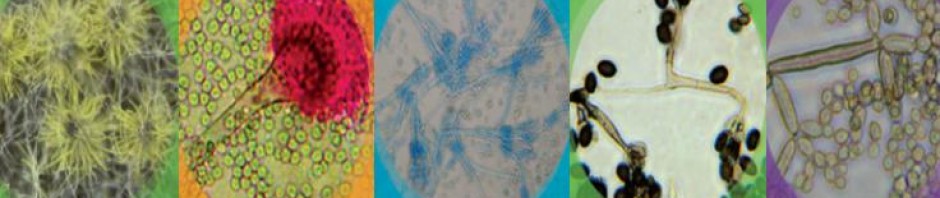
Posted in Environmental Health Threats, Health - Medical - Science, Riverstone Residential, Toxic Mold | Tagged , , , , , , , , , , , , | Comments Off on Lethal Danger of Mold-Another Death-Aspergillus

Senator Tackles Toxic Mold

By Christine Lin
Epoch Times Staff

NEW YORK—Before the wet winter months come around and beckon mold into our homes, State Senator Liz Krueger warns that anyone who claims they can remediate mold had better know what they are doing.

Krueger is putting forth legislation that requires commercial mold cleaners be certified by the Department of Environmental Conservation according to requirements to be set by her task force. The task force will define what is a toxic mold and who is qualified to clean it.

Similar regulations have been put in place for lead and asbestos abatement.

Krueger hopes that with certification requirements, residents can effectively banish mold before it banishes them. “Residents of an entire building had to move out and sue their landlord due to mold that was never properly remediated,” Krueger said.

Mold can affect new and old buildings alike, as long as it’s moist inside. Because the fur we know as mold is just the visible part of the organism, it’s hard to get rid of it completely.

“You can scrub your walls, you can scrub your bathroom, and it can be behind the walls and in the walls and be doing just as much health damage whether you see it or not,” Krueger said.

Mold releases spores, which can cause allergic reactions in some people. Poor indoor air caused by mold is a known trigger of asthma and other respiratory problems.

Jesse Goldman, the housing organizer at Make the Road New York, a community advocacy group based out of Bushwick, Brooklyn, says that current practices are not regulated at all.

“There are no specific requirements of who is qualified and who is not,” he said. “In Bushwick, they (residents) basically bring in anyone who could do it the cheapest.” Usually the cleaners would first paint over the mold, and if that doesn’t do the trick, put plywood over the hole where moisture comes in, according to Goldman.

News Story – http://en.epochtimes.com/n2/united-states/senator-tackles-toxic-mold-4667.html

Posted in Environmental Health Threats, Mold and Politics, Toxic Mold | Tagged , , , , , | Leave a comment

CAS Appoints Gardner Rees

Consolidated American Services (CAS) Appoints Gardner Rees Managing Director of Business Services
Last update: 7:51 p.m. EDT Sept. 23, 2008
DALLAS, Sept 23, 2008 /PRNewswire via COMTEX/ — Gardner Rees has been named Managing Director of Business Services for Consolidated American Services (CAS), a diversified real estate organization with operations nationwide. Gardner is responsible for originating and implementing corporate acquisition activities, from transaction analysis through due diligence and operational integration. He also oversees the operations of three of the organization’s ancillary business groups: Purchasing/Vendor Services, Rockcreek Utility Services, and Residential Screening and Collections Services (RSS).
Gardner has extensive experience in the acquisition of multifamily real estate companies and property assets. He previously served as Executive Vice President of Acquisitions for CAS. Immediately prior to joining the Dallas-based company, he was a principal of Stratus Real Estate in California where he headed the business services and resident screening groups, as well as the information technology group. Gardner also served as a Vice President for an international investment bank and was involved in the acquisition, recapitalization and corporate restructuring of a number of Fortune 100 companies.
Gardner has a Bachelor of Science degree from the University of Western Ontario and an MBA in Corporate Finance and Information Systems from York University’s acclaimed Schulich School of Business in Toronto, Canada.
Headquartered in Dallas, Texas, Consolidated American Services (CAS) has quickly established itself as a preeminent force in residential real estate. The innovative national property services organization has made its mark on the industry through a unique approach that melds outstanding residential services with an unparalleled collection of ancillary products and services. CAS-owned companies include Riverstone Residential Group and Recap Advisors; other operations are active in property insurance, renters insurance, streamlined purchasing, energy procurement, utility rebilling, renovation construction, capital needs assessments, operational audits, acquisitions and disposition services.
Consolidated American Services (CAS) is the American property services company of UK-based Regis Capital, Ltd. Since 2006, the Dallas-based organization has provided the real estate industry with unparalleled services in property management, construction, maintenance, asset management, financial services and insurance services. CAS’ operating groups include Riverstone Residential Group, the largest privately-held residential management company in the Riverstone Group, and Recap Advisors. Additional information is available at http://www.casfirst.com.
SOURCE Consolidated American Services
http://www.casfirst.com/

Story – http://www.marketwatch.com/news/story/consolidated-american-services-cas-appoints/story.aspx?guid=%7B571ADE7E-BEC2-452F-91B9-3C81FF1A8292%7D&dist=hppr

Posted in Riverstone Residential | Tagged , | Leave a comment

Aviana Tenants Blog – Latest Comments

Anonymous said…
is this blog dying? :(
September 9, 2008 11:27 PM

Anonymous said…
No, Joby, the blog is not dying. See you in court soon!!!
September 21, 2008 1:39 PM

Posted on – http://avianatenants.blogspot.com/

Posted in Riverstone Residential | Tagged , , | Leave a comment