Severe Fungal Infections Linked to Drugs

After receiving numerous reports of serious fungal infections among patients taking tumor necrosis factor (TNF) blockers—infections that in some cases resulted in prolonged hospitalizations and death—the US Food and Drug Administration (FDA) has ordered manufacturers of the drugs to add a stronger warning to their label.

Labeling for these immunosuppressive drugs already warns that they may cause severe infections. But the agency has received some reports suggesting that physicians may have been slow to diagnose fungal infections among patients taking these drugs, leading to treatment delays and poorer outcomes. TNF- blockers are used to treat a range of disorders, including rheumatoid arthritis, juvenile idiopathic arthritis, psoriatic arthritis, plaque psoriasis, ankylosing spondylitis, and Crohn disease.

The FDA has reviewed 240 reports of histoplasmosis in patients being treated with etanercept, adalimumab, and infliximab. Treatment was delayed because physicians initially failed to recognize the condition in at least 21 . . .

Must purchase subsciption or article to read all.
jama.ama-assn.org

Posted in Health - Medical - Science | Tagged , , , , , | Leave a comment

Detection of fungal development in closed spaces through the determination of specific chemical targets

Abstract

In addition to the biodegradation problems encountered in buildings, exposure of their occupants to moulds is responsible for numerous diseases: infections (invasive nosocomial aspergillosis), immediate or delayed allergies, food-borne infections and different types of irritation. In this context, the aim of our work has been to determine specific chemical tracers for fungal development on construction materials. More generally, by detecting a specific chemical fingerprint of fungal development, our objective was to propose a microbiological alert system which could control systems and/or procedures for the microbiological treatment of indoor areas.

We therefore characterized the chemical emissions from six types of construction material contaminated artificially by moulds. Chemical fingerprints were established for 19 compounds arising specifically from fungal metabolism: 2-ethylhexanoic acid methyl ester, 1-octen-3-ol, 3-heptanol, 3-methyl-1-butanol, 2-methyl-1-butanol, 1,3-octadiene, 2-(5H)-furanone, 2-heptene, α-pinene, 2-methylisoborneol, 4-heptanone, 2-methylfuran, 3-methylfuran, dimethyldisulfide, methoxybenzene, a terpenoid and three sesquiterpenes.

Determining the origin of these compounds and their specific links with a growth substrate or fungal species made it possible to judge the pertinence of choosing these compounds as tracers.

Thus the detecting specific volatile organic compounds emitted as from the second day of fungal growth demonstrated that this approach had the advantage of detecting fungal development both reliably and rapidly before any visible signs of contamination could be detected.

Keywords: VOC; Fungal development; Quality of indoor air; Moulds; Chemical fingerprint

Note – This article requires subscription or can be purchased

doi:10.1016/j.chemosphere.2008.01.057

Posted in Environmental Health Threats, Toxic Mold | Tagged , , , , , , , , , , , | Leave a comment

The latest over at the Aviana

Anonymous said…

The Aviana is up for sale. Our sources say Avalon Properties is about to buy the place. This is good and bad. The “good” is that they manage their own properties, so we can say goodbye to Joby and Co.

The “bad” is that they really jack up rents when they take over a property.

I’ll draft a letter to Avalon asking that they strongly consider unloading Riverstone as soon as possible. I’ll send it around via the Aviana Tenants email list for comments and suggestions. We’d like to send it tomorrow.

avianatenants.blogspot.com

Posted in Riverstone Residential | Tagged , , , | Leave a comment

Allergic Bronchopulmonary Aspergillosis – need for routine screening of all patients with asthma with an Aspergillus skin test

Ritesh Agarwal, MD, DM, FCCP
 
From the Department of Pulmonary Medicine, Postgraduate Institute of Medical Education and Research, Chandigarh, India.
 
Abstract
 
Allergic bronchopulmonary aspergillosis (ABPA) is an immunologic pulmonary disorder caused by hypersensitivity to Aspergillus fumigatus. Clinically, a patient presents with chronic asthma, recurrent pulmonary infiltrates, and bronchiectasis. The population prevalence of ABPA is not clearly known, but the prevalence in asthma clinics is reported to be around 13%. The disorder needs to be detected before bronchiectasis has developed because the occurrence of bronchiectasis is associated with poorer outcomes. Because many patients with ABPA may be minimally symptomatic or asymptomatic, a high index of suspicion for ABPA should be maintained while managing any patient with bronchial asthma whatever the severity or the level of control. This underscores the need for routine screening of all patients with asthma with an Aspergillus skin test. Finally, there is a need to update and revise the criteria for the diagnosis of ABPA. This review summarizes the advances in the diagnosis and management of ABPA using a systematic search methodology.
 
Keywords:
  • allergic bronchopulmonary aspergillosis
  • Aspergillus
  • bronchial asthma
  • cystic fibrosis
  • prevalence

     
    chestjournal.org

  • Posted in Environmental Health Threats, Health - Medical - Science, Toxic Mold | Tagged , , , , , , , , , | Leave a comment

    Property owners – Riverstone Group, L.L.C. – want to clear-cut Cove Swamp – Video

    The state is offering to buy the land from Riverstone for about $700,000, but the company said it wants about $50,000 more.

    swampswamp-2swamp-3

    March 19, 2009

    Reported by Max Winitz
    Posted by Debra Worley 
    Updated by Kristy Ondo

    COLUMBUS COUNTY, NC (WECT) – Residents gathered in Columbus County Thursday night to figure out how to save a large piece of land from being clear cut for timber.

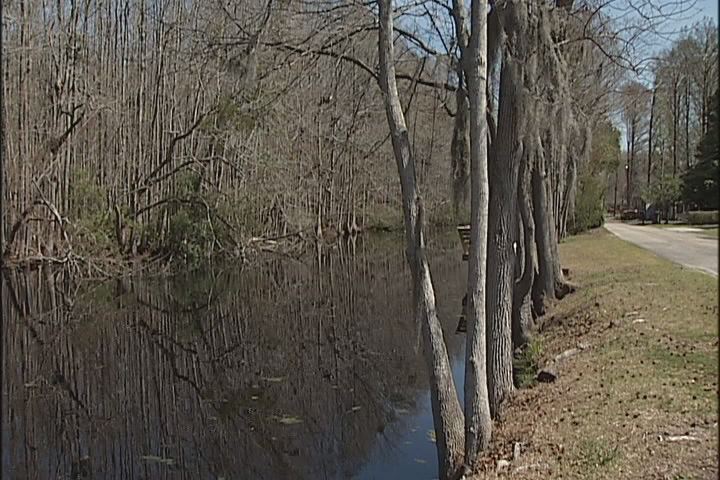
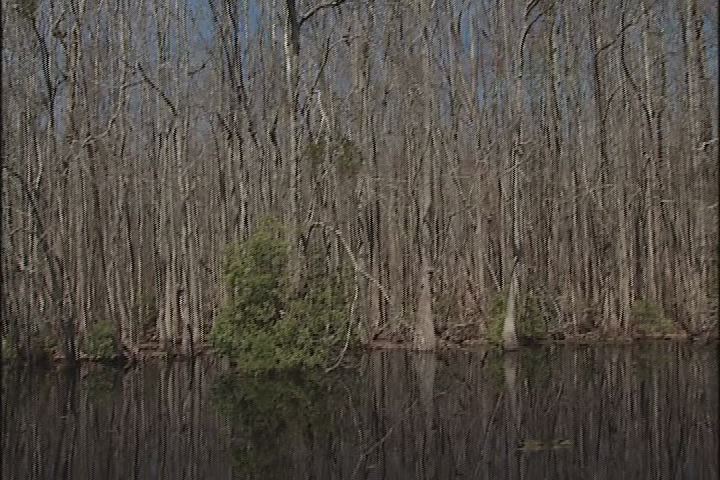
    Cove Swamp is a 440 acre crescent shaped tract of timberland that borders much of the canal along Canal Cove between Weaver Street and Cove Canal Road.

    The owner of the property, The Riverstone Group, L.L.C., wants to clear cut the timber soon, which will leave the area looking like the swampland that was clear cut in 2008 along Business 74-76, east of Whiteville.

    “It’s an important swamp,” said state park ranger Chris Helms.  “It does what swamps do and that is, it helps filter the water.  Sediments and things like that come out before it gets in the lake.”

    Residents are concerned that clear cutting the area will potentially damage the ecology and water quality of Lake Waccamaw as well as hurt surrounding property values.

    “It could degrade the water quality in the lake,” said David Scott.  “It would greatly effect the species that make this lake a unique eco system, and it would effect the recreational potential of the lake.”

    The yellow belly slider is just one of many species that lives in the swamp, and advocates are worried if it’s destroyed, the species won’t have a place to live.

    The state is offering to buy the land from Riverstone for about $700,000, but the company said it wants about $50,000 more.

    Thursday night, residents took matters into their own hands by working to raise the extra money Riverstone wants.  According to Scott, about 125 people attended the meeting.  They raised about $23,000 in cash and pledges.  That still leaves $27,000 more that Scott and other residents are hoping they can raise before the deadline of July 1.

    Note – You can go to the link below to donate.  I just could not bring myself to post that information.  They have more than enough money already.  katy 

    wect.com

    Video – Cove Swamp
    Posted in Riverstone Residential | Tagged , | Leave a comment