
Your New Condo Leaks? Join the Club

condos
Marilynn K. Yee/The New York Times;Tony Cenicola/The New York Times

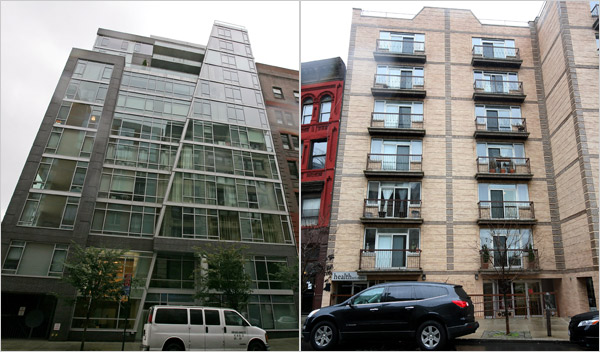
FIX IT PLEASE The boards of both the Slate Condominiums, above, in Manhattan, and the Broadway Arms in Brooklyn filed suit against the sponsors for defects.

October 25, 2009
By VIVIAN S. TOY

ROOFS and windows that leak whenever it rains.

Heating and air-conditioning units that can’t quite heat or cool the entire building.

Balconies with flaking concrete and wobbly railings.

These kinds of complaints have become more and more common in recent months, according to lawyers and engineers who represent owners of sleek new condominium units across the city.

They say the wave of development in New York City that started in 2004 and crested in mid-2007 has resulted in a wave of accusations about defective construction and building design.

“There’s always an underlying number of lawsuits about defects,” said Stuart M. Saft, a real estate lawyer and the chairman of the Council of New York Cooperatives and Condominiums, “but about a year ago the number started to increase. And over the next two years there’s going to be an explosion, because of all the buildings that were built at about the same time.”

He noted that buildingwide problems often don’t become apparent until people have lived in a building for a while. Legal action is often delayed because sponsors typically control a condo board for a year or more after a building opens and can block attempts by residents to file complaints.

But since condo owners have a three-year statute of limitations for suing a developer or construction contractors for negligence, many people who moved into new buildings in 2007 — when about 7,000 condos came on the market — are realizing that they will soon run out of time.

A negligence lawsuit charges a sponsor or contractor with causing harm or damage to condo owners. If the owners believe a written agreement has been violated, another legal strategy is to sue a sponsor for breach of contract. The statute of limitations for breach of contract is six years.

Lawyers at several firms said that the volume of condo defect work had doubled in the last year, adding up to dozens of buildings with construction problems. In most cases, the condo owners hire lawyers to add muscle to their complaints, in the hope of getting the necessary work done. In a few instances they have filed suits. Lawyers say that condo owners are reluctant to talk about the defects in their buildings, fearful that publicity will decrease the value of their properties.

Water leaks and climate control problems top the list of complaints. Many of the recently built glass towers are especially prone to temperature issues, because air-conditioning units are too small to combat the punishing summer sun, and heating systems can’t make up for a lack of insulation during the cold months.

But lawyers and engineers said that they had also come across buildings with more serious defects that violate the city’s building code. The most common code violation involves inadequate fire-stopping components — building materials that are used to fill empty spaces where fire or smoke can spread between floors and apartments.

Howard L. Zimmerman, an architect whose firm is checking about 35 new condo buildings for construction problems, said that his workers had found fire-stopping violations in about a third. He said his firm has clients in buildings of five to 300 units, throughout Manhattan and in Brooklyn and Queens.

According to Mr. Zimmerman, the most common problem is found behind the walls of apartments, where, say, no caulking material has been used to seal a two-inch space between a pipe and a concrete wall. That unsealed space, he said, “is where smoke and fire can travel quickly,” and it could also allow smells to float through a building. “Odor migration has been a tremendous problem, and if you buy a $3 million apartment, you probably don’t want to smell your neighbor’s smoking or the restaurant downstairs.”

Mr. Zimmerman says that the Department of Buildings can miss these kinds of lapses because architects or engineers hired by the sponsor are allowed to vouch for certain aspects of construction. “There was supposed to be somebody on the job who signed off that this was all installed before the walls got covered up,” he said. “As nutty as it sounds, just because you have a certificate of occupancy doesn’t mean you have a building that’s code compliant.”

He and real estate lawyers said that even when a condo board discovers building code violations, it is often reluctant to alert city officials because the board then becomes responsible for correcting the problem as well as for paying any fines.

James P. Colgate, an assistant commissioner at the Department of Buildings, says that condo boards are not under any obligation to report code violations. But when they do, the department may decide to investigate whether an engineer or architect improperly certified work at the building.

As for problems like water leaks, Mr. Colgate said that a certificate of occupancy was not the same thing as a guarantee. Such a document “certifies that the building is substantially in compliance with rules governing its construction,” he said, “and even if workmanship in a building may not be superb and you get those kinds of issues, the building might still be in compliance.”

When a building is clearly out of compliance, talk quickly turns to lawsuits.

Steven D. Sladkus, a real estate lawyer at Wolf Haldenstein Adler Freeman & Herz, said that he represents an Upper East Side building where the developer put only one layer of wallboard between the floors, instead of the two layers required by city code to create a fire-resistant barrier. “The board knows that’s a serious code violation, and it’s prepared to do the work and sue the developer and hope for reimbursement,” he said.

Mr. Sladkus said that the board hoped that the New York State attorney general’s office, which oversees condominium offering plans, would press the sponsor to do the work.

It will be expensive and disruptive, he added, since contractors will have to remove ceilings and recessed lighting to install the fire-stopping materials.

At the Slate Condominium, a 12-story glass-walled tower in Chelsea where in 2007 one-bedroom apartments sold for as much as $1.4 million and two-bedrooms for as much as $1.9 million, the condo board filed a lawsuit in March accusing the sponsor, Chelsea Luxury Condos, of using defective materials and of not living up to promises made in the offering plan.

“The unit owners have not only personally observed a number of defective and unsafe conditions in the building, but they have suffered a plethora of dangerous conditions,” the suit states. The complaint lists incomplete fire-stopping in hallways, and uneven floors and water damage in various places. Problems common to individual units include warped floors and balcony doors, nonworking electrical outlets, rusted kitchen faucets and water leaks.

Most people moved into the 26-unit building in 2007, and the apartment owners took control of the condo board in April 2008. Debra Guzov, the lawyer representing the condo board, would not comment on the case.

Anna A. Higgins, the lawyer representing the sponsor, said the sponsor had hired its own engineer to inspect the building, and “our position is that the problems listed are mostly punch-list items and are not considered defects, but things that are under warranty and therefore the responsibility of the subcontractors.”

The sponsor has, in turn, brought several of its building and electrical contractors into the suit as third-party defendants, charging they were negligent. “This is a reputable building and company,” Ms. Higgins added. “And they take these matters very seriously.”

The sheer volume of new buildings that went up during the condo construction boom is the main reason for the increase in defective buildings, lawyers and engineers said.

“It happens in every cycle,” Mr. Saft said. “At the beginning of the cycle, workers are underemployed, then suddenly they’re busy, and at the height, there are too many projects and not enough workers. Then what happens is shoddy workmanship, and when you have sponsors running out of money, they start to cut corners.”

Andrew P. Brucker, a real estate lawyer with the New York law firm of Schechter & Brucker, said that the boom had prompted people with no experience in real estate to start building condos. “When the market was hot,” he said, “anybody who had a couple bucks suddenly became a developer, thinking they’d get rich. When the market was strong, if you complained about something, sponsors would fix it, but then the market started to tank and brand-new buildings aren’t selling out, so there’s no money to do that anymore.”

The more unusual problems that Mr. Brucker has encountered include a building whose developer built an illegal pool and another whose developer put the building’s electrical system in a closet inside an apartment. The pool, he said, was never approved by the Buildings Department and may have to be removed. The electrical closet may also be illegal, because it may not be easily accessible in an emergency. In both cases, the solutions will entail costly projects.

When it becomes clear that a building has problems that go beyond punch-list items — a kitchen drawer, say, that won’t stay shut or a closet door that sticks — the first thing owners should do is hire an engineer.

“You have to get a top-to-bottom assessment of the building — the interior, the exterior, all the systems,” Mr. Sladkus said. “That creates a record and tells the board where things stand.”

The sooner this is done, the better, he added, because it takes away a sponsor’s potential claim that problems were caused by the apartment owners. Depending on the size of the building, an engineering report could cost $10,000 to $50,000.

Filing a lawsuit is usually a last resort because it can be costly and take years to resolve. Lawyers say the condo board’s first course of action should be to try to negotiate with the sponsor, with a goal of having the sponsor make the repairs or pay a settlement to get the work done.

If that fails, lawyers said, a condo board can file a complaint with the attorney general’s office, which can help to mediate a dispute and press developers to make repairs. The office can, but rarely does, file its own lawsuit against a developer. But lawyers say that the attorney general has been inundated with complaints; it can take months just to find out if the office will take on a building’s case.

“The attorney general will look at life, health and safety issues and things like whether a temporary certificate of occupancy is current,” said Jeffrey S. Reich, another real estate lawyer at Wolf Haldenstein. “But it’s hard to get them motivated to roll up their sleeves on minor issues.”

Lawyers believe that the attorney general’s office is more likely to act on behalf of smaller buildings, because it recognizes that litigation could be prohibitively costly for buildings with relatively few unit owners.

That presumption is well illustrated by one case in which Mr. Reich represents the owners in a large luxury building that he had hoped the attorney general would see to. But, he said, “the sponsor’s attorney went to the attorney general and said they should not take the case because the apartments are larger than regulation basketball courts and the owners are titans of finance who are fully capable of pursuing it in court.”

Mr. Reich said he was able to persuade the office to keep pursuing the complaint only because an aspect of law was involved that could not be addressed in court because it fell under the attorney general’s jurisdiction.

A spokeswoman for the attorney general encouraged condo owners facing building problems to contact the office’s real estate finance bureau.

The attorney general’s Web site states that when the office receives a written complaint about a building, “we usually demand that the sponsor provide a written response to the allegations. Sometimes, this alone causes the sponsor to repair the defects.”

If that fails, the site states, the office may send its own engineers to inspect the property or have the two sides jointly hire an engineer or architect to evaluate the building and suggest solutions.

Sometimes, even when an early settlement offers the promise of resolution, unit owners still end up in court.

At the Broadway Arms, a 12-unit building that opened in Williamsburg, Brooklyn, in late 2004, the owners took control of the condo board fairly quickly. When they noticed the leaking roofs, shoddy balcony railings and a faulty ventilation system in 2005, they hired an engineer to review the building.

By July 2006, the condo board had reached an agreement with the sponsor, Broadway Driggs Associates, to fix many of the problems the engineer had found. But Alan Winkler, the condo board’s lawyer, said that the work was never completed and that the board decided to sue the sponsor in late 2008 for failing to live up to the offering plan and the settlement agreement.

Mr. Winkler said that the sponsor had repaired the balconies and done some work on the building’s upper roof, but that a lower roof still had leaks, and various problems persisted in the common areas. “At this point,” he said, “there shouldn’t be any contention as to whether this work needs to be done.”

The sponsor denied the charges in court filings and has accused its building contractor of walking off the job. The contractor in turn has denied that in court papers and has claimed that the sponsor owes him $200,000.

Charles L. Mester, the sponsor’s lawyer, said, “A lot of the problems were fixed and it’s just an opinion of some other experts that what was done should have been done another way.” He added that the $200,000 figure “has no basis in anything.”

Five years after they moved into the building, the owners “would like to resolve this quickly,” Mr. Winkler said. “But they want to make sure they get the value they were promised for their units when they bought it.”

nytimes.com

Note – Information on Riverstone Residential knowingly exposing tenants to extreme amounts of mold toxins at Toxic Mold Infested Jefferson Lakes Apartments in Baton Rouge, Louisiana.  katy

Toxic Mold Infested Jefferson Lakes Apartments managed by Riverstone Residential

Riverstone Residential Litigation

Mold Inspection Reports

Photos of Mold in Apartment

Attorney Malpractice


Posted in Environmental Health Threats, Politics | Tagged , , , , , | Leave a comment

Veterans seek coverage related to Agent Orange exposure – new bill would give treatment to all who served in Vietnam

October 25, 2009

By Brian Tumulty

WASHINGTON — When Wayne Rademaker underwent prostate cancer surgery in 2007, the Department of Veterans Affairs denied him coverage, even though he’d been exposed to Agent Orange in Vietnam in 1969.

The water that the 60-year-old Oakfield, N.Y., resident drank and showered with aboard the aircraft carrier USS Oriskany in the Tonkin Gulf contained traces of the toxic defoliant.

But to save money, the VA years ago stopped covering Vietnam veterans who didn’t serve on the ground.

“They changed the wording, saying if you didn’t have feet on the ground, you weren’t part of the war,” Rademaker said.

Until that policy shift, Rademaker had received a free annual VA physical to check for service-related illnesses.

Some New York lawmakers want to reverse the VA policy.

Sen. Kirsten Gillibrand, D-N.Y., introduced legislation this week in the Senate to cover Navy, Air Force and other personnel who came into contact with Agent Orange at sea or while loading aircraft used to deliver it.

Veterans who received the Vietnam Service Medal or the Vietnam Campaign Medal automatically would be covered.

An identical bill introduced in May in the House has 180 sponsors, including New York Reps. John Hall, D-Dover, Eric Massa, D-Corning, Mike Arcuri, D-Utica, Brian Higgins, D-Buffalo, Louise Slaughter, D-Fairport, Maurice Hinchey, D-Hurley, and Nita Lowey, D-Harrison.

In Elmira, Robert Bly, director and benefits adviser for the Chemung County Department of Veterans Affairs, said the effort to recognize additional veterans for their exposure to Agent Orange comes as good news to him and the local veterans who so far have been excluded from that type of health coverage.

“If there is a measure that is passed that allows them to get that presumption (of exposure), that’s very good news,” Bly said. “I have a number of veterans in that category that we’ve worked on claims for.

“Absolutely it would have an impact,” he said. “We have a lot of what are referred to as blue-water Navy veterans — those who were in the theater but can’t prove that they were boots on the ground in Vietnam.”

Gillibrand said she became aware of the issue from a veterans’ advisory committee she set up while serving as a House member representing the Hudson Valley.

“These veterans are being treated very poorly,” she said.

Passage of the legislation — which would increase the VA’s health care costs — may be difficult.

“It will be controversial, but I think we will be able to develop the support necessary for it,” Gillibrand said.

Recent scientific findings, such as a study earlier this year by the Institute of Medicine, have added to the large body of evidence that exposure to Agent Orange increases the risk of health problems such as heart disease or Parkinson’s.

New York’s junior senator also has introduced another bill, the Agent Orange Children’s Study, that would require the VA to examine the possibility that chronic illnesses such as multiple sclerosis and asthma in children can be traced to their parent’s exposure to Agent Orange.

“I have high hopes,” Rademaker said.

His cancer was covered by private insurance and is in remission, but he still worries about developing other service-related health problems.

Navy veteran Willard Hughes of Bath said in a phone interview that he’s also optimistic that Congress will eliminate the VA’s denial of Agent Orange coverage for service members who weren’t on the ground.

Hughes served aboard a destroyer, the USS Newman K. Perry, while it was stationed for six months along Vietnam’s Mekong River delta. He provided gunfire support for ground troops.

The 69-year-old BOCES retiree suffered from Type 2 diabetes and has breathing problems that he says were caused by Agent Orange in the ship’s drinking water.

“They were using Agent Orange quite heavily during that time as a defoliant,” Hughes said.

He said Australia and New Zealand have recognized the connection and cover their seamen who served in Vietnam.

jdavis92840.newsvine.com

Posted in Environmental Health Threats, Health - Medical - Science, Politics, Veterans | Tagged , , , , , , | 33 Comments

Unearthing Unpublished Reports to Congress from Federal Agencies: The Birth of a New Journalism Research Technique

By Michael Ravnitzky

Nearly all federal agencies provide reports to Congress.  Most reports fall into one of four general categories:

Periodic reports produced as a statutory obligation for an oversight or appropriations Committee in the House or Senate;

One-time reports produced as a statutory obligation for a Committee;

One-off reports produced in response to a specific request from a Committee, or as a result of an inquiry from a Congressman or Senator.

Unsolicited reports produced to help inform a Congressional office or a Committee office.

Many of these reports, perhaps even the majority of them, are never published or posted on the agencies’ websites.

One effective means of accessing such reports is to direct a public records request to agencies of interest, or specific components of agencies, and ask for a copy of the title page and first 10 or 20 pages of each report (i.e., all reports) produced for Congress by the agency or component during the time period of interest, for example, during the last three years, but only those which are not posted on the agency public website.

The latter point is quite important — you must specify that the reports you want do not include those posted on the agency public website.

THE ESSENTIAL ASPECT TO THIS IS TO REFUSE TO LIMIT THE REQUEST BY TOPIC, SUBJECT OR TITLE, AND SIMPLY INSIST ON ALL REPORTS PROVIDED TO CONGRESS BY THAT AGENCY OR COMPONENT DURING THE DESIGNATED TIMEFRAME.  The most likely initial response will be a request to specify the subject of the request — but you need not do that if your request is unambiguous as would be above.

If asked, you can indicate that the records are likely to be found in the Legislative Relations or Congressional Relations office of the respective agency or component.

Since these reports typically exist in electronic form, you can alternatively ask for an electronic copy of the entirety of each of the applicable reports.

NOTE: A resource already taking advantage of this strategy is GovernmentAttic.org. See also related SEJ WatchDog TipSheet of Sep. 24, 2008, “Agency FOIA Logs Posted on Watchdog Site.”

sej.org

Posted in Politics | Tagged , , | Leave a comment

Logjam at CDC – School Mold Help.org request for CDC to update mold info to correspond with that produced by the World Health Organization – July 2009 & the results of communication with Dr. Paul L. Garbe – Chief of Air Pollution & Respiratory Branch

Reqest to CDC to update is included at the end of this post.

Since January, 2009, The Center for School Mold Help has engaged in a writing campaign to alert President Obama and the Centers for Disease Control and Prevention about the need to recognize the national public health problems associated with indoor dampness and mold, and for the CDC to update its information related to mold and health. This has resulted in direct communications with the (former) Acting Director of the CDC and a phone conference with the Chief of Air Pollution and Respiratory Branch of the CDC, Dr. Paul L. Garbe, who is ultimately  responsible for the current information on the CDC website about mold and health. As of 10/9/2009, Dr. Garbe has admitted the information falls short and promised to improve it, to add the IOM’s (2004) full findings including the effects associated with mold and dampness, which include (new) asthma development and lower respiratory disease in otherwise healthy children. Further, he promised to insert the WHO findings on dampness and mold (2009). As of 10/27/09, the CDC information remains the same. We are waiting and have alerted President Obama, CDC Director Thomas Frieden, MD, and Senator Barbara Boxer (Chairperson of the Senate Committee on Environment and Public Works) of this meeting and promises. (SMH)

The result of that meeting is summarized below:

The Center for School Mold Help
P.O. Box 655
La Mesa, CA 91944-0655 

Paul L.Garbe, DVM, MPH
Chief, Air Pollution and Respiratory Health Branch
Division of Environmental Hazards and Health Effects
National Center for Environmental Health
Centers for Disease Control and Prevention

Oct. 23, 2009 

Dear Dr. Garbe: 

Thank you for meeting with me on Oct. 9, 2009, regarding my concerns relating to the information that your division of the CDC is disseminating on mold and health. During that fifty minute discussion the following was determined, according to my notes: 

1. The Centers for Disease Control Air Pollution and Respiratory division, of which you are Chief, is responsible for what appears on the CDC web site with regard to indoor air pollution and mold.

2. Information from the IOM Damp Indoor Spaces and Health (2004) has been shared with the public via the website, on a very limited and selective basis. For instance, I brought to your attention that the IOM findings related to health effects associated with mold and/or (indoor) dampness, such as development of (new) asthma and lower respiratory disease in otherwise healthy children DO NOT appear on the Mold and Health section of the CDC website – yet the minor associated health effects did, such as skin irritation, wheezing, etc.. You agreed. The IOM report link was “buried” under many layers of information in the web site, where most would never look. You agreed. 

3. Your division was unaware of the 250 page WHO Guide to Indoor Air Quality: Dampness and Mould (July 16, 2009) because there is “no coordination whatsoever” with WHO on this topic of mold and dampness. You said you were glad to learn of its publication and will include a link to it, with summary of the WHO findings on the CDC web site, with permissions as needed from WHO. 

4. You will be contacting your web designers to adjust the Mold and Health information to include all the important associated effects of mold (IOM) and the WHO findings, immediately. 

5. You expressed concern that you are not given even “a dollar” for mold per se, and do not have “unlimited webspace”. 

I was very pleased that we were able to speak and clarify all of the above. I have to say that I am disappointed in the performance of the CDC, to date, on this important health topic that impacts the entire American population, healthcare industry, and economy, ultimately.  I believe that this is an important area of accountability and prioritizing that needs to be delved into further. We need the CDC to be current, transparent, science-based, and non-political regarding disease prevention. 

The changes in the CDC information on Mold and Health, described above, will help prevent mold and dampness-related illness and chronic disease in millions of Americans. It is imperative that, without need for further research or passage of time for any reason, these current scientific findings are published prominently on the Mold and Health section of the web site. As of today, the old, inaccurate information still appears, two weeks after our phone conversation. Further, it is very hard to find the Mold and Health section.

The reason I am being so persistent on this matter is that I see a direct connection to the lack of current, comprehensive information by the CDC and the illness of many tens of millions. This is, quite definitely, a failure to protect the public and can readily be remedied, overnight, if the political will exists. The information is already published by the most authoritative sources, all CDC has to do is share it prominently and start applying this information in all its programs related to asthma, respiratory, and immunological disease prevention. Our nation’s school children and staff (20% of the US population) are frequently exposed to indoor mold and dampness, with much misunderstanding about the health effects – thus, school districts, health departments, state and local lawmakers do not make it a priority to provide dry and sanitary buildings. Physicians often deny the health effects described in the IOM and WHO documents, as they are unaware, getting their information, ultimately, from that which the CDC publishes on its website and emphasizes in its communications. This is something that can be fixed immediately, within our easy reach. 

I thank you for taking the time to speak with me, and for your promise to correct the matter.

I would like to be notified of the changes to the CDC Mold and Health web site, on an urgent basis.

Sincerely,

Susan  Brinchman
Executive Director,
The Center for School Mold  Help
director@schoolmoldhelp.org
nomoreschoolmold@aol.com

schoolmoldhelp.org

The following email, below, was sent by our SMH Director to the CDC on Sept. 8, 2009 – a request for the United States Centers for Disease Control to update its mold information to correspond with that produced by the World Health Organization, July, 2009. Previous communications with the CDC have resulted in the receipt of a listing of the CDC’s information links, all of which are inadequately describing the health effects of mold. Since the WHO is doing the work, we want the CDC to report it and inform the nation’s healthcare professionals, health departments, and the general public regarding the serious health threat caused by dampness and mold. Our site visitors may wish to add their voices and emails to this effort, by writing the CDC at cdcinfo@cdc.gov. (SMH)

Note: Your vital support, through a small donation to subscribe to this site, helps SMH advocate for our nation’s children and school staff to occupy safe, clean, dry, healthy school buildings. (S. Brinchman, SMH)

Subject: URGENT request for CDC to update mold and health info re: WHO mold info

Date:9/8/2009
From:SMH Director
Reply To: cdcinfo@cdc.gov

Dear CDC Info Administrator,

I am writing, as the Director of The Center for School Mold Help, a national, 501c3, educational nonprofit, to request that the Centers for Disease Control website information on mold and health be updated to correspond with and include the WHO guidelines for indoor air quality: dampness and mould (July 16, 2009).

Millions of Americans are unnecessarily subjected to and sickened by dampness and mold, without help or recognition of the environmental illnesses that often develop. School children suffer in moldy, leaky, damp schools throughout the United States – chronically sickened while trying to obtain an education. The school staff suffer and may die from exposures within these buildings. Homeowners and renters alike find their health and finances destroyed by preventable mold exposures.  Physicians, health departments, and the public are misinformed by your current information, which is dated and inaccurate – the CDC is, sadly, the primary source of the poor information.

This misinformation, in turn, helps overwhelm our healthcare system and damages our nation’s economy and productivity by causing millions to be sickened by a preventable cause. Now that the WHO has provided the vital planning and improved information regarding the very harmful health effects and mortality caused by mold and dampness, this should be included in an improved, updated informational section on mold and health on your website. The CDC must not continue to downplay this public health threat. The CDC must fully inform and warn physicians and the public about the health effects of mold and dampness.

The US GAO Audit on Mold (Sept., 2008) found that the US gov’t health agencies were not consistent in their information on mold. In fact, the US EPA and Federal OSHA both warn the public far more about the health effects of dampness and mold. This report, a year ago, has not yet improved your website information. I trust that the WHO Guidelines will assist in providing that which is missing, going beyond what any of our United States agencies have provided.

Mold and Your Health (from your website today)

Exposure to damp and moldy environments may cause a variety of health effects, or none at all. Some people are sensitive to molds. For these people, molds can cause nasal stuffiness, throat irritation, coughing or wheezing, eye irritation, or, in some cases, skin irritation. People with mold allergies may have more severe reactions. Immune-compromised people and people with chronic lung illnesses, such as obstructive lung disease, may get serious infections in their lungs when they are exposed to mold. These people should stay away from areas that are likely to have mold, such as compost piles, cut grass, and wooded areas.

 A link between other adverse health effects, such as acute idiopathic pulmonary hemorrhage among infants, memory loss, or lethargy, and molds, including the mold Stachybotrys chartarum (Stachybotrys atra), has not been proven. Further studies are needed to find out what causes acute idiopathic hemorrhage and other adverse health effects. (CDC, Mold)

 Note the contrast with the WHO information, below:

WHO guidelines for indoor air quality: dampness and mould

Published July, 2009

From the WHO Foreward

“Indoor air pollution – such as from dampness and mould, chemicals and other biological agents – is a major cause of morbidity and mortality worldwide.”

“The guidelines were developed and peer reviewed by scientists from all over the world, and the recommendations provided were informed by a rigorous review of all currently available scientific knowledge on this subject.”

From the WHO Executive summary

“Exposure to microbial contaminants is clinically associated with respiratory symptoms, allergies, asthma and immunological reactions.”

“There is strong evidence regarding the hazards posed by several biological agents that pollute indoor air; however, the WHO working group convened in October 2006 concluded that the individual species of microbes and other biological agents that are responsible for health effects cannot be identified. This is due to the fact that people are often exposed to multiple agents simultaneously, to complexities in accurately estimating exposure and to the large numbers of symptoms and health outcomes due to exposure. ”

“The presence of many biological agents in the indoor environment is due to dampness and inadequate ventilation. Excess moisture on almost all indoor materials leads to growth of microbes, such as mould, fungi and bacteria, which subsequently emit spores, cells, fragments and volatile organic compounds into

indoor air. Moreover, dampness initiates chemical or biological degradation of materials, which also pollutes indoor air. Dampness has therefore been suggested to be a strong, consistent indicator of risk of asthma and respiratory symptoms (e.g. cough and wheeze). The health risks of biological contaminants of indoor air could thus be addressed by considering dampness as the risk indicator.”

“Sufficient epidemiological evidence is available from studies conducted in different countries and under different climatic conditions to show that the occupants of damp or mouldy buildings, both houses and public buildings, are at increased risk of respiratory symptoms, respiratory infections and exacerbation of asthma. Some evidence suggests increased risks of allergic rhinitis and asthma. Although few intervention studies were available, their results show that remediation of dampness can reduce adverse health outcomes. There is clinical evidence that exposure to mould and other dampness-related microbial agents increases the risks of rare conditions, such as hypersensitivity pneumonitis, allergic alveolitis, chronic rhinosinusitis and allergic fungal sinusitis.”

“Toxicological evidence obtained in vivo and in vitro supports these findings, showing the occurrence of diverse inflammatory and toxic responses after exposure to microorganisms isolated from damp buildings, including their spores, metabolites and components.”

“Microbial growth may result in greater numbers of spores, cell fragments, allergens, mycotoxins, endotoxins, β-glucans and volatile organic compounds in indoor air. The causative agents of adverse health effects have not been identified conclusively, but an excess level of any of these agents in the indoor environment is a potential health hazard.”

“Microbial interactions and moisture-related physical and chemical emissions from building materials may also play a role in dampness-related health effects.”

“The authors conclude that occupants of damp or mouldy buildings, both private and public, have up to a 75% greater risk of respiratory symptoms and asthma. The guidelines recommend the prevention or remediation of dampness- and mould-related problems to significantly reduce harm to health…In damp conditions, hundreds of species of bacteria and fungi grow indoors and emit spores, cell fragments and chemicals into the air. Exposure to these contaminants is associated with the incidence or worsening of respiratory symptoms, allergies, asthma and immunological reactions. Children are particularly susceptible.” (WHO Press Release, 7/16/09)

This World Health Organization report, published July 16, 2009, verifies that which suffering millions and The Center for School Mold Help have been reporting, which the United States Centers for Disease Control, health departments, and most US physicians have downplayed and denied – that mold and dampness cause serious health problems, including respiratory and immunological. The WHO emphasizes that mold should be avoided as a major health risk, explains how to prevent and address indoor mold, and points out that building owners have the responsibility to provide healthy indoor air. This document will begin the changes needed to rescue the world population from the devastating impact of indoor mold (mould) and dampness, especially within our schools and homes. We expect that the United States Centers for Disease Control will quickly follow with a position on mold and dampness, in step with the WHO.  There is no more doubt – mold and dampness harms and can kill. We cannot tolerate this in our schools and buildings.

I would like to be informed about your plans to update your mold and health information, on an urgent basis.

Sincerely,

Susan Brinchman
Founder and Executive Director,
The Center for School Mold Help
P.O. Box 655
La Mesa, CA 91944

www.schoolmoldhelp.org

schoolmoldhelp.org

Posted in Environmental Health Threats, Health - Medical - Science, Mold and Politics, Toxic Mold | Tagged , , , , , , , , , , , , , , | Leave a comment

Riverstone Residential’s ridiculous settlement offer – they will dismiss a pending reconventional demand for rent, plus costs, interest, and attorney fees if we would agree, in writing, to not pursue a writ with the Louisiana Supreme Court OR take any further action to pursue litigation against Jefferson Lakes Apartments, its owners, agents, or representatives

Maybe they think all the toxin producing molds we were exposed to in their toxic apartment complex (still leasing) has affected our cognitive abilities and we would sign!  They have, but not enough to sign something that stupid. 

Coming up – the overwhelming evidence that several obvious and illegal measures that were taken to avoid producing past records of mold testing at Jefferson Lakes Apartments before we ever moved in along with records of air duct cleaning in the apartment we leased. 

Of course, the evidence of water leaks, inferior repairs, and visual mold documented in photos along with our mold inspection report was enough to prove they knew about the mold. Especially since the massive amounts of growth proves it has been growing for a long time.  Granting their motion for summary judgement with that evidence looks corrupt but if the records showing past mold testing had been done at the complex because of complaints, that would have been solid evidence the judge could not ignore or overlook and prove that management should have been on notice.

The 2007 mold inspection reports that were done two years after we moved out during a sale and sent to me by accident could not be used in court.  Those reports sure prove they know about the mold in the complex now while they continue leasing!

Note – Information on Riverstone Residential knowingly exposing tenants to extreme amounts of mold toxins at Toxic Mold Infested Jefferson Lakes Apartments in Baton Rouge, Louisiana

Toxic Mold Infested Jefferson Lakes Apartments managed by Riverstone Residential

Riverstone Residential Litigation

Mold Inspection Reports

Photos of Mold in Apartment

Attorney Malpractice

Posted in Environmental Health Threats, Louisiana Housing Finance Agency, Mold and Politics, Mold Litigation, Riverstone Residential, Toxic Mold | Tagged , , , , , , , , , , , , , , , , , , , , , , , , , , | 1 Comment