H1N1 Vaccines’ Immunotoxity, Neurotoxicity, and Carcinogenic Ingredients (Report) – also Packages’ Inserts & Warnings

The following are the ingredient lists, warnings and side effects for vaccines currently scheduled to be administered to populations worldwide for the H1N1 swine flu.

Not one scientific study has ever established the long-term safety of adjuvants and none have ever been approved for use in vaccines for humans.

H1N1 Vaccine Ingredients, Packages’ Inserts and Warnings

H1N1 Vaccines’ Immunotoxity, Neurotoxicity,
Sterility and Carcinogenic Ingredients (REPORT)

Political Action Committee – NAA – files Amicus Brief in mold case (two infant deaths in mold filled apt – Wasatch Prop Mgmt) citing US Chamber/ACOEM ‘litigation defense report’ to disclaim health effects of indoor mold & limit financial risk for industry

“Changes in construction methods have caused US buildings to become perfect petri dishes for mold and bacteria to flourish when water is added. Instead of warning the public and teaching physicians that the buildings were causing illness; in 2003 the US Chamber of Commerce Institute for Legal Reform, a think-tank, and a workers comp physician trade organization mass marketed an unscientific nonsequitor to the courts to disclaim the adverse health effects to stave off liability for financial stakeholders of moldy buildings. Although publicly exposed many times over the years, the deceit lingers in US courts to this very day.” Sharon Noonan Kramer

Information on Riverstone Residential knowingly exposing tenants to extreme amounts of mold toxins at Toxic Mold Infested Jefferson Lakes Apartments in Baton Rouge, Louisiana

Toxic Mold Infested Jefferson Lakes Apartments managed by Riverstone Residential

Riverstone Residential Litigation

Mold Inspection Reports

Photos of Mold in Apartment

Attorney Malpractice

Posted in Health - Medical - Science, Politics | Tagged , , , , , | Leave a comment

Virginia teen suffers rare illness (Guillain-Barre) after swine flu shot

Boy diagnosed with Guillain-Barre syndrome, but CDC says no clear link

Jordan McFarland, 14, was hospitalized for five days after coming down with Guillain-Barre syndrome hours after receiving a vaccination for H1N1.

By JoNel Aleccia
Health writer
Nov. 11, 2009

A  14-year-old Virginia boy is weak and struggling to walk after coming down with a reported case of Guillain-Barre syndrome within hours after receiving the H1N1 vaccine for swine flu.

Jordan McFarland, a high school athlete from Alexandria, Va., left Inova Fairfax Hospital for Children Tuesday night in a wheelchair nearly a week after developing severe headaches, muscle spasms and weakness in his legs following a swine flu shot. He will likely need the assistance of a walker for four to six weeks, plus extensive physical therapy.

“The doctor said I’ll recover fully, but it’s going to take some time,” the teenager said.

Jordan is among the first people in the nation to report developing the potentially life-threatening muscle disorder after receiving the H1N1 vaccine this fall. His alarming reaction was submitted via msnbc.com’s reader reporting tool, First Person, by his stepmother, Arlene Connin.

Increased cases of GBS were found in patients who received a 1976 swine flu vaccine, but government health officials say they’ve seen no rise in the condition associated with the current outbreak.

So far, the federal Centers for Disease Control and Prevention have received five reports of GBS in people who received the H1N1 vaccine since Oct. 6, not including Jordan’s case, said Dr. Claudia J. Vellozzi, deputy director for immunization safety.

Out of about 40 million doses of H1N1 vaccine available to date, that’s a far lower rate of GBS than the 1 case that develops in every 1 million people who receive the regular flu vaccine.

“It’s much less than we’d expect,” she said, adding that many cases go unreported.

In 1976, about 1 additional case of GBS developed in every 100,000 people who were vaccinated against the swine flu, according to the CDC.

Jordan’s parents said doctors diagnosed the teen with GBS, a rare muscle disorder that develops when a person’s own immune system attacks the nerves, causing muscle weakness, difficulty walking and sometimes paralysis and death.

Hospital officials didn’t dispute that the boy had GBS, but refused to comment on the boy’s condition or treatment, even after his family granted permission.

“They don’t want to create a fear or panic in the community,” said Jordan’s stepmother, Connin.

Connin and Jordan’s father, Calvin McFarland, both 38, believe the shot sparked the illness that came on 18 hours after the boy’s vaccination.

No clear link

But Vellozzi said there’s no clear link between the new vaccine and the disease.

“We know that GBS and other illnesses occur routinely in the U.S.,” Vellozzi said, noting that 80 to 120 cases are diagnosed each week in the general population.

“There are events that follow vaccination. That’s what they are, they happened to follow vaccination.

GBS is among the most severe adverse events being tracked with updated systems developed by the CDC, the Food and Drug Administration and the American Association of Neurology in order to monitor the rollout of the H1N1 flu vaccine.

So far, CDC officials have received about 1,700 reports of adverse events linked to the new shot, Vellozzi said. Of those, only about 4 percent, or 68, were coded as serious. That’s on par with reports regarding seasonal vaccine.

While any harmful side effect can be devastating for an individual, when it comes to larger public health issues, the H1N1 virus is considerably riskier than the vaccine, experts say.

“The H1N1 illness is making lots of children very ill,” Vellozzi said. “There’s lots of illness and lots of death.”

So far, more than 4,000 people have died from H1N1 infection in the U.S., according to latest estimates by the CDC.

Since the start of the H1N1 vaccine campaign, the CDC has repeatedly warned that certain conditions, such as miscarriage, heart attack and even GBS occur regardless of immunization, and officials have urged the public not to blame the vaccine for the illnesses, but to report promptly any suspected side effects.

Officials at Inova Fairfax had not reported Jordan’s case to the CDC as of early today, and did not respond to queries about whether they would report the adverse event.

Vaccine critic Barbara Lowe Fisher, president of the National Vaccine Information Center in Vienna, Va., said assuming all potential side effects are coincidence is a mistake. Such an attitude is likely to prevent doctors and other health workers from reporting adverse events in a timely manner, obscuring a true picture of any problems.

Fisher said only between 1 percent and 10 percent of adverse events are reported to the government’s Vaccine Adverse Event Reporting System, which was set up to track problems with vaccines. A 1986 law requires reporting of certain adverse events to VAERS, but there are no sanctions for not reporting, Fisher noted. CDC officials said general reporting to VAERS is voluntary.

Fisher said she suspects that many more cases of GBS have occurred in the wake of the H1N1 vaccines.

“We basically have people blowing it off,” she said. “We need to make sure people are reporting.”

Eager for protection

Like many parents across the country, Arlene Connin said she was eager to protect Jordan and his brother, Lleyton, 7, against the flu. When she took the boys to the local health department for seasonal flu shots on Nov. 5, the provider said H1N1 vaccine was available, too.

There was “not even a thought,” that either boy would have a reaction, Connin said. Within hours, however, Jordan developed severe headaches, chills and back spasms. The family rushed him to the closest hospital, Dewitt Army Community Hospital, where doctors conducted neurological exams, a CT scan and an EKG test.

The small hospital didn’t have the facilities to diagnose or treat Jordan’s illness, so he was transferred by ambulance on Nov. 6 to Inova Fairfax Hospital in Falls Church, Va., a spokesman said. Doctors there quickly gave Jordan intravenous immunoglobulin, a standard treatment for GBS, Connin said.

“GBS, that’s the diagnosis they gave us and that’s how they were treating him,” Connin said.

A hospital spokesman, Tony Raker, declined further comment on Jordan’s case. When an msnbc.com photographer asked to view Jordan’s chart, even with his father’s permission, hospital officials refused.

Doctors are reluctant to discuss GBS in connection with vaccines, Connin said. Anti-vaccine groups frequently cite the disorder as evidence of vaccine dangers, which public health officials fear will discourage people from getting life-saving protection, especially in the case of H1N1. 

Jordan’s experience has made his parents think hard about immunization, even though they’ve always insisted on annual flu shots. Under CDC guidelines for children 9 and younger, Lleyton should receive another booster shot of H1N1 vaccine to protect him fully against the virus.

“I have mixed emotions on that one,” Calvin McFarland, the boys’ father, said. “We’re not sure what we’re going to do about that.”

Potential side effects of H1N1 vaccine

Like the seasonal flu shot, the H1N1 vaccine may cause minor side effects:

— Soreness, redness or swelling where the shot was given
— Low-grade fever
— Aches
— Nausea

The nasal-spray version of the vaccine contains weakened virus, and side effects may include:

— Runny nose
— Wheezing
— Headache
— Vomiting
— Muscle aches
— Fever
— Sore throat or cough

On rare occasions, flu vaccination can cause serious problems, such as severe allergic reactions that include difficulty breathing, hoarseness, wheezing, swelling around the eyes or lips, weakness or a fast heart beat.

If any unusual condition occurs after vaccination, you should seek immediate medical attention, tell your doctor what happened, the date and time it happened and when the vaccine was given. Ask your doctor, nurse or health department to report the reaction by filing a Vaccine Adverse Event Reporting System (VAERS) form. Or you can file this report yourself online at vaers.hhs.gov.    Source: CDC

Toxic Indoor Mold Central

Political Action Committee – NAA – files Amicus Brief in mold case (two infant deaths in mold filled apt – Wasatch Prop Mgmt) citing US Chamber/ACOEM ‘litigation defense report’ to disclaim health effects of indoor mold & limit financial risk for industry

“Changes in construction methods have caused US buildings to become perfect petri dishes for mold and bacteria to flourish when water is added. Instead of warning the public and teaching physicians that the buildings were causing illness; in 2003 the US Chamber of Commerce Institute for Legal Reform, a think-tank, and a workers comp physician trade organization mass marketed an unscientific nonsequitor to the courts to disclaim the adverse health effects to stave off liability for financial stakeholders of moldy buildings. Although publicly exposed many times over the years, the deceit lingers in US courts to this very day.” Sharon Noonan Kramer

Information on Riverstone Residential knowingly exposing tenants to extreme amounts of mold toxins at Toxic Mold Infested Jefferson Lakes Apartments in Baton Rouge, Louisiana

Toxic Mold Infested Jefferson Lakes Apartments managed by Riverstone Residential

Riverstone Residential Litigation

Mold Inspection Reports

Photos of Mold in Apartment

Attorney Malpractice
Posted in Health - Medical - Science, Politics | Tagged , , , , | Leave a comment

Belltown Moda Apartments Has Its Balconies Repossessed – managed by Riverstone Residential

From the comments – Anonymous says:

haha Moda Apartments communicate with its tenants?? That is a good one. We have been here for three months and we have kicked ourselves everyday for moving in. Come on, Riverstone Residential Group must be hard up for money. This speaks to every amount of “quality” that they try to promote.

Sign of the Times: Belltown Condo Moda Has Its Balconies Repossessed

Caleb Hannan
Nov. 5 2009

UPDATE: Moda’s manager has filed criminal charges. Details after the jump.

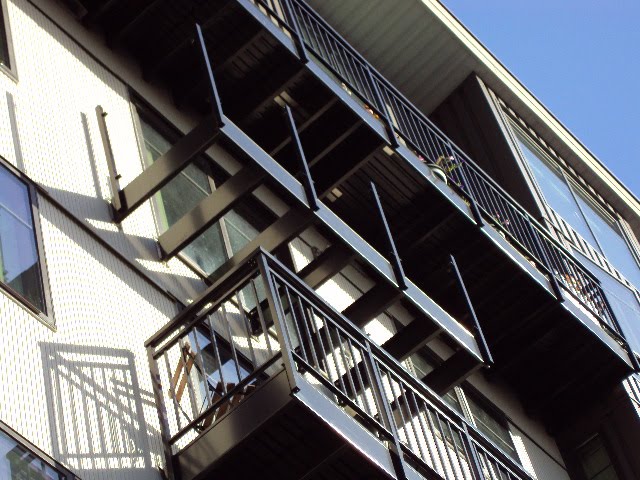
When our grandchildren open up their history books 40 years from now to see what the Great Recession looked like, what lasting images will they see? Detroit’s frozen man? Las Vegas’s foreclosed homes bus tour? Seattle’s repossessed balconies?

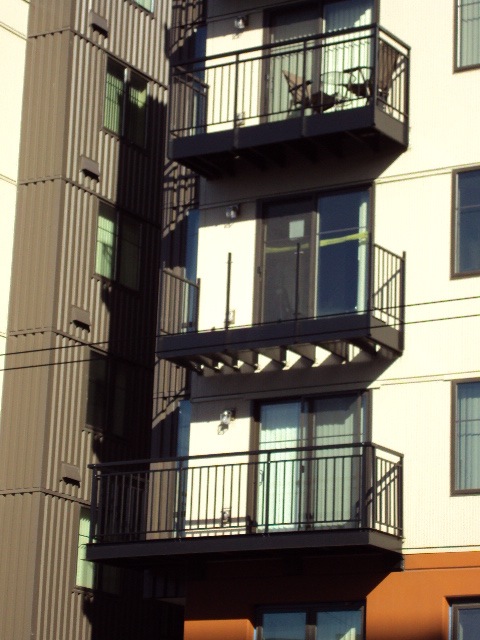
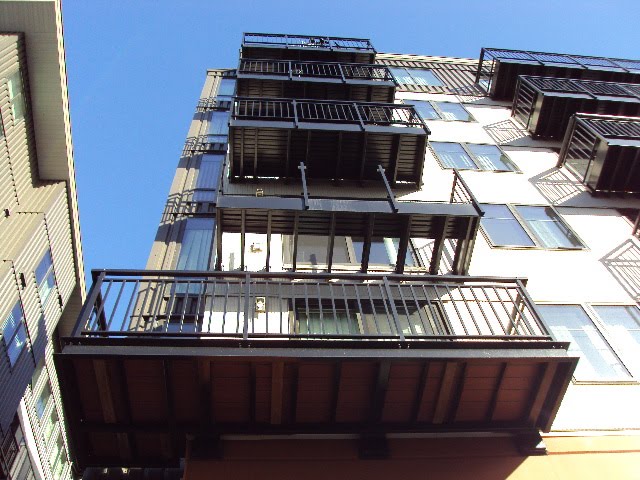
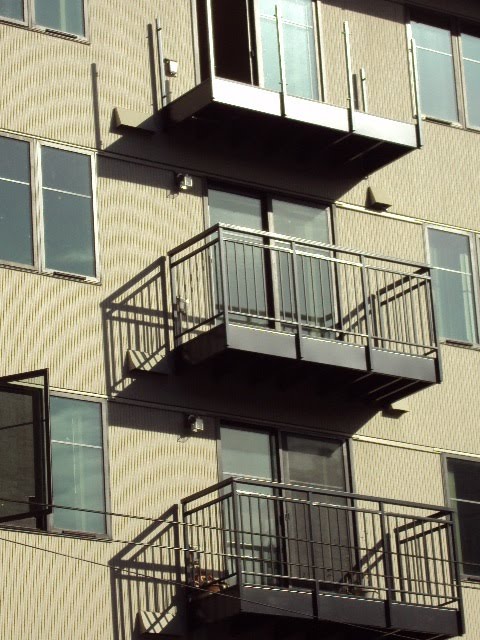
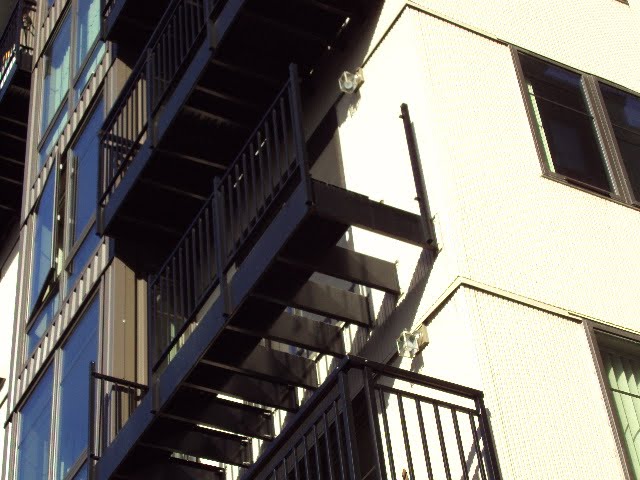
Blogger Igor Keller from Hideous Belltown got a tip last week that some desperate sub-contractors had scaled 3rd Avenue’s Moda apartment building on ladders, partially dismantled five balconies and then left with the recovered metal in the back of their truck. Keller’s tipster said the men told him Moda had shorted them on their bill to the tune of $20,000. So Keller decided to take a look for himself, and came back with what may be the most hilarious, hazardous and epoch-defining pictures Recession-era Seattle has seen.

As you can see, the guys on ladders only managed to take part of each balcony. But what they did remove makes the balconies much less usable in some cases and downright dangerous in others.

Keller’s tipster said that each one of the apartments left with a balcony shell is occupied. Which led SunBreak to reason that some particularly brave Moda resident is in line to file a “spectacular personal injury lawsuit.”

For his part, Keller manages a nuanced view of the situation that’s notable for its sympathy towards both Moda residents and Moda management.

From the time I spent temping at a real estate management company, I came to realize that most buildings operate in near-permanent debt. They generally owe months and months of bills for power, water and the like. Why, my own lovely, ancient building gets a water shut-off notice nailed to its front door around twice a year. But this strange event is a different animal; it’s the economic downturn asserting itself in new and weird ways. I wish the Moda the best of luck getting its balconies back. And no, I don’t consider them deadbeats. They just failed to consider just how hungry their poor subcontractors were.

Like Keller, Daily Weekly tried to get Moda’s response to the balcony repossessing. And just like Keller, we were also given a friendly “no comment.”

If you, or anyone you know, lives in Moda, let us know what management said. And if any Belltown residents happen to notice the balconies getting put back together in the next couple weeks, let us know that too. And take pictures!

UPDATE: Moda has filed charges of criminal trespass and reckless endangerment against Brace Point Railing, the contractor who built and took down the balconies.

KOMO News reports that Brace Point wouldn’t return calls. But material photographed at their warehouse looks similar to the metal used in the balcony railings.

Moda tenants said they found out about the missing balconies from a note left by Brace Point. The company claimed it had every right to take back its property.

The balconies at Moda: You might not want to lean.

seattle weekly

Moda
2312 3rd Avenue
Seattle, WA 98121

riverstone res

Link to the photos below – The Moda’s Hilarious and Hazardous Predicament

moda1

moda4

moda2

moda3

moda5

Political Action Committee – NAA – files Amicus Brief in mold case (two infant deaths in mold filled apt – Wasatch Prop Mgmt) citing US Chamber/ACOEM ‘litigation defense report’ to disclaim health effects of indoor mold & limit financial risk for industry

“Changes in construction methods have caused US buildings to become perfect petri dishes for mold and bacteria to flourish when water is added. Instead of warning the public and teaching physicians that the buildings were causing illness; in 2003 the US Chamber of Commerce Institute for Legal Reform, a think-tank, and a workers comp physician trade organization mass marketed an unscientific nonsequitor to the courts to disclaim the adverse health effects to stave off liability for financial stakeholders of moldy buildings. Although publicly exposed many times over the years, the deceit lingers in US courts to this very day.” Sharon Noonan Kramer

Information on Riverstone Residential knowingly exposing tenants to extreme amounts of mold toxins at Toxic Mold Infested Jefferson Lakes Apartments in Baton Rouge, Louisiana

Toxic Mold Infested Jefferson Lakes Apartments managed by Riverstone Residential

Riverstone Residential Litigation

Mold Inspection Reports

Photos of Mold in Apartment

Attorney Malpractice
Posted in Environmental Health Threats, Photos, Riverstone Residential | Tagged , , , , , , , , | Leave a comment

American College of Allergy, Asthma and Immunology (ACAAI) – Damp environments, poorly maintained heating & air-conditioning systems & carpeting may contribute to poor indoor air quality

Heating, Air-Conditioning And Carpets May Be Hazardous To Your Health

ScienceDaily (Nov. 11, 2009) — Damp environments, poorly maintained heating and air-conditioning systems and carpeting may contribute to poor indoor air quality, according to experts at the annual meeting of the American College of Allergy, Asthma and Immunology (ACAAI) in Miami Beach, Fla. Americans spend about 90 percent of their time indoors, where they are repeatedly exposed to indoor allergens and airborne particles that can lead to respiratory symptoms and conditions.

“If there was just one thing I could do to fix buildings, it would be to change the relative humidity,” said Doug Garrett, CEM, CDSM, building scientist and president of Building Performance and Comfort, Leander, Texas. “Moisture leads to conditions that are conducive to dust mites and mold, as well as bacteria, yeast and other living organisms.”

Garrett pointed to dust mites and mold as particularly worrisome.

A damp building with high humidity may lead to increased levels of dust mites and mold, leading to increased allergic respiratory symptoms, as well as the worsening of asthma. And even if someone is not allergic, molds may produce mycotoxins and volatile organic chemicals (VOCs) that smell bad and may cause respiratory irritation, he said.

Dust mites are microscopic arachnids that thrive in humidity. They cause allergic reactions and trigger asthma symptoms. Nearly half of all young people with asthma are allergic to dust mites; about 10 percent of the population is allergic to dust mites.

Mold requires moisture to grow. Indoor environments house many sources of moisture including condensation and leaky pipes.

Indoor Breathing Environment

Although there are many culprits that negatively affect indoor air quality, poorly maintained air-conditioning and carpeting are among the most problematic.

“A home’s heating and air-conditioning (HVAC) system, if poorly maintained, can become a major source of microbial allergens,” said Garrett.

According to Garrett, up to 30 percent of the air inside a home can come from the attic, parking garage or basement. One study supported by the EPA found that 75 percent of homes had carbon monoxide from the garage inside of the home.

Like air conditioning systems, carpeting often harbors allergens, including dust mites and molds said Jeffrey May, M.A., principal scientist of May Indoor Air Investigations LLC, Tyngsborough, Mass. Organisms and particles that become airborne eventually settle in carpeting. In damp environments, carpeting provides an ideal environment for mold growth.

“Many schools shampoo their carpeting right before school starts at the end of summer when it’s humid outside,” said May. “There couldn’t be a worse time.”

Making a Healthier Indoor Environment

To improve indoor air quality, Garrett lists several construction practices that, when done right, can make a significant difference. These include installing tight ductwork, achieving airtight construction, using a correctly sized HVAC (heating, ventilation and air conditioning) system and making sure there is fresh air ventilation. Proper ventilation involves introducing air from a known source and then filtering, dehumidifying and pre-cooling or heating it.

“You can’t build houses too airtight,” said Garrett. “But you can under ventilate them.”

Once built, maintenance becomes key. May offers the following advice for home owners on making their indoor environments healthier:

• Keep the air conditioner clean. Use a filter with an American Society of Heating and Air-Conditioning Engineers (AHRAE) Standard MERV (Minimum Efficiency Reporting Value) of at least 8.

• Do not have carpeting in any buildings or homes where humidity can’t be controlled. If you cannot replace carpet, vacuum thoroughly, carefully and methodically so you don’t stir dust into the air. Use a vacuum with a HEPA filter or cyclonic vacuum.

• Prevent mold by dehumidifying the basement. In unfinished basements, humidity should be kept lower than 50 percent. Do research before buying a dehumidifier. “There are scams out there” said May. “And ‘exhaust only’ systems are not effective.”

science daily

Political Action Committee – NAA – files Amicus Brief in mold case (two infant deaths in mold filled apt – Wasatch Prop Mgmt) citing US Chamber/ACOEM ‘litigation defense report’ to disclaim health effects of indoor mold & limit financial risk for industry

“Changes in construction methods have caused US buildings to become perfect petri dishes for mold and bacteria to flourish when water is added. Instead of warning the public and teaching physicians that the buildings were causing illness; in 2003 the US Chamber of Commerce Institute for Legal Reform, a think-tank, and a workers comp physician trade organization mass marketed an unscientific nonsequitor to the courts to disclaim the adverse health effects to stave off liability for financial stakeholders of moldy buildings. Although publicly exposed many times over the years, the deceit lingers in US courts to this very day.” Sharon Noonan Kramer

Information on Riverstone Residential knowingly exposing tenants to extreme amounts of mold toxins at Toxic Mold Infested Jefferson Lakes Apartments in Baton Rouge, Louisiana

Toxic Mold Infested Jefferson Lakes Apartments managed by Riverstone Residential

Riverstone Residential Litigation

Mold Inspection Reports

Photos of Mold in Apartment

Attorney Malpractice
Posted in Environmental Health Threats, Health - Medical - Science, Toxic Mold | Tagged , , , , , , , , , , | Leave a comment

Residents say apartments have holes, leaks, and mold – Alamo Apartments on Sahara – San Antonio

Mireya Villarreal
10-31-09
 

SAN ANTONIO – A leaky roof and moldy carpet are just some of the complaints tenants at North Side apartment complex say have gone unheard.

One resident said if nothing is done at the Alamo Apartments on Sahara, people’s health may be at risk.

News 4 WOAI found out the complex has had some problems in the past with San Antonio’s Code Compliance Department.

Most of the residents at Alamo Apartment residents were too afraid to speak with News 4 WOAI on camera, saying they didn’t want to start any trouble. But off camera they talked about living with holes in their walls, moldy carpet, shower leaks, and unsafe porches. They said they have taken their complaints to management. But the problems have never been resolved.

However, one fed up resident who says he wants to help is neighbors was ready to speak out about the issue.

“It just caved in,” Joshua Garcia said.

With days after big rains hit San Antonio, Garcia’s ceiling gave way. That was more than a week ago.

“I saw a big piece of chunk fall on the floor,” Garcia told News 4 WOAI. “I realized more of my roof was coming apart.”

Despite Garcia’s pleas for help, the complex’s maintenance workers have done little.

“I’m concerned about mold,” explained Garcia. “It’s also getting on my carpet. I’m concerned about getting sick.”

News 4 WOAI went to the Alamo Apartments’ assistant manager to discuss Garcia’s problems. She claimed his apartment was the only unit having problems. But News 4 WOAI’s crew saw contractors examining other buildings too.

News 4 WOAI ran a check on Alamo Apartments and found out the complex has had nearly 20 violations since 2003. Half of the violations have been for building problems like Joshua Garcia’s.

“I don’t want to be here and the whole thing collapse,” Garcia added.

Garcia said he can no longer live in his apartment and is getting out of his lease.

Tenants have rights, including:

the right to peace and quiet

the right to demand repairs to your apartment if it affects your health

the right to security (Such as dead-bolts for your door or window latches)

If you have a problem with your apartment, report it to management in writing and keep copies of the your complaint reports.

CLICK HERE to find out more about renters rights and how to file complaints

woai.com

Political Action Committee – NAA – files Amicus Brief in mold case (two infant deaths in mold filled apt – Wasatch Prop Mgmt) citing US Chamber/ACOEM ‘litigation defense report’ to disclaim health effects of indoor mold & limit financial risk for industry

“Changes in construction methods have caused US buildings to become perfect petri dishes for mold and bacteria to flourish when water is added. Instead of warning the public and teaching physicians that the buildings were causing illness; in 2003 the US Chamber of Commerce Institute for Legal Reform, a think-tank, and a workers comp physician trade organization mass marketed an unscientific nonsequitor to the courts to disclaim the adverse health effects to stave off liability for financial stakeholders of moldy buildings. Although publicly exposed many times over the years, the deceit lingers in US courts to this very day.” Sharon Noonan Kramer

Information on Riverstone Residential knowingly exposing tenants to extreme amounts of mold toxins at Toxic Mold Infested Jefferson Lakes Apartments in Baton Rouge, Louisiana

Toxic Mold Infested Jefferson Lakes Apartments managed by Riverstone Residential

Riverstone Residential Litigation

Mold Inspection Reports

Photos of Mold in Apartment

Attorney Malpractice
Posted in Environmental Health Threats, Toxic Mold | Tagged , , , , , , , , , , , , , , , , , | Leave a comment