Links on “U.S. Green Building Council” Facebook – Comment – Please send this to my management company, Riverstone Residential

Links on “U.S. Green Building Council” | Facebook

The Keys to Green Affordable Housing – Free 3-webinar series- Keys to Green Affordable Housing:Guide for Existing Multifamily Properties.

March 29 at 11:43am

Please send this to my management company, Riverstone Residential. My apartment is so not energy efficient, other than all the lights in my apartment I changed to CFL.

They have huge gaps between the doors and frames, keep all sorts of outside lights on during the day, snow comes in through closed doors, etc, etc. And it was only built in ’05.

March 29 at 11:52am

webcache

New Action Committee – ACHEMMIC- Urges Transparency in EPA Policy Over Mold & Microbial Contaminants

FEMA Using US Chamber Fraud in Katrina Trailer Litigation; EPA, GAO & Both Isle$ of Congre$$ Turn Blind Eye$

Sociological Issues Relating to Mold: The Mold Wars

Certain Corporate and Government Interests Have Spent Huge Sums of Money and Resources DENYING THE TRUTH about the HEALTH EFFECTS of TOXIC MOLD

Political Action Committee – National Apartment Association (NAA) files Amicus Brief in mold case (two infant deaths in mold filled apt – Wasatch Prop Mgmt) citing US Chamber/ACOEM ‘litigation defense report’ to disclaim health effects of indoor mold & limit financial risk for industry

“Changes in construction methods have caused US buildings to become perfect petri dishes for mold and bacteria to flourish when water is added. Instead of warning the public and teaching physicians that the buildings were causing illness; in 2003 the US Chamber of Commerce Institute for Legal Reform, a think-tank, and a workers comp physician trade organization mass marketed an unscientific nonsequitor to the courts to disclaim the adverse health effects to stave off liability for financial stakeholders of moldy buildings. Although publicly exposed many times over the years, the deceit lingers in US courts to this very day.” Sharon Noonan Kramer

Information on Riverstone Residential, the Louisiana Housing Finance Agency, and the owners of Toxic Mold Infested Jefferson Lakes Apartments in Baton Rouge, Louisiana continuing to allow tenants to be exposed to extreme amounts of mold toxins

Irrefutable evidence indicates that Riverstone Residential, Guarantee Service Team of Professionals, & plaintiffs’ attorney, J Arthur Smith III, must have agreed to exclude evidence that would have shown the owners of Jefferson Lakes Apartments & Riverstone Residential had knowledge of the severe MOLD INFESTATION at the complex before we moved in

Toxic Mold Infested Jefferson Lakes Apartments managed by Riverstone Residential

Riverstone Residential Litigation

Mold Inspection Reports

Photos of Mold in Apartment

Attorney Malpractice

Posted in Riverstone Residential | Tagged , , , , , , , | Leave a comment

Bronx tenants take landlord Semper Fi Management, run by Frank Palazzolo to court over repairs

Semper Fi Management is controlled by Frank Palazzolo, ranked by the Village Voice as one the city’s “Ten Worst Landlords.”

BY Bill Egbert
DAILY NEWS STAFF WRITER
April 2nd 2010

Tenants of a dilapidated Bronx building went to court Thursday to fire their landlord.

After years of living with broken windows, leaky ceilings, sagging floors, cracking walls and no locks on the outer doors, residents of 2710 Bainbridge Ave. filed suit to ask a judge to appoint new management for the building.

“Enough is enough,” said tenant association President Cruzmaria Renvill, who has lived in the Fordham building for more than 25 years. “We refuse to continue to live – or be treated – like this.”

Nearly a year and a half ago, the Department of Housing Preservation and Development listed the building as one of the 200 worst maintained in the city.

Under its Alternative Enforcement Program, HPD gave the landlord four months before the city sent workers to make vital repairs at the landlord’s expense.

More than a year later, however, few repairs have been made.

The window in electrician Edgar Sandoval’s living room has been broken for a year and a half and the window frame is separating from the wall. His bathtub doesn’t drain, so after every shower he has to bail the bathwater into the toilet – which leaks when it flushes. And the sink doesn’t work, forcing him to go into the kitchen to wash his hands whenever he uses the bathroom.

“I call 311 every week,” said Sandoval, 46, “but nothing ever happens.”

That’s because, according to HDP, the landlord, Semper Fi Management, repeatedly refused the city access to the property, forcing HPD to go to court to get a warrant.

Last month, HPD won the case and repairs have begun in earnest, with $158,663 worth of work already completed, according to the agency. Major work to replace the roof, water and sewer lines will begin in less than two weeks.

Semper Fi Management is controlled by Frank Palazzolo, ranked by the Village Voice as one the city’s “Ten Worst Landlords.”

Neither Palazzolo nor Semper Fi Management could be reached for comment.

nydailynews.com

New Action Committee – ACHEMMIC- Urges Transparency in EPA Policy Over Mold & Microbial Contaminants

FEMA Using US Chamber Fraud in Katrina Trailer Litigation; EPA, GAO & Both Isle$ of Congre$$ Turn Blind Eye$

Sociological Issues Relating to Mold: The Mold Wars

Certain Corporate and Government Interests Have Spent Huge Sums of Money and Resources DENYING THE TRUTH about the HEALTH EFFECTS of TOXIC MOLD

Political Action Committee – National Apartment Association (NAA) files Amicus Brief in mold case (two infant deaths in mold filled apt – Wasatch Prop Mgmt) citing US Chamber/ACOEM ‘litigation defense report’ to disclaim health effects of indoor mold & limit financial risk for industry

“Changes in construction methods have caused US buildings to become perfect petri dishes for mold and bacteria to flourish when water is added. Instead of warning the public and teaching physicians that the buildings were causing illness; in 2003 the US Chamber of Commerce Institute for Legal Reform, a think-tank, and a workers comp physician trade organization mass marketed an unscientific nonsequitor to the courts to disclaim the adverse health effects to stave off liability for financial stakeholders of moldy buildings. Although publicly exposed many times over the years, the deceit lingers in US courts to this very day.” Sharon Noonan Kramer

Information on Riverstone Residential, the Louisiana Housing Finance Agency, and the owners of Toxic Mold Infested Jefferson Lakes Apartments in Baton Rouge, Louisiana continuing to allow tenants to be exposed to extreme amounts of mold toxins

Irrefutable evidence indicates that Riverstone Residential, Guarantee Service Team of Professionals, & plaintiffs’ attorney, J Arthur Smith III, must have agreed to exclude evidence that would have shown the owners of Jefferson Lakes Apartments & Riverstone Residential had knowledge of the severe MOLD INFESTATION at the complex before we moved in

Toxic Mold Infested Jefferson Lakes Apartments managed by Riverstone Residential

Riverstone Residential Litigation

Mold Inspection Reports

Photos of Mold in Apartment

Attorney Malpractice
Posted in Environmental Health Threats | Tagged , , , , , , , , , , | Leave a comment

National group to probe LSU’s firing of professor – Ivor van Heerden

By JORDAN BLUM
Advocate Capitol News Bureau
April 8, 2010
 
A national college faculty organization is starting an investigation into LSU’s termination last year of Ivor van Heerden, one of the leading critics of federal engineers before and after Hurricane Katrina.

The American Association of University Professors wrote LSU Chancellor Michael Martin this week announcing the group is forming an investigatory committee to look into last year’s termination of van Heerden, the former deputy director of the LSU Hurricane Center,

In February, van Heerden, a coastal scientist, sued LSU, alleging he was unfairly fired because he blamed the U.S. Army Corps of Engineers for most of the flooding of New Orleans that occurred in the wake of Katrina in 2005. The letter to LSU by AAUP Associate Secretary B. Robert Kreiser concludes, “This matter raises significant issues of academic freedom, tenure and due process.”

AAUP is a nearly 50,000-member organization of faculty and other academics focused on ensuring academic freedom.

Van Heerden led the “Team Louisiana” levee inspection after Katrina. He also wrote “The Storm,” in which he alleged the corps made “serious engineering mistakes that caused multiple breaches in the system of levees that were supposed to protect New Orleans against hurricane-related flooding,” his suit says.

In February, Martin issued a statement arguing, “Although the decision not to renew Ivor van Heerden’s contract was made before I came to LSU, I have carefully reviewed the process that led to that decision and am confident that the process was handled appropriately.”

LSU spokesman Ernie Ballard said  Wednesday that LSU officials will have no further comment while the litigation is pending.

While van Heerden claimed he was fired because LSU officials sought to silence him, he also has said his firing might have been related to litigation against the corps over flooding caused by the Mississippi River-Gulf Outlet.

2theadvocate.com

U.N. Observer: flooding in New Orleans area was a man-made disaster

Levees.org Rally – Protest LSU’s firing of Ivor van Heerden – the most honest appraiser of city’s levee failures

New Action Committee – ACHEMMIC- Urges Transparency in EPA Policy Over Mold & Microbial Contaminants

FEMA Using US Chamber Fraud in Katrina Trailer Litigation; EPA, GAO & Both Isle$ of Congre$$ Turn Blind Eye$

Sociological Issues Relating to Mold: The Mold Wars

Certain Corporate and Government Interests Have Spent Huge Sums of Money and Resources DENYING THE TRUTH about the HEALTH EFFECTS of TOXIC MOLD

Political Action Committee – National Apartment Association (NAA) files Amicus Brief in mold case (two infant deaths in mold filled apt – Wasatch Prop Mgmt) citing US Chamber/ACOEM ‘litigation defense report’ to disclaim health effects of indoor mold & limit financial risk for industry

“Changes in construction methods have caused US buildings to become perfect petri dishes for mold and bacteria to flourish when water is added. Instead of warning the public and teaching physicians that the buildings were causing illness; in 2003 the US Chamber of Commerce Institute for Legal Reform, a think-tank, and a workers comp physician trade organization mass marketed an unscientific nonsequitor to the courts to disclaim the adverse health effects to stave off liability for financial stakeholders of moldy buildings. Although publicly exposed many times over the years, the deceit lingers in US courts to this very day.” Sharon Noonan Kramer

Information on Riverstone Residential, the Louisiana Housing Finance Agency, and the owners of Toxic Mold Infested Jefferson Lakes Apartments in Baton Rouge, Louisiana continuing to allow tenants to be exposed to extreme amounts of mold toxins

Irrefutable evidence indicates that Riverstone Residential, Guarantee Service Team of Professionals, & plaintiffs’ attorney, J Arthur Smith III, must have agreed to exclude evidence that would have shown the owners of Jefferson Lakes Apartments & Riverstone Residential had knowledge of the severe MOLD INFESTATION at the complex before we moved in

Toxic Mold Infested Jefferson Lakes Apartments managed by Riverstone Residential

Riverstone Residential Litigation

Mold Inspection Reports

Photos of Mold in Apartment

Attorney Malpractice

Posted in Civil Justice, Politics | Tagged , , , , , , , , | Leave a comment

“Great Recession” Challenges Apartment Industry, According to NMHC’s Annual Ranking of 50 Largest Apartment Firms

April 7, 2010
by NMHC

WASHINGTON, DC – April 7, 2010 – (RealEstateRama) — Every facet of the apartment industry was touched by the Great Recession in 2009, according to the NMHC 50, the National Multi Housing Council’s annual ranking of the 50 largest apartment owners and the 50 largest apartment managers.

“Apartment sales transaction volume plummeted,” noted Mark Obrinsky, NMHC Chief Economist. “Only $14 billion in properties changed hands in 2009, an 86 percent drop from two years ago.  In addition, new apartment construction set an all-time post-World War II low in 2009, at under 100,000 new starts.”

“As a result, most changes to the NMHC 50 rankings were modest, although there were some notable changes at the top of the NMHC 50 owners list.”

“Demographic trends, changing lifestyles and our national need to grow more sustainably all point to strong long-term demand for apartments,” added Doug Bibby, NMHC President.  “In fact, experts predict that apartments will be the first real estate sector to bounce back when the economy recovers.”

Highlights of this year’s survey follow, and a complete analysis of the results is available at www.nmhc.org/goto/Top50 or by calling 202/974?2300.

Highlights from the NMHC 50 Owners Survey

The five largest apartment owners in the country are:

1.Boston Capital (162,677 units);
2.SunAmerica Affordable Housing Partners, Inc. (147,087 units);
3.Equity Residential (136,843 units);
4.AIMCO (133,200 units); and
5.PNC Tax Credit Capital (128,727 units).

Net sales among the top 50 owners greatly outpaced net acquisitions: sellers shed 98,919 apartments, while acquirers added 34,203.  In fact, the four largest apartment owners all reduced their portfolios last year.

The biggest net seller was AIMCO, which shed 25,750 apartments and now owns 133,200, its lowest number since 1998 and a decrease of more than 50 percent from its peak in 2004. The second largest seller was another real estate investment trust (REIT), Equity Residential, whose ownership portfolio declined by 11,272 apartments. Equity now owns 40 percent fewer apartments than it did at its peak in 2000.

Six of the 10 largest apartment owners are now affordable housing providers: Boston Capital (No. 1); SunAmerica Affordable Housing Partners, Inc. (No. 2); PNC Tax Credit Capital (No. 5); National Equity Fund (No. 6); Enterprise Community Investment, Inc. (No. 7); and The Richman Group Affordable Housing Corporation (No. 8).

Total apartment holdings by REITs continued to slip.  There are 10 REITs among the top 50 owners, one less than last year and down from a peak of 14 in 2005.

Both the ownership and management lists underscore the importance of medium-sized firms to the apartment industry.  Fully half the firms in the NMHC 50 own or manage at least 30,000, but fewer than 50,000 apartments.

A firm had to own 23,730 units to make the NMHC 50 owners list; the median owner has 42,962 units.
As of January 1, 2010 the top 50 apartment owners held 2.72 million apartments, or 14.6 percent of the nation’s estimated 18.6 million apartments.

There were six new firms added to the NMHC 50 owners list this year: Invesco Real Estate (No. 20); Raymond James Tax Credit Funds, Inc. (No. 23); Irvine Company Apartment Communities (No. 26); Crow Holdings (No. 27); Concord Management, Ltd. (No. 36); and AEW Capital Management, L.P. (No. 42).

Highlights from the NMHC 50 Managers Survey

The five largest apartment managers in the country are:

1.Pinnacle Family of Companies (183,877 units);
2.Riverstone Residential Group (178,431 units);
3.Greystar Real Estate Partners, LLC (153,819 units);
4.Equity Residential (136,843 units); and
5.Lincoln Property Company (132,881 units).

In line with the sizable reductions in their ownership portfolios, AIMCO and Equity Residential downsized their management portfolios by 25,750 and 11,272 units, respectively.

By contrast, Greystar for the second year in a row had the largest portfolio growth, increasing the number of apartments under management by 13,819.

The NMHC 50 apartment managers operate 2.69 million apartments, or 14.5 percent of the nation’s estimated 18.6 million apartments.

The number of apartments included in the NMHC 50 managers list rose by 0.8 percent in 2010 to 2,689,719, the second highest level in the survey’s history.

A firm had to manage 26,845 apartments to make the NMHC 50 managers list; the median manager controls 37,767 units.

Eight new firms joined the NMHC 50 managers list this year: Irvine Company Apartment Communities (No. 28); Concord Management, Ltd. (No. 36); Asset Plus Companies (No. 38); The Bozzuto Group (No. 40); The Laramar Group, LLC (No. 43); American Campus Communities Inc. (No. 44); McKinley, Inc. (No. 45); and Edgewood Management Corporation (No. 50).

Based in Washington, DC, NMHC is a national association representing the interests of the larger and most prominent apartment firms in the U.S.  NMHC’s members are the principal officers of firms engaged in all aspects of the apartment industry, including owners, developers, managers and financiers.  One-third of Americans rent their housing, and more than 14 percent live in a rental apartment.  For more information, contact NMHC at 202/974-2300, e-mail the Council at , or visit NMHC’s web site at www.nmhc.org.

Contact:
Michael Tucker, 202/974/2360,

realestaterama.com

New Action Committee – ACHEMMIC- Urges Transparency in EPA Policy Over Mold & Microbial Contaminants

FEMA Using US Chamber Fraud in Katrina Trailer Litigation; EPA, GAO & Both Isle$ of Congre$$ Turn Blind Eye$

Sociological Issues Relating to Mold: The Mold Wars

Certain Corporate and Government Interests Have Spent Huge Sums of Money and Resources DENYING THE TRUTH about the HEALTH EFFECTS of TOXIC MOLD

Political Action Committee – National Apartment Association (NAA) files Amicus Brief in mold case (two infant deaths in mold filled apt – Wasatch Prop Mgmt) citing US Chamber/ACOEM ‘litigation defense report’ to disclaim health effects of indoor mold & limit financial risk for industry

“Changes in construction methods have caused US buildings to become perfect petri dishes for mold and bacteria to flourish when water is added. Instead of warning the public and teaching physicians that the buildings were causing illness; in 2003 the US Chamber of Commerce Institute for Legal Reform, a think-tank, and a workers comp physician trade organization mass marketed an unscientific nonsequitor to the courts to disclaim the adverse health effects to stave off liability for financial stakeholders of moldy buildings. Although publicly exposed many times over the years, the deceit lingers in US courts to this very day.” Sharon Noonan Kramer

Information on Riverstone Residential, the Louisiana Housing Finance Agency, and the owners of Toxic Mold Infested Jefferson Lakes Apartments in Baton Rouge, Louisiana continuing to allow tenants to be exposed to extreme amounts of mold toxins

Irrefutable evidence indicates that Riverstone Residential, Guarantee Service Team of Professionals, & plaintiffs’ attorney, J Arthur Smith III, must have agreed to exclude evidence that would have shown the owners of Jefferson Lakes Apartments & Riverstone Residential had knowledge of the severe MOLD INFESTATION at the complex before we moved in

Toxic Mold Infested Jefferson Lakes Apartments managed by Riverstone Residential

Riverstone Residential Litigation

Mold Inspection Reports

Photos of Mold in Apartment

Attorney Malpractice

Posted in Politics, Riverstone Residential, Whatever | Tagged , , , , , , , , , , | Leave a comment

Lucrative stimulus contract for green jobs in New Orleans goes to group with least to offer

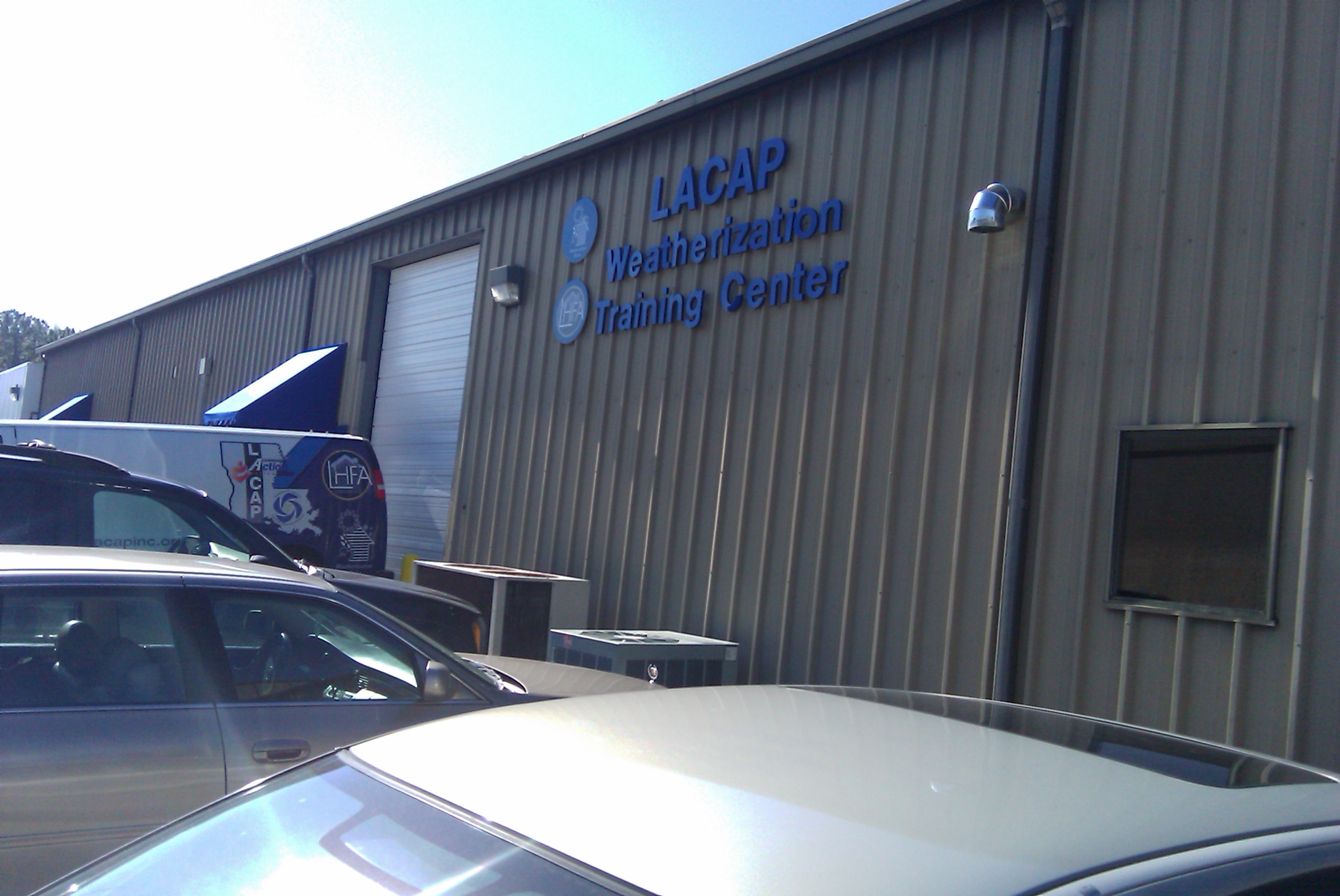
This new weatherization training center was set up by Louisiana Assocation of Community Action Partnerships, using federal money — a move that gave the group an edge in getting federal stimulus money.

April 6th, 2010 | Posted by Brentin Mock

By Brentin Mock – staff writer – For more than 30 years, a federal program to weatherize homes of low-income families has been a fairly low-budget, low-profile affair in Louisiana. In recent years, the state has hired an association of non-profits to do the work on the side as they run other public-benefit programs with considerably higher budgets.

But the weatherization program here attracted a lot more attention – and a tremendous amount of money – a year ago with the passage of President Barack Obama’s American Recovery and Reinvestment Act.

Instead of the normal $1million to $2 million a year, the stimulus package set aside $50 million for Louisiana. Yes, the feds wanted to see a sharp increase in the number of houses fixed up – from a few hundred to more than 1,600 a year – but just as importantly, they wanted to see new jobs created to carry out that work. And because the work will ultimately save on energy costs, those new positions would have the added benefit of being considered “green jobs,” making good on another Obama pledge.

In the end, low-income families get their attics insulated, windows and doors sealed with weather stripping and caulk, light fixtures fitted with fluorescent bulbs, air conditioners cleaned, exhaust fans installed and windows covered with sun screens. The residents also are to be educated on efficient energy use, such as using the provided fans sometimes in place of air-conditioning.

The way the state tried to fulfill these goals is a study in strong-arm tactics by non-profits, well-intentioned bungling by state bureaucrats and ill-informed intervention by Washington officials. In New Orleans in particular, the effort has left the program exclusively in the hands of a relatively small outfit while shutting out better-equipped organizations that promised to match the money with millions more.

In New Orleans, the program has created almost no new jobs and didn’t come close to hitting its goals in the opening months.

“There’s been a concern that all of this money will be spent on I don’t know what, but I haven’t seen any evidence of it making an impact on people I’ve worked with, ” said Darryl Malek-Wiley of the Sierra Club of New Orleans.

Existing coalition not happy with newcomers

To understand where the money has gone, you need to start with where it came from and follow the tortuous path to the end.

The U.S. Energy Department has been handing grants to states for the weatherization-assistance program for decades. The program is overseen here by the Louisiana Housing Finance Agency, the state organization responsible for helping low-income families with their housing needs.

Rather than doing the work itself as it had done for years, the finance agency hires an outside administrator in 2007, the Louisiana Association of Community Action Partnerships. That group is a coalition of more than 42 “community action agencies,” federally designated non-profits that were established to provide services to low-income families.

But with the unprecedented one-time allocation coming from the stimulus package, the state finance agency decided to do things differently last year and open the work to to more bidders.

“This was supposed to stimulate new business and new job growth, so with that spirit, our mission was to open it up as much as we could.” said Jeff DeGraff, spokesman for the Louisiana Housing Finance Agency.

Members of action-agency associations were told informally about the new open process and didn’t initially object, said Charlette Minor, the finance agency’s weatherization manager. Representatives of the association even attended a public roundtable discussion in March 2009 with other non-profits, where the finance agency [b1] was brainstorming the best use of the new money, she said.

However, the association did express disagreement two months later, at a May hearing. And that’s where the trouble started.

“We really don’t need to start recreating the wheel,” association representative Chris Dunn said, according to a transcript of that hearing. “We need to go with what we have and expand on it.”

Things got uglier and more territorial after the meeting, at least as far as the New Orleans share was concerned, said Kristin Gisleson Palmer, former executive director of Rebuilding Together New Orleans, which was interested in participating in the work.

The statewide association of agencies is represented in New Orleans by Total Community Action, a venerable group that also provides the community with such services as Head Start early childhood education, job counseling, transportation for the elderly and disabled and homeless prevention.

Gisleson Palmer said in an interview that she was confronted by James Wallace, the weatherization manager for Total Community Action, after the May meeting.

“ ‘This is our money and this is how we’re going to use it and we’ll tell you how many units you do, if we decide to work with you,’ ” recalled Gisleson Palmer. “He just came off as if he was the only one entitled to the money.”

Likewise, the leader of another local environmental organization remembered an unpleasant encounter with Wallace.

Will Bradshaw, executive director of Green Coast Enterprises, held a phone conference for those applying for the state stimulus money, hoping to get them to agree to a unified approach. He invited Wallace who “expressed some reservation,” Bradshaw said, but ultimately decided to join the call.

Wallace stayed on the call long enough to tell the group that Total Community Action would not be participating in their collaborative before hanging up. Asked if Wallace exited respectfully, Bradshaw said, “not particularly.”

“I think TCA in particular thought something was being taken from them that was rightfully theirs,” Bradshaw said. “If you look at the history of TCA, they have been doing this for a very long time. So I think there was this sense that they were being threatened by these new organizations that were suddenly trying to get involved with weatherization.”

The president of the coalition, Jane Killen, did not respond to requests for an interview, nor did Total Community Action’s leader, Thelma French. And though Wallace was interviewed about the program in general, his organization did not make him available later, after Gisleson Palmer and Bradshaw described their situations with Wallace.
Spreading the money to get more money

Despite the objections from Wallace in particular, and the statewide association in general, the state sent to Washington a plan for spending the money that included several new non-profits.

For the New Orleans area, the plan included:

The Salvation Army, working through its recently launched EnviRenew program that does green home renovations for low-income families;

Catholic Charities, which through its partnership with Providence Community Housing is working toward building and repairing thousands of houses for disadvantaged families since Katrina;

Rebuilding Together New Orleans, a non-profit known around the city for its work in restoring and preserving the unique residential landscape of the city, also with a focus on poor families;

And Total Community Action, which had been weatherizing 50 to 60 houses on average annually in the 27 years it has been participating in the weatherization program .

The non-profits saw the stimulus funds as an opportunity to expand home repair work they were already doing. They knew that the stimulus was a one-time grant, but they had plans to stretch the money – and to create more jobs as an associated benefit. For instance, the Salvation Army included a commitment to create a $250,000 revolving fund for contractors, and Rebuilding Together New Orleans pledged millions from its parent organization, Rebuilding Together Inc., to match the stimulus grant.

“The regional nonprofits were selected first because LHFA realized they were the best suited to leverage these funds,” Gisleson Palmer said. “In New Orleans, and those areas affected by the hurricanes, you really have to do holistic rebuilding. So the repairs we could make with these dollars would have been much more intensive and complete.”

“We already have construction staff on hand, which means we don’t have to subcontract out this work, which adds another layer, and more bureaucracy, and more money from what you can spend on weatherization work. We were able to quickly utilize these funds and put the money to work immediately from within an existing construction framework, and LHFA realized that.”

The plan was sent to the U.S. Energy Department, where it was met with an unexpected buzz saw of objections.

The feds want answers and explanations

The addition of new non-profits led federal officials to come back with a flurry of questions: Why do you need new contractors? Why can’t the coalition already in place do the work? What role will the existing association have in overseeing the program?

The letter sent from the Energy Department to the state finance agency in July said that the association already in place “must receive preference.” If the state decides to go with someone else, the letter said, officials need to explain why they decided the program “will be run more efficiently by bringing on entirely new contractors rather than by utilizing the knowledge and experience of its current contractor”

Minor, finance agency’s weatherization program handler, wasn’t prepared for this reply. She said her office was in touch regularly with the Energy Department’s state liaison, Robert DeSoto, who was well aware that Louisiana was pursuing an expansion of its pool of contractors. Contacted by phone, DeSoto said he couldn’t speak without permission of his agency’s public-affairs officer.

Energy public affairs officer Jen Stutsman said, “There was a preference toward existing providers because we believed they had the infrastructure already in place.”

Still, that didn’t exclude new contractors, she said, as long as the state explained the need. In fact, other states have done just that, expanding beyond their traditional base of community action agencies.

The letter from her bosses gave another reason the Energy Department preferred the association. It involved green – the kind you take to the bank.

The previous year’s weatherization plan prepared by the state and approved by Washington provided “a significant funding increase” that let the association build a new training center.  That approval was given with the understanding that the association was getting ready to train more workers who would be needed when the stimulus money was released, it said.

A few months later, the state relented. Rather than supporting its initial strategy of 36 contractors and fleshing out the need for new blood, it submitted a new plan to Washington that included only the association’s network, representing 20 community action agencies. In September, the state signed a contract with the Louisiana Association of Community Action Partnerships, which allocated $4.2 million for Total Community Action to do the work in New Orleans.

The New Orleans-area groups left out were confused and frustrated.

“It never was revealed to us where the decision came down from as to how it had to happen, as opposed to what the state wanted,” said Capt. Ethan Frizzell of the Salvation Army.

Gisleson Palmer, who recently won election to the New Orleans City Council, said the decision to re-direct funds to the community action groups was purely political, saying the statewide association applied pressure. The community action agencies “went behind closed doors and lobbied the Department of Energy, or at least that’s how it was told to me,” Gisleson Palmer said. “They came down and yanked it from us …. Meanwhile, we were not given the opportunity to lobby, or speak to DOE or anything like that.”

Stutsman, the Energy Department spokeswoman, said that’s just not so. However, she said the association was included in a meeting with state and Energy Department officials where the new plan was crafted.

In federal reporting required by the stimulus award, the statewide coalition has reported that it created 107 jobs with the federal money and retained another 121.

What they’ve done with the money they have used?

“Most activities have continued to support the ramp up of workforce and infrastructure,” reads the report, available on recovery.gov. The area where coalition officials describe the jobs created reads more like a plan for the future: “The ARRA funds will allow subgrantees to expand the weatherization workforce … the expansion will also foster more partnerships and increase the number of vendors and suppliers.”

Some of the jobs created have been in the very offices of the statewide association itself. In the front of its new training center are dozens of cubicles and offices for its expanding staff. Killen has said publicly that her central staff grew from a few in 2006 to 22 now. New trucks and vans are parked outside, prominently displaying the decal of the Louisiana Association of Community Action Partnerships.

“They now had money to create a business to hire competent people,” said James Gilmore, who as vice president of the finance agency in 2007 signed an agreement with the statewide association to be the state’s weatherization program administrators. “They hired an attorney. They were able to hire a CPA. At the time, they were just a loose network. When they got the administrative funds, they became an organization with a staff. They became a business.”

New Orleans outfit triples its workload

While there may have been a framework for the statewide coalition to distribute money to its partners, there was not one in place at Total Community Action – or at least not one that was able to help it comply with new regulations that came with stimulus money. And its record shows a history of poor paperwork and a lack of openness in contracting.

As Gisleson Palmer alluded, the agency has no staff for performing weatherization duties; it has historically subcontracted the work.

The new money came with the provision that each community action agency choose the subcontractors through a bid process, and it required that they pay a prevailing wage. The agency wasn’t familiar with either of those policies.

When told that, Stutsman said, “I can’t comment specifically on New Orleans, but we believed that the local providers working on this in previous years would have the necessary infrastructure in place and that’s the extent of what I know of it.”

Total Community Action began running its weatherization program in the early 1980s. From then until last year, it was only responsible for no more than about 60 houses a year. The stimulus contract is for 549 houses through 2012. As with other recipients of stimulus money, it has 18 months to show it can handle the load, otherwise the contract terms will change.

Wallace, the local agency’s weatherization manager, said it took some time just to get himself and two staffers familiar with how to issue and receive bids and what the implications were of other new regulations. That delayed the start of weatherization work for at least a month, he said. Wallace bemoaned the extra paperwork, pointing out “there’s no more money in it for TCA.”

Its contracts have never been bid, instead handed out to a few of its own preferred providers – “People who have been doing weatherization work for TCA for the last 10 or 12 years,” Wallace said. “They’re just small guys and females. They may be just two- or three-person entities.”

Last June, in a management review report from the statewide association, Total Community Action received a “satisfactory” for its service delivery, management practices, technical activities and administrative operations, but were graded as “below average” for its maintenance of client files. A subsequent overall management review of its work for the last few months of 2009 was upgraded to “superior.”

“I wouldn’t say it was one of the best in the world,” said Gilmore, the former finance agency vice president. “But based off the numbers of people in New Orleans needing assistance, they did the best they could.”

Wallace shrugged off any concerns about the capabilities of his organization.

“All that is important is that TCA has continued to do this work for a number of years, regardless of if it was the guy on the corner who sat on the steps who did the work, or somebody else,” he said. “TCA has never had a problem, as I know about it, with a misuse of funds.

“[Our contractors] have to sign a paper that says they have not been disbarred, and have not had any problems with any previous federal contractors, and they are not somebody who’s been indicted. But if TCA is using the money as it should, and getting reports in, and getting audits then everything works out fine. That’s why we still do this.”

thelensnola.org

New Action Committee – ACHEMMIC- Urges Transparency in EPA Policy Over Mold & Microbial Contaminants

FEMA Using US Chamber Fraud in Katrina Trailer Litigation; EPA, GAO & Both Isle$ of Congre$$ Turn Blind Eye$

Sociological Issues Relating to Mold: The Mold Wars

Certain Corporate and Government Interests Have Spent Huge Sums of Money and Resources DENYING THE TRUTH about the HEALTH EFFECTS of TOXIC MOLD

Political Action Committee – National Apartment Association (NAA) files Amicus Brief in mold case (two infant deaths in mold filled apt – Wasatch Prop Mgmt) citing US Chamber/ACOEM ‘litigation defense report’ to disclaim health effects of indoor mold & limit financial risk for industry

“Changes in construction methods have caused US buildings to become perfect petri dishes for mold and bacteria to flourish when water is added. Instead of warning the public and teaching physicians that the buildings were causing illness; in 2003 the US Chamber of Commerce Institute for Legal Reform, a think-tank, and a workers comp physician trade organization mass marketed an unscientific nonsequitor to the courts to disclaim the adverse health effects to stave off liability for financial stakeholders of moldy buildings. Although publicly exposed many times over the years, the deceit lingers in US courts to this very day.” Sharon Noonan Kramer

Information on Riverstone Residential, the Louisiana Housing Finance Agency, and the owners of Toxic Mold Infested Jefferson Lakes Apartments in Baton Rouge, Louisiana continuing to allow tenants to be exposed to extreme amounts of mold toxins

Irrefutable evidence indicates that Riverstone Residential, Guarantee Service Team of Professionals, & plaintiffs’ attorney, J Arthur Smith III, must have agreed to exclude evidence that would have shown the owners of Jefferson Lakes Apartments & Riverstone Residential had knowledge of the severe MOLD INFESTATION at the complex before we moved in

Toxic Mold Infested Jefferson Lakes Apartments managed by Riverstone Residential

Riverstone Residential Litigation

Mold Inspection Reports

Photos of Mold in Apartment

Attorney Malpractice

Posted in Louisiana Housing Finance Agency, Politics | Tagged , , , , , , , | Leave a comment